What Should Your SEO Content Optimization Checklist Include?
Posted by
 Stefan Winter
How to Build the Ultimate SEO Content Optimization Checklist for 2026
Creating content that ranks well in search engines requires more than just good writing. It demands a systematic approach that ensures every piece of content meets the evolving standards of search algorithms while delivering genuine value to readers. An SEO content optimization checklist serves as your roadmap to consistently produce content that performs well in search results and engages your target audience effectively.
In this comprehensive guide, you'll discover how to build and implement a robust SEO content optimization checklist that covers everything from keyword research to technical optimization. Whether you're a content creator, marketing professional, or business owner, this systematic approach will help you streamline your content optimization process and achieve better search engine visibility.
What Should Your SEO Content Optimization Checklist Include?
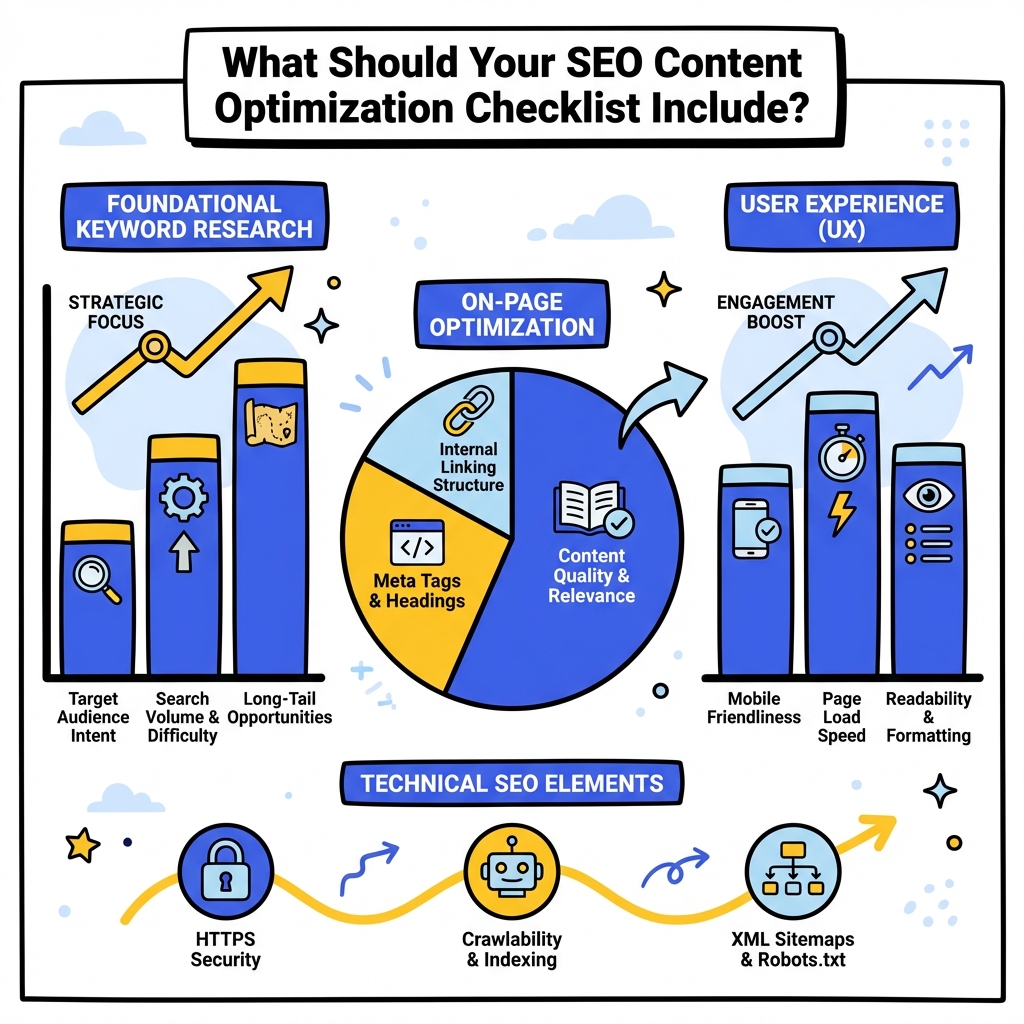
A comprehensive SEO content optimization checklist encompasses multiple layers of optimization, from foundational keyword research to advanced technical elements. The most effective checklists address both on-page factors that search engines evaluate and user experience elements that keep readers engaged.
Your checklist should cover content planning, keyword integration, technical optimization, and performance measurement. Each category plays a crucial role in determining how well your content performs in search results. The key is creating a systematic process that ensures consistency across all your content while adapting to the latest search engine guidelines.
Modern SEO content optimization extends beyond traditional keyword stuffing or meta tag optimization. Today's approach requires understanding user intent, creating comprehensive content that answers questions thoroughly, and ensuring technical elements support both search engines and human readers.
How to Structure Your Pre-Writing Optimization Phase
What Research Steps Should Come First?
Before writing a single word, your SEO content optimization checklist should guide you through essential research phases. Start with comprehensive keyword research that identifies primary keywords, related terms, and long-tail variations your target audience actually searches for. Tools like Google Keyword Planner, SEMrush, or Ahrefs provide valuable insights into search volume and competition levels.
Analyze competitor content to understand what's already ranking for your target keywords. This analysis reveals content gaps you can fill and helps you determine the depth and angle needed to compete effectively. Look for opportunities to provide more comprehensive information or approach topics from unique perspectives.
Search intent analysis forms another critical component of your pre-writing checklist. Understanding whether users seek informational, navigational, commercial, or transactional content helps you align your content format and structure with user expectations.
How Do You Plan Content Structure for SEO Success?
Content structure planning should address both user experience and search engine requirements. Create detailed outlines that incorporate your target keywords naturally while organizing information in logical, scannable sections. Use heading hierarchies (H1, H2, H3) to create clear content architecture that helps both readers and search engines understand your content organization.
Plan for featured snippet opportunities by identifying questions your content can answer concisely. Structure sections to provide direct answers followed by detailed explanations. This approach increases your chances of earning position zero rankings while improving overall content quality.
What On-Page Elements Need Optimization Attention?
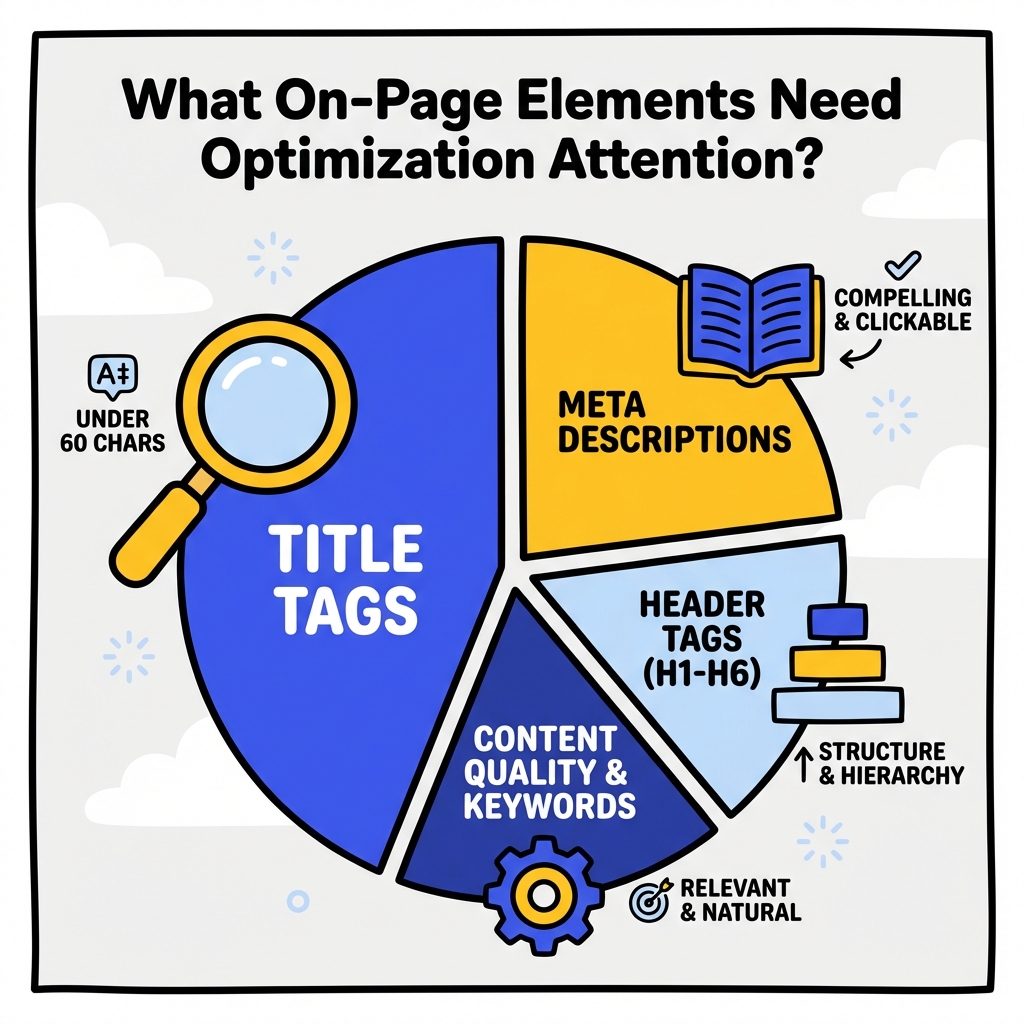
Your SEO content optimization checklist must address critical on-page elements that directly impact search engine visibility. Title tags should incorporate primary keywords naturally while remaining compelling for human readers. Keep titles under 60 characters to ensure full display in search results.
Meta descriptions, while not direct ranking factors, significantly influence click-through rates. Write descriptions between 150-160 characters that accurately summarize content while encouraging clicks. Include primary keywords and compelling calls-to-action when appropriate.
Header tags create content hierarchy and help search engines understand topic relationships. Use H1 tags for main titles, H2 for major sections, and H3 for subsections. Incorporate relevant keywords in headers naturally without forcing awkward phrasing.
| On-Page Element | Optimal Length | Primary Function | SEO Impact |
|---|---|---|---|
| Title Tag | 50-60 characters | Search result headline | High |
| Meta Description | 150-160 characters | Search result summary | Medium |
| H1 Tag | 20-70 characters | Main page title | High |
| H2-H6 Tags | 20-70 characters | Content structure | Medium |
| URL Slug | 50-60 characters | Page identification | Medium |
How Do You Optimize Content Quality and Readability?
Content quality optimization goes beyond keyword placement to focus on user engagement and satisfaction signals. Your checklist should ensure content thoroughly addresses user intent while maintaining readability and engagement. Write in clear, conversational language appropriate for your target audience's knowledge level.
Incorporate multimedia elements like images, videos, and infographics to break up text and provide additional value. Optimize images with descriptive alt text that includes relevant keywords when appropriate. These elements improve user experience while providing additional ranking opportunities.
Content length should match user intent and topic complexity. While there's no magic word count, comprehensive coverage of topics often requires substantial content. Long-form content SEO can provide significant advantages for complex topics that require detailed explanations.
Readability optimization ensures your content serves both search engines and human readers effectively. Use short paragraphs, bullet points, and numbered lists to improve scannability. Tools like Hemingway Editor or Grammarly can help identify areas for improvement in clarity and readability.
What Technical SEO Elements Should Your Checklist Cover?
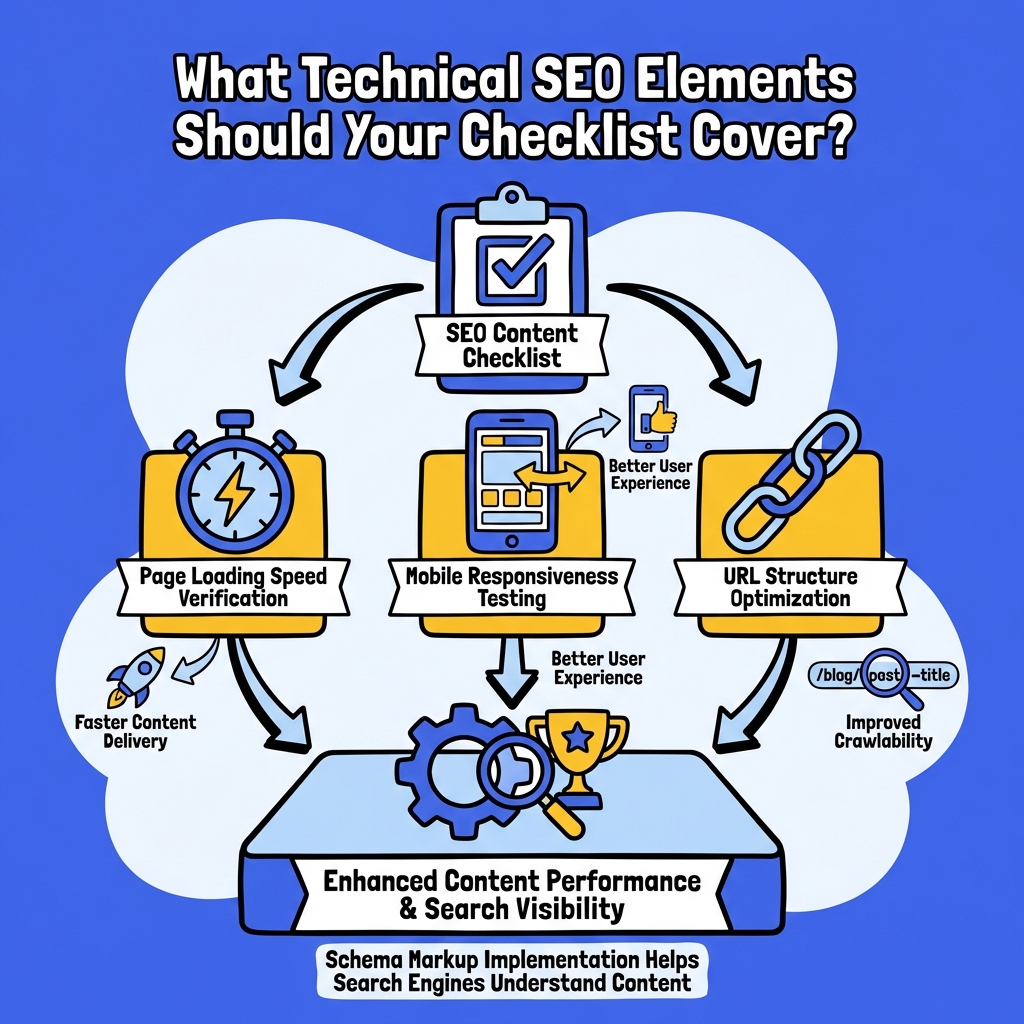
Technical optimization elements often get overlooked but play crucial roles in content performance. Your SEO content optimization checklist should include page loading speed verification, mobile responsiveness testing, and URL structure optimization.
Schema markup implementation helps search engines understand your content context better. Add relevant schema types like Article, FAQ, or HowTo markup to increase chances of enhanced search result displays. This structured data can significantly improve click-through rates and visibility.
URL optimization involves creating clean, descriptive URLs that include target keywords when natural. Avoid complex parameter strings or unnecessary subdirectories that make URLs difficult to understand or share.
Consider how SEO content automation tools can help streamline technical optimization tasks while maintaining quality standards.
How Should You Handle Post-Publishing Optimization?
Your SEO content optimization checklist shouldn't end at publication. Post-publishing optimization involves monitoring performance metrics, updating content based on search trends, and improving based on user feedback and analytics data.
Track key performance indicators like organic traffic, average time on page, bounce rate, and conversion rates. These metrics reveal how well your content serves both search engines and users. Use tools like Google Analytics and Google Search Console to monitor performance and identify optimization opportunities.
Content freshness matters for many topics, especially in rapidly changing industries. Schedule regular content audits to update statistics, add new information, and remove outdated details. Fresh, current content often performs better in search results and provides more value to readers.
Monitor keyword rankings and adjust optimization strategies based on performance data. If content isn't ranking for target keywords, analyze competitor content and identify potential improvements in depth, structure, or keyword targeting.
What Tools Can Streamline Your Optimization Process?
Effective SEO content optimization requires the right tools to execute your checklist efficiently. Content optimization platforms like Clearscope, MarketMuse, or Surfer SEO provide data-driven recommendations for keyword usage, content structure, and competitive analysis.
Technical SEO tools help identify and fix issues that might prevent your content from ranking well. Google PageSpeed Insights, GTmetrix, and Screaming Frog provide insights into technical performance factors that impact search engine visibility.
Analytics and monitoring tools track your optimization success over time. Beyond Google Analytics and Search Console, tools like SEMrush, Ahrefs, or Moz provide detailed insights into keyword rankings, backlink opportunities, and competitive analysis.
Conclusion
Building and implementing a comprehensive SEO content optimization checklist transforms content creation from guesswork into a systematic process that consistently delivers results. By addressing pre-writing research, on-page optimization, content quality, technical factors, and post-publishing maintenance, you create a framework for sustainable search engine success.
The key to effective content optimization lies in balancing search engine requirements with genuine user value. Your checklist should guide you toward creating content that ranks well because it truly serves your audience's needs and provides comprehensive answers to their questions.
Ready to implement these optimization strategies? Start by auditing your existing content against this checklist and identify areas for improvement. Consistent application of these principles will lead to better search engine visibility, increased organic traffic, and improved user engagement across your content portfolio.

Stefan Winter
Founder & SEO Expert
Founder of Fast SEO Fix and SEO automation expert. Stefan built Fast SEO Fix to solve the tedious problem of manual SEO work. He specializes in SEO optimized content generation, keyword research, and automated SEO strategies.
