What Exactly Is Long Form Content SEO and Why Does It Matter?
Posted by
 Stefan Winter
How to Master Long Form Content SEO: A Step-by-Step Guide for 2026 Rankings
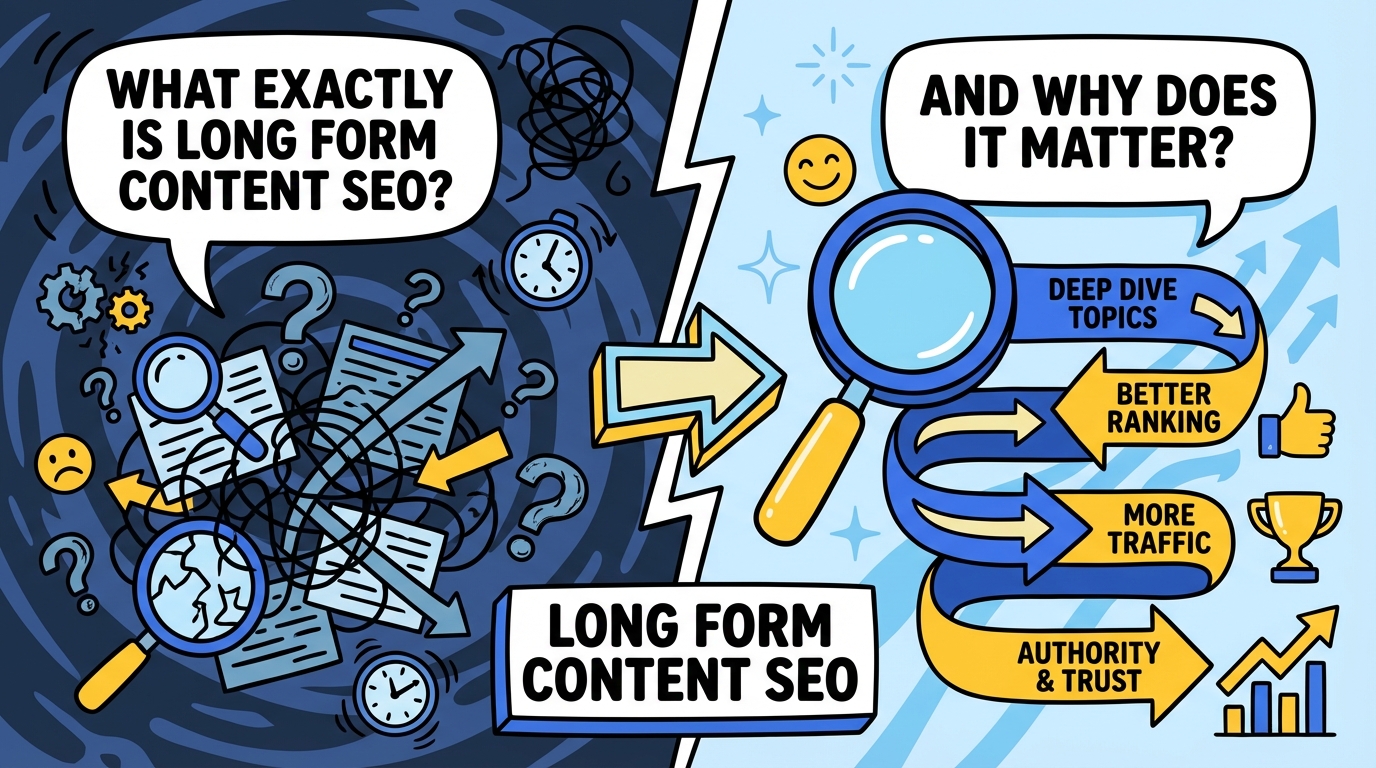
Long form content has become the backbone of successful SEO strategies, but creating content that ranks requires more than just hitting a high word count. In this comprehensive guide, you'll discover exactly how to optimize lengthy articles for search engines while maintaining reader engagement. Whether you're a marketing professional or business owner, these proven strategies will help you leverage long form content to dominate search results and drive meaningful traffic to your website.
What Exactly Is Long Form Content SEO and Why Does It Matter?
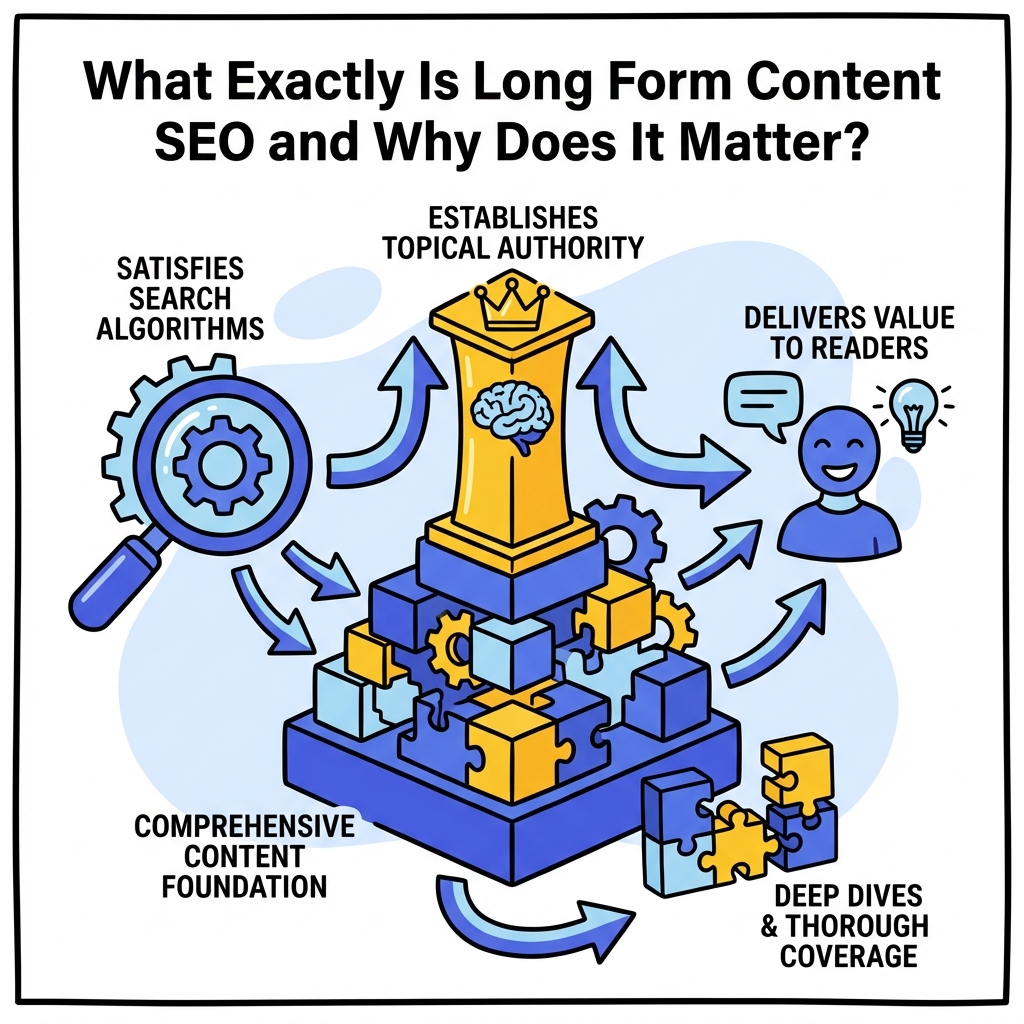
Long form content SEO refers to the strategic creation and optimization of in-depth articles, typically exceeding 1,500 words, designed to comprehensively cover topics while satisfying search engine algorithms. Unlike shorter pieces, long form content allows you to establish topical authority, capture multiple keyword variations, and provide the depth that both users and search engines crave.
Search engines have consistently shown preference for comprehensive content that thoroughly addresses user intent. Google's algorithm updates increasingly favor content that demonstrates expertise, authoritativeness, and trustworthiness (E-A-T). Long form pieces naturally accommodate these requirements by allowing space for detailed explanations, examples, and supporting evidence.
The strategic advantage of long form content lies in its ability to capture long-tail keywords naturally while addressing multiple search intents within a single piece. This approach not only improves your chances of ranking for primary keywords but also helps you capture traffic from related searches that shorter content might miss.
How to Research and Plan Your Long Form Content Strategy
Step 1: Conduct Comprehensive Keyword Research
Begin your long form content journey with thorough keyword research that goes beyond primary terms. Use tools like SEMrush, Ahrefs, or Google Keyword Planner to identify not just your main keyword, but also related terms, questions, and long-tail variations your audience searches for.
Create a keyword map that includes:
- Primary keyword (main focus)
- Secondary keywords (2-3 supporting terms)
- Long-tail variations (specific phrases)
- Question-based keywords (what, how, why queries)
- Related semantic terms
Step 2: Analyze Search Intent and Competition
Understanding search intent is crucial for long form content success. Analyze the top-ranking pages for your target keywords to identify what type of content performs best. Look for patterns in content structure, depth, and the specific questions being answered.
Study your competitors' long form pieces to identify content gaps you can fill. This competitive analysis reveals opportunities to create more comprehensive, valuable content that outperforms existing results.
What Are the Essential Elements of SEO-Optimized Long Form Content?
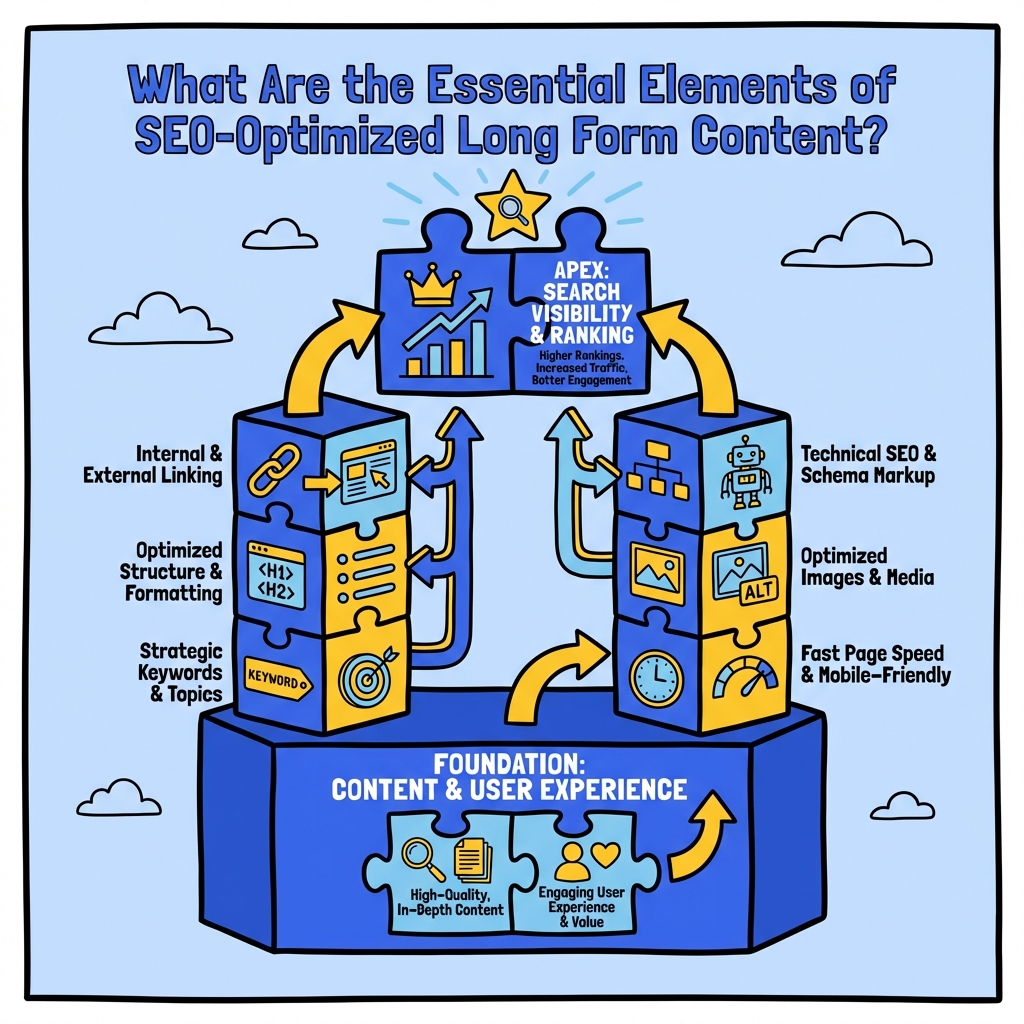
Successful long form content SEO requires specific structural and technical elements that work together to improve search visibility and user experience.
| Element | Purpose | Best Practice |
|---|---|---|
| Title Tag | Primary ranking signal | Include main keyword within 60 characters |
| Headings (H1-H6) | Content structure | Use keyword variations in subheadings |
| Meta Description | Click-through rates | Compelling 150-160 character summary |
| Internal Links | Site authority distribution | 3-5 relevant internal links per 1,000 words |
| External Links | Credibility and context | 2-3 authoritative sources per article |
| Images/Media | Engagement and accessibility | Alt text with relevant keywords |
How to Optimize Content Length and Structure for Maximum SEO Impact
Finding the Optimal Word Count
While there's no magic number for long form content, research consistently shows that articles between 2,000-4,000 words tend to perform best in search results. However, focus on comprehensiveness rather than arbitrary word counts. Your content should be as long as necessary to thoroughly cover the topic without unnecessary fluff.
Consider these factors when determining length:
- Topic complexity and depth required
- Competitor content length analysis
- User intent and information needs
- Your expertise and available resources
Structuring for Readability and SEO
Break your long form content into digestible sections using clear headings and subheadings. This approach serves dual purposes: improving user experience and providing search engines with clear content signals. Each section should focus on a specific aspect of your main topic while maintaining logical flow throughout the piece.
Use transitional phrases and sentences to connect sections smoothly. This creates a cohesive reading experience that encourages users to consume your entire article, sending positive engagement signals to search engines. Remember that publishing timing can also impact your SEO performance, so coordinate your long form content releases strategically.
How to Incorporate Keywords Naturally in Long Form Content
Strategic Keyword Placement
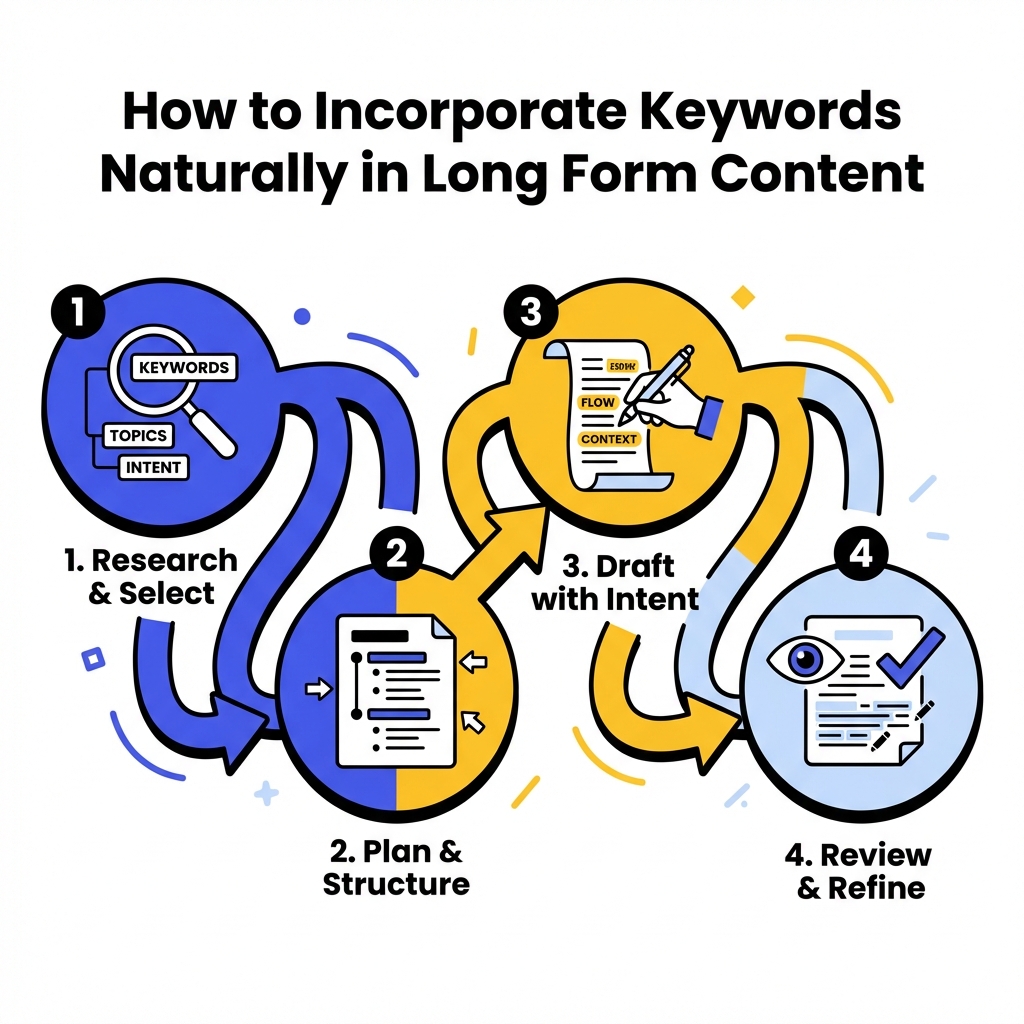
Effective long form content SEO requires natural keyword integration that doesn't compromise readability. Place your primary keyword in critical locations: title tag, first paragraph, at least one subheading, and conclusion. However, avoid keyword stuffing, which can harm your rankings and user experience.
Secondary keywords should appear throughout your content in contextually relevant locations. Long form pieces provide ample opportunity to include keyword variations and related terms without forcing them into the text. This natural distribution helps search engines understand your content's topic comprehensiveness.
Using Semantic Keywords and Related Terms
Modern search algorithms understand context and semantic relationships between words. Incorporate related terms, synonyms, and conceptually connected phrases throughout your long form content. This semantic richness helps search engines better categorize and rank your content for relevant searches.
What Role Does Content Automation Play in Long Form SEO?
Modern content creation increasingly relies on automation tools to streamline the long form content process. SEO content automation can help with research, outline creation, and optimization tasks, allowing you to focus on creating valuable, in-depth content.
However, automation should enhance rather than replace human expertise in long form content creation. The best results come from combining automated research and optimization tools with human insight, creativity, and subject matter expertise. This hybrid approach ensures your long form content maintains the quality and authenticity that both users and search engines value.
Consider leveraging AI-powered SEO analysis to identify optimization opportunities in your long form content while maintaining the human touch that creates truly engaging, valuable articles.
How to Measure and Improve Long Form Content Performance
Key Metrics to Track
Monitor specific metrics that indicate long form content SEO success:
- Organic traffic growth for target keywords
- Average session duration and pages per session
- Bounce rate and user engagement signals
- Keyword ranking improvements over time
- Social shares and backlink acquisition
- Conversion rates from organic traffic
Continuous Optimization Strategies
Long form content SEO requires ongoing refinement based on performance data. Regularly update your content with new information, refresh outdated statistics, and expand sections that show high user engagement. This maintenance signals to search engines that your content remains current and valuable.
Use tools like Google Search Console to identify which queries bring users to your long form content. This data reveals optimization opportunities and potential topics for future long form pieces.
Conclusion
Mastering long form content SEO requires a strategic approach that balances comprehensive coverage with user-focused optimization. By following these step-by-step guidelines, you'll create content that not only ranks well in search results but also provides genuine value to your audience. Remember that successful long form content SEO is an ongoing process that requires consistent effort, measurement, and refinement.
Ready to implement these long form content SEO strategies for your business? Fast SEO Fix specializes in helping companies develop and execute comprehensive content strategies that drive results. Contact us today to discover how our automated SEO solutions can accelerate your long form content success and improve your search rankings in 2026 and beyond.

Stefan Winter
Founder & SEO Expert
Founder of Fast SEO Fix and SEO automation expert. Stefan built Fast SEO Fix to solve the tedious problem of manual SEO work. He specializes in SEO optimized content generation, keyword research, and automated SEO strategies.
