What Is AI Powered SEO Analysis and Why Does It Matter?
Posted by
 Stefan Winter
How to Implement AI Powered SEO Analysis for Maximum Website Performance
Artificial intelligence has revolutionized how we approach search engine optimization, transforming what once required hours of manual work into automated, precise analysis. AI powered SEO analysis combines machine learning algorithms with traditional SEO metrics to deliver insights that human analysts might miss, helping websites achieve better rankings and increased organic traffic. In this comprehensive guide, you'll learn how to implement AI-driven SEO analysis tools and strategies that will elevate your website's search performance in 2026 and beyond.
What Is AI Powered SEO Analysis and Why Does It Matter?
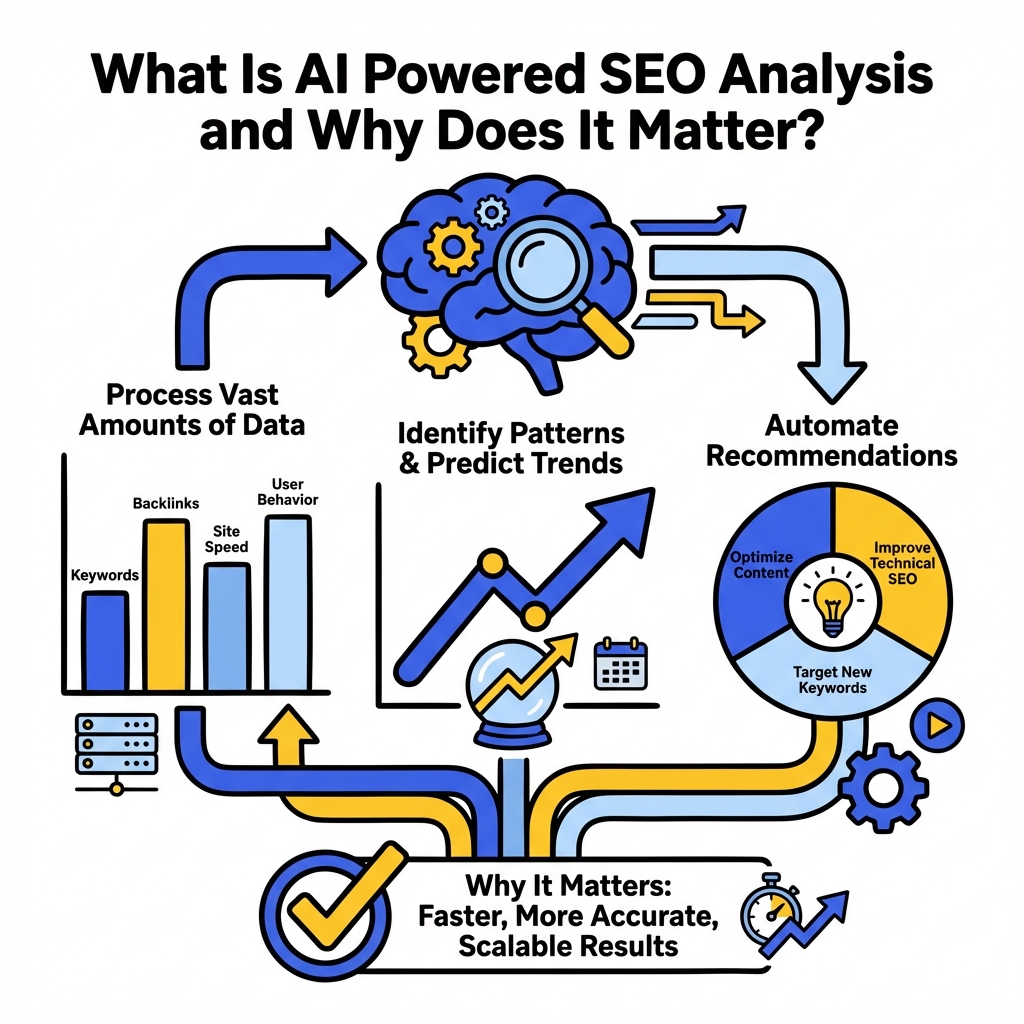
AI powered SEO analysis uses artificial intelligence to examine your website's performance across multiple ranking factors simultaneously. Unlike traditional SEO audits that focus on individual elements, AI systems can process vast amounts of data to identify patterns, predict trends, and recommend optimizations based on real-time search engine behavior.
Modern AI SEO tools analyze everything from technical site health and content quality to user engagement signals and competitor strategies. They can process millions of data points in seconds, providing actionable insights that would take human analysts days or weeks to compile. This comprehensive approach ensures no optimization opportunity goes unnoticed.
The technology becomes particularly powerful when integrated with automated SEO processes, creating a continuous improvement cycle for your website's search performance.
How to Choose the Right AI SEO Analysis Platform
Selecting the appropriate AI powered SEO analysis tool requires evaluating several critical factors that align with your specific needs and budget constraints.
Start by assessing the platform's data sources and accuracy. The best AI SEO tools integrate with multiple search engines and use proprietary algorithms trained on extensive datasets. Look for platforms that provide real-time data updates and can analyze both your website and competitor performance simultaneously.
Consider the tool's ability to handle technical SEO analysis alongside content optimization. Advanced AI platforms can identify crawl errors, analyze site speed across different devices, evaluate mobile responsiveness, and assess core web vitals while simultaneously reviewing content quality and keyword optimization.
Key Features to Evaluate
| Feature Category | Essential Capabilities | Impact Level |
|---|---|---|
| Technical Analysis | Site speed, crawl errors, mobile optimization | High |
| Content Intelligence | Keyword optimization, readability, semantic analysis | High |
| Competitor Insights | Gap analysis, strategy identification, trend prediction | Medium |
| Reporting & Automation | Custom dashboards, scheduled reports, alert systems | Medium |
| Integration Options | CMS connectivity, analytics platforms, third-party tools | High |
Step 1: Set Up Your AI SEO Analysis Foundation
Begin implementation by establishing clear baseline metrics and connecting your chosen AI platform to essential data sources. This foundational step ensures accurate analysis and meaningful progress tracking.
Connect your AI tool to Google Search Console, Google Analytics, and any existing SEO platforms you currently use. Most advanced AI systems can also integrate with content management systems like WordPress, Shopify, or custom-built platforms to provide comprehensive site analysis.
Configure your target keywords, competitor list, and geographic targeting parameters within the AI platform. The more specific information you provide, the more accurate and relevant your analysis results will become. Include both primary and long-tail keywords that align with your business objectives.
Step 2: Conduct Your Initial AI Powered Website Audit
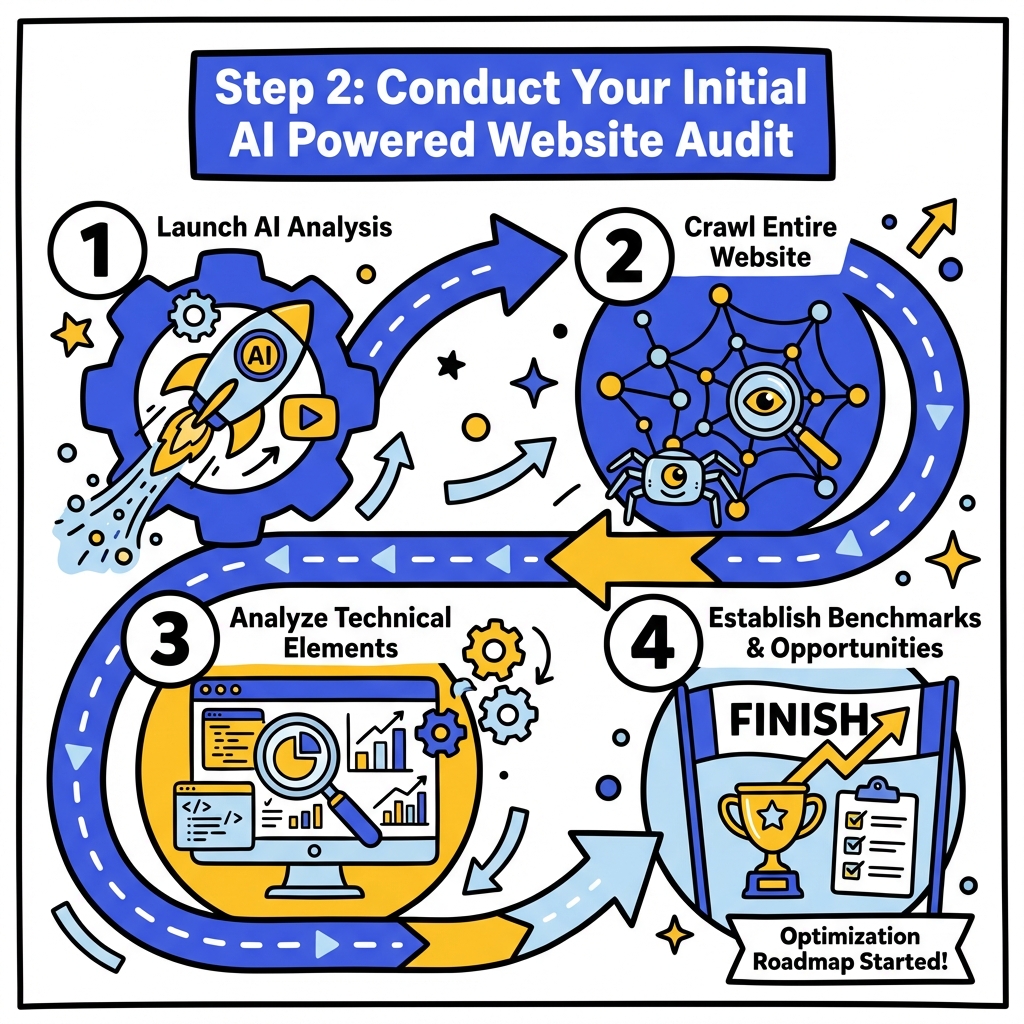
Launch your first comprehensive AI analysis to establish current performance benchmarks and identify immediate optimization opportunities. This initial audit serves as your starting point for measuring improvement over time.
Allow the AI system to crawl your entire website, analyzing technical elements, content quality, and user experience factors. Most platforms complete this process within 24-48 hours, depending on your site's size and complexity. During this time, the AI examines page load speeds, internal linking structures, meta tag optimization, and content relevance.
Review the generated report carefully, paying special attention to high-priority issues flagged by the AI system. These typically include critical technical problems that could significantly impact your search rankings if left unaddressed.
How to Interpret AI Generated SEO Insights
Understanding the data and recommendations provided by your AI powered SEO analysis platform is crucial for successful implementation. AI systems often present information differently than traditional SEO tools, requiring a new approach to data interpretation.
Focus on the priority scores assigned to different optimization opportunities. AI platforms typically rank recommendations based on potential impact and implementation difficulty, helping you allocate resources effectively. High-impact, low-effort changes should be addressed first to maximize your return on investment.
Pay attention to pattern recognition insights that AI tools excel at identifying. These might include seasonal keyword trends, user behavior patterns, or competitor strategy shifts that human analysts could easily overlook. According to Search Engine Land's research on AI in SEO, these pattern-based insights often lead to the most significant performance improvements.
Common AI Insight Categories
AI powered SEO analysis typically organizes findings into several key categories that require different response strategies:
Technical optimization insights focus on site performance, crawlability, and user experience factors. These recommendations often have immediate impact on search rankings and should be prioritized in your implementation timeline.
Content optimization suggestions analyze semantic relevance, keyword usage, and user engagement potential. The AI system compares your content against top-ranking pages for similar keywords, identifying gaps and opportunities for improvement.
Competitive intelligence insights reveal strategies used by successful competitors in your industry. This information helps you understand market trends and identify untapped opportunities for gaining competitive advantage.
Step 3: Implement Priority Optimizations Based on AI Recommendations
Begin executing the highest-priority recommendations identified during your AI analysis, starting with technical fixes that can provide immediate ranking benefits.
Address critical technical issues first, including page speed optimizations, mobile responsiveness problems, and crawl errors. These foundational elements directly impact how search engines access and evaluate your website content. Most AI platforms provide specific implementation guidance for technical fixes, making the process more straightforward than traditional SEO audits.
Move on to content optimizations once technical issues are resolved. AI powered analysis often identifies specific keywords, phrases, and topics that could improve your content's search performance. Unlike basic keyword tools, AI systems understand semantic relationships and user intent, providing more sophisticated content recommendations.
How to Monitor and Adjust Your AI SEO Strategy
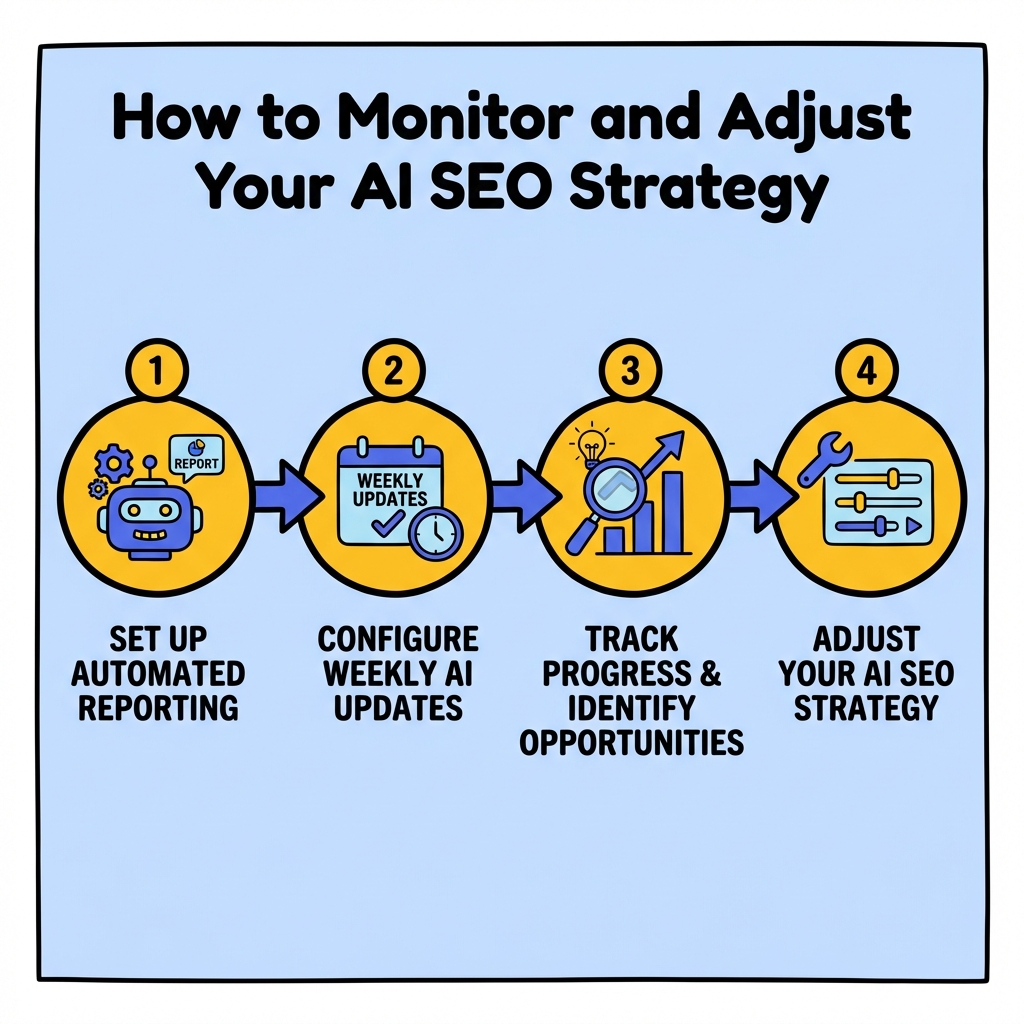
Continuous monitoring and adjustment are essential for maximizing the benefits of AI powered SEO analysis. Set up automated reporting and alert systems to track progress and identify new opportunities as they emerge.
Configure your AI platform to provide regular performance updates, typically weekly or monthly depending on your website's size and update frequency. These reports should track improvements in search rankings, organic traffic, and technical performance metrics identified during your initial analysis.
Use the AI system's predictive capabilities to anticipate future optimization needs. Many advanced platforms can forecast seasonal trends, algorithm changes, and competitive shifts that might impact your search performance. This forward-looking approach allows you to implement optimizations proactively rather than reactively.
The integration with comprehensive SEO automation strategies becomes particularly valuable during this monitoring phase, as it allows for continuous optimization without constant manual intervention.
Advanced AI Analysis Techniques for 2026
As AI technology continues evolving, new analysis techniques are becoming available that provide even deeper insights into search performance optimization opportunities.
Voice search optimization analysis uses AI to understand how people phrase spoken queries differently from typed searches. This technology helps optimize content for voice assistants and mobile voice search, which continue growing in importance for local and mobile SEO strategies.
Visual content analysis employs computer vision to evaluate images, videos, and other multimedia elements on your website. AI systems can now assess image quality, relevance, and optimization potential, providing recommendations for alt text, file names, and visual content strategy.
What Results Can You Expect from AI Powered SEO Analysis?
Realistic expectations help ensure successful implementation of AI powered SEO analysis tools and strategies. Most websites see initial improvements within 4-8 weeks of implementing AI recommendations, with more significant gains developing over 3-6 months.
Technical optimizations typically produce the fastest results, often improving page load speeds and crawlability within days of implementation. These improvements can lead to immediate ranking benefits for pages that were previously hindered by technical issues.
Content optimizations generally require more time to show results, as search engines need time to re-crawl and re-evaluate updated pages. However, AI-guided content improvements often produce more sustainable long-term gains than traditional optimization methods because they're based on comprehensive data analysis rather than assumptions.
According to Moz's latest SEO industry research, websites using AI powered SEO analysis tools report 35% faster improvement in search rankings compared to traditional SEO methods, with 60% seeing increased organic traffic within the first quarter of implementation.
Conclusion
AI powered SEO analysis represents the future of search optimization, offering unprecedented insights and automation capabilities that traditional methods simply cannot match. By following this implementation guide, you can leverage artificial intelligence to identify optimization opportunities, streamline your SEO workflow, and achieve better search performance results.
The key to success lies in choosing the right AI platform for your needs, properly interpreting the generated insights, and consistently implementing recommended optimizations. Remember that AI tools are most effective when combined with human expertise and strategic thinking, creating a powerful hybrid approach to SEO success.
Ready to revolutionize your SEO strategy with AI powered analysis? Start by evaluating your current SEO performance and identifying areas where artificial intelligence could provide the biggest impact for your website's search success.

Stefan Winter
Founder & SEO Expert
Founder of Fast SEO Fix and SEO automation expert. Stefan built Fast SEO Fix to solve the tedious problem of manual SEO work. He specializes in SEO optimized content generation, keyword research, and automated SEO strategies.
