What Makes DuckDuckGo Search Engine Different from Google?
Posted by
 Stefan Winter
How to Optimize Your Website for DuckDuckGo Search Engine: A Complete SEO Guide

Most website owners focus exclusively on Google optimization, but they're missing out on a rapidly growing search engine that prioritizes user privacy and delivers different ranking results. DuckDuckGo has gained over 100 million daily searches, making it a valuable traffic source that many businesses overlook. In this comprehensive guide, you'll learn exactly how to optimize your website for DuckDuckGo search engine, understand its unique ranking factors, and tap into this privacy-focused audience for increased organic traffic.
What Makes DuckDuckGo Search Engine Different from Google?
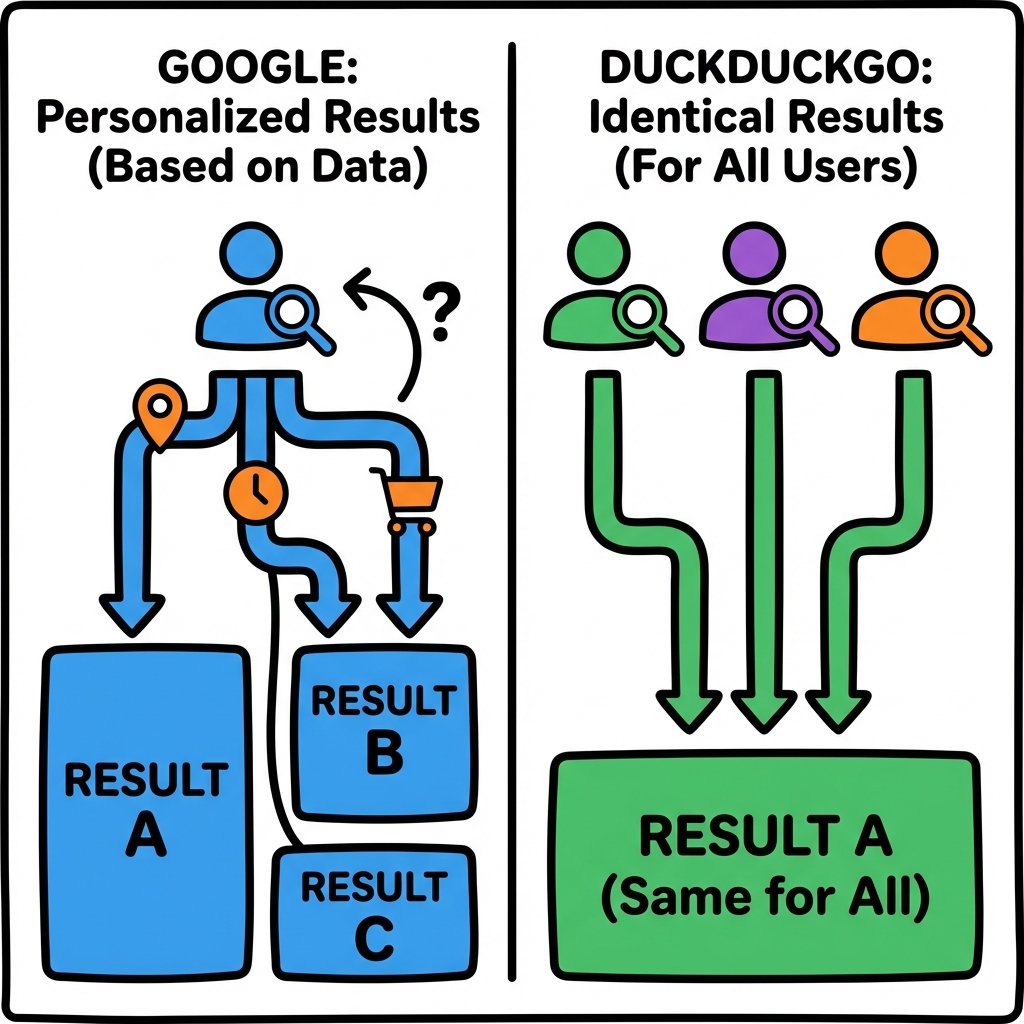
DuckDuckGo search engine operates fundamentally differently from Google, which creates unique SEO opportunities. Unlike Google's personalized results based on user data tracking, DuckDuckGo delivers the same search results to all users for identical queries. This means your optimization efforts aren't competing against personalized algorithms or user history.
The search engine doesn't store personal information, track users across websites, or create advertising profiles. This privacy-first approach attracts users who value anonymity and want unbiased search results. According to DuckDuckGo's official traffic data, the platform has experienced consistent growth, reaching billions of searches annually.
DuckDuckGo pulls results from multiple sources, including its own web crawler, Bing, Yahoo, and specialty databases. This diverse sourcing means your content has multiple pathways to appear in search results, unlike relying solely on Google's single algorithm.
How Does DuckDuckGo Rank Websites?
Understanding DuckDuckGo's ranking methodology is crucial for effective optimization. The search engine emphasizes content relevance and quality without the complex personalization layers found in other search engines. Here's how DuckDuckGo evaluates and ranks websites:
DuckDuckGo search engine prioritizes exact keyword matches more heavily than Google does. If someone searches for "organic traffic strategies," pages with that exact phrase in titles, headings, and content often rank higher than pages optimized for semantic variations. This creates opportunities for businesses willing to target specific keyword phrases.
The platform also values fresh, regularly updated content. Since DuckDuckGo doesn't rely on extensive user behavior data, it places greater weight on content recency and site activity. Websites that publish new content consistently often see better rankings than static sites, even if the static sites have higher domain authority.
Core Ranking Factors for DuckDuckGo
DuckDuckGo search engine uses several key factors to determine rankings:
Content Quality and Relevance: Pages must directly answer user queries with comprehensive, well-structured information. Thin content or keyword stuffing performs poorly across all DuckDuckGo results. Technical SEO Foundation: Clean HTML structure, fast loading speeds, and mobile responsiveness remain essential. DuckDuckGo crawlers evaluate these technical elements when indexing pages. Domain Authority and Trust Signals: While less emphasized than on Google, established domains with consistent publishing schedules and quality backlinks still perform better in DuckDuckGo results.Step-by-Step Guide to DuckDuckGo Optimization
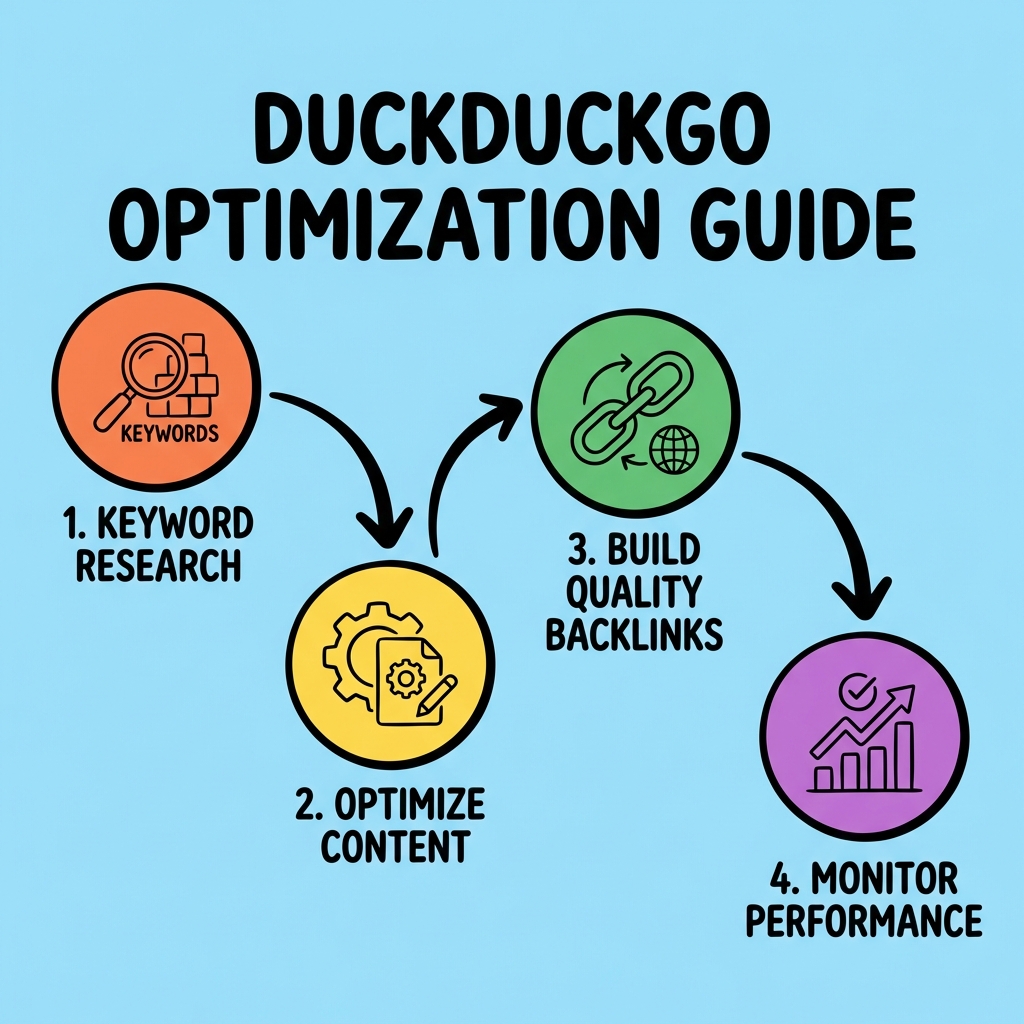
Step 1: Research DuckDuckGo-Specific Keywords
Start by conducting keyword research specifically for DuckDuckGo search engine. Use the platform's search suggestions and analyze the types of results that appear for your target terms. DuckDuckGo users often search with different intent patterns than Google users, frequently seeking unbiased information or privacy-focused alternatives.
Test your primary keywords directly in DuckDuckGo to understand the competitive landscape. Look for gaps where comprehensive content could rank well. Since DuckDuckGo shows fewer ads and knowledge panels, organic results get more visibility than on other search engines.
When developing your keyword research strategy, focus on long-tail phrases and specific questions. DuckDuckGo users tend to search with more detailed queries since they're not receiving personalized suggestions.
Step 2: Optimize Your Content Structure
DuckDuckGo search engine favors well-structured content with clear hierarchies. Use descriptive headings that include your target keywords naturally. Create comprehensive pages that thoroughly cover topics rather than thin pages targeting multiple keywords.
Structure your content with logical flow and clear sections. DuckDuckGo's algorithm appreciates content that's easy to parse and understand. Include relevant internal links to related pages, which helps the crawler understand your site's topical authority.
| Content Element | DuckDuckGo Best Practice | Impact Level |
|---|---|---|
| Title Tags | Include exact target keywords | High |
| Meta Descriptions | Write compelling, keyword-rich descriptions | Medium |
| H1 Headers | One per page with primary keyword | High |
| H2/H3 Headers | Use semantic keywords and variations | Medium |
| Internal Links | Link to related content with descriptive anchors | Medium |
| Content Length | Comprehensive coverage (1000+ words) | High |
Step 3: Implement Technical SEO Best Practices
Ensure your website meets technical standards that DuckDuckGo search engine expects. Focus on fast loading speeds, clean code, and proper XML sitemaps. DuckDuckGo crawlers are efficient but appreciate well-structured sites.
Implement schema markup to help DuckDuckGo understand your content context. While the search engine doesn't display rich snippets as extensively as Google, structured data still improves content comprehension and ranking potential.
Optimize for mobile devices since DuckDuckGo users access the platform across various devices. Responsive design and fast mobile loading speeds contribute to better rankings and user experience.
How to Track Your DuckDuckGo Performance?
Unlike Google's comprehensive Search Console, DuckDuckGo doesn't offer detailed webmaster tools. However, you can track your performance through several methods that provide valuable insights into your optimization success.
Monitor your overall organic traffic and look for patterns that might indicate DuckDuckGo referrals. Many analytics platforms group DuckDuckGo traffic under "organic search" or "direct traffic" due to the platform's privacy features. Set up UTM parameters for campaigns specifically targeting DuckDuckGo users to better track this traffic source.
Use third-party SEO tools that track rankings across multiple search engines. Tools like SEMrush and Ahrefs now include DuckDuckGo ranking data, allowing you to monitor your positions for target keywords. Regular rank tracking helps you understand which optimization efforts are working.
Creating DuckDuckGo-Focused Content
Develop content that appeals specifically to privacy-conscious users who choose DuckDuckGo search engine. These users often seek unbiased information, alternative solutions, and comprehensive guides without commercial bias. Your content marketing strategy should reflect these preferences.
Create in-depth, authoritative content that establishes your expertise. DuckDuckGo users appreciate thorough coverage of topics without excessive self-promotion. Focus on providing genuine value and answering questions completely within your content.
Why Should You Include DuckDuckGo in Your SEO Strategy?
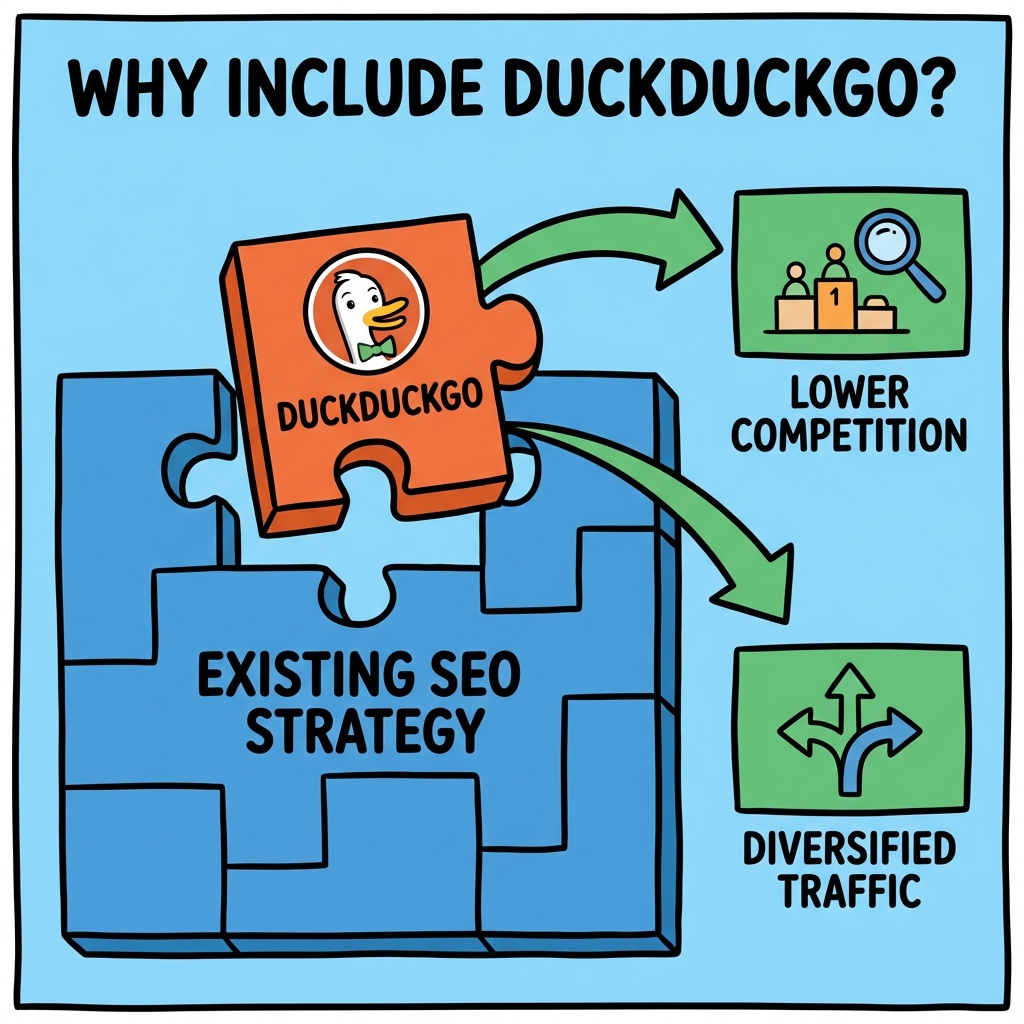
DuckDuckGo search engine represents a significant opportunity for businesses willing to diversify their traffic sources. While Google dominates search volume, DuckDuckGo's growing user base offers several advantages for smart marketers.
The competition on DuckDuckGo is generally lower than Google, especially for niche topics. This means well-optimized content can achieve higher rankings more quickly. Users who find your content through DuckDuckGo often demonstrate higher engagement rates since they're actively seeking unbiased information.
Privacy-conscious users tend to be more engaged and conversion-focused when they find relevant content. They're often researching purchases or solutions without the influence of personalized ads, making them valuable prospects for businesses that provide genuine value.
Understanding how to optimize for multiple search engines, including DuckDuckGo, strengthens your overall digital marketing strategy. Diversifying your traffic sources reduces dependence on any single platform and provides more stable organic growth.
Common DuckDuckGo Optimization Mistakes to Avoid
Many marketers make critical errors when optimizing for DuckDuckGo search engine. The most common mistake is applying Google SEO tactics without considering DuckDuckGo's unique characteristics. Over-optimization for semantic keywords, for example, can hurt rankings when exact keyword matches perform better.
Avoid neglecting the technical foundation of your website. While DuckDuckGo is more forgiving than Google in some areas, basic technical SEO remains crucial. Broken links, slow loading speeds, and poor mobile experience will hurt your rankings regardless of content quality.
Don't ignore the importance of fresh content. DuckDuckGo values recently updated pages more heavily than some other search engines. Static websites with outdated information struggle to maintain rankings even with strong domain authority.
Conclusion
Optimizing for DuckDuckGo search engine opens new opportunities for organic traffic growth that most businesses haven't explored. By understanding DuckDuckGo's unique ranking factors, implementing targeted optimization strategies, and creating content that appeals to privacy-conscious users, you can tap into a valuable traffic source with less competition than traditional search engines.
The key to DuckDuckGo success lies in focusing on exact keyword matches, maintaining fresh content, and providing comprehensive value to users seeking unbiased information. While the optimization process requires some different approaches than Google SEO, the potential for increased organic traffic makes it a worthwhile investment for forward-thinking businesses.
Ready to expand your organic traffic beyond Google? Start implementing these DuckDuckGo optimization strategies today and discover how this growing search engine can become a valuable part of your traffic generation strategy.

Stefan Winter
Founder & SEO Expert
Founder of Fast SEO Fix and SEO automation expert. Stefan built Fast SEO Fix to solve the tedious problem of manual SEO work. He specializes in SEO optimized content generation, keyword research, and automated SEO strategies.
