What Makes DuckDuckGo Search Different from Traditional Engines?
Posted by
 Stefan Winter
How to Master DuckDuckGo Search for Better Privacy and Results
Privacy-focused search has become a necessity, not a luxury. With data breaches and tracking concerns at an all-time high in 2026, millions of users are turning to DuckDuckGo as their primary search engine. But simply switching isn't enough. To truly harness the power of DuckDuckGo search, you need to understand its unique features, advanced operators, and optimization strategies that can transform your search experience while keeping your data completely private.
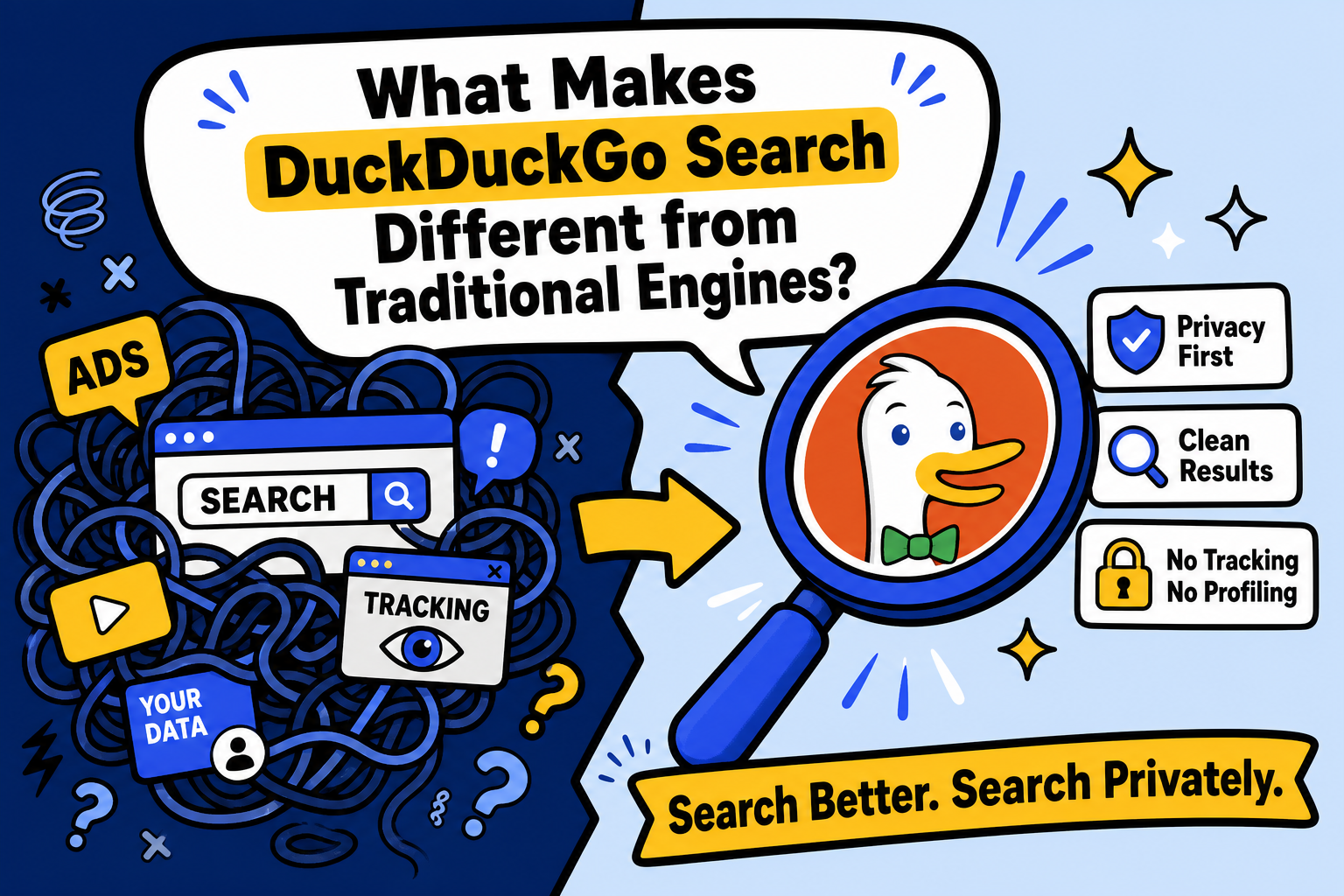
What Makes DuckDuckGo Search Different from Traditional Engines?
DuckDuckGo search operates on fundamentally different principles than Google or Bing. While traditional search engines create detailed user profiles based on your search history, location, and browsing behavior, DuckDuckGo treats every search as if it's the first time you've ever used the platform.
This privacy-first approach means no personalized results based on past searches, no filter bubbles, and no tracking cookies following you across the web. However, this also means you need to be more specific and strategic with your search queries to get the most relevant results.
The search algorithm focuses heavily on exact keyword matches, page authority, and content relevance without the personalization layer that other engines rely on. This creates both opportunities and challenges for users who want to maximize their search effectiveness.
How to Use Advanced DuckDuckGo Search Operators
Essential Search Operators for Power Users
DuckDuckGo search supports numerous advanced operators that can dramatically improve your search precision. The most powerful operators include:
Site-specific searches using `site:domain.com` allow you to search within specific websites. For example, `site:reddit.com best coffee makers 2026` will only return results from Reddit about coffee makers. Exact phrase matching with quotation marks ensures DuckDuckGo searches for your exact terms. Searching for `"content marketing strategy"` will only return pages containing that exact phrase, not variations or synonyms. Exclusion operators using the minus sign help eliminate unwanted results. If you're searching for apple recipes but don't want technology results, use `apple recipes -iphone -mac -technology`.Advanced Filtering Techniques
DuckDuckGo search offers sophisticated filtering options that many users overlook. The `filetype:` operator lets you search for specific document types. Using `climate change report filetype:pdf` will only return PDF documents about climate change reports.
Time-based filtering helps you find recent information by adding `after:2025` or `before:2024` to your searches. This is particularly valuable for finding current information on rapidly evolving topics.
Geographic filtering using `region:` can help you find location-specific results without compromising your privacy. For instance, `best restaurants region:us-ca` will prioritize California-based results.
What Search Strategies Work Best on DuckDuckGo?
The key to effective DuckDuckGo search lies in understanding that less personalization means more intentional querying. Unlike Google's algorithm that tries to guess what you want based on your history, DuckDuckGo requires clearer, more specific search terms.
Start with longer, more descriptive queries rather than short keyword phrases. Instead of searching for "SEO tips," try "comprehensive SEO optimization strategies for small businesses 2026." This approach helps DuckDuckGo's algorithm understand exactly what you're looking for without relying on personalization data.
Consider using natural language queries that match how people actually write about topics. DuckDuckGo often performs well with conversational search phrases that mirror the language used in articles and discussions. For content creators looking to optimize their material, understanding what makes DuckDuckGo search engine different from Google can inform your content strategy.
How to Optimize Your Content for DuckDuckGo Search Visibility?
Content optimization for DuckDuckGo search requires a different approach than traditional SEO. Since the platform doesn't track user behavior or create detailed profiles, it relies more heavily on on-page signals and content quality indicators.
Focus on comprehensive, well-structured content that thoroughly covers your topic. DuckDuckGo tends to favor longer-form content that provides complete answers to user queries. Include relevant keywords naturally throughout your content, but prioritize readability and value over keyword density.
Technical SEO elements become more important in DuckDuckGo search results. Ensure your site has clean HTML markup, fast loading times, and mobile responsiveness. The Mozilla Developer Network's SEO guidelines provide excellent technical foundations that align well with DuckDuckGo's preferences.
Content Structure That Performs Well
| Content Element | DuckDuckGo Preference | Implementation Tips |
|---|---|---|
| Title Tags | Exact keyword matches | Include primary keywords naturally |
| Headers | Clear hierarchy | Use H1, H2, H3 structure logically |
| Meta Descriptions | Descriptive summaries | Write for users, not algorithms |
| Content Length | Comprehensive coverage | Aim for thorough topic exploration |
| Internal Links | Contextual relevance | Link to related, valuable content |
Why Should Content Creators Care About DuckDuckGo Search Optimization?
The growing privacy movement has made DuckDuckGo search increasingly important for content creators and marketers. With over 100 million daily searches as of 2026, according to DuckDuckGo's official traffic statistics, the platform represents a significant audience that values privacy and authentic content.
Users who choose DuckDuckGo often have different search behaviors and preferences compared to traditional search engine users. They tend to be more tech-savvy, privacy-conscious, and skeptical of overly commercialized content. This audience responds well to authentic, informative content that provides genuine value without aggressive marketing tactics.
For businesses developing their digital marketing strategy, incorporating DuckDuckGo search optimization can help reach this valuable demographic. Understanding what are content marketing tools and why do they matter becomes crucial when adapting your approach for privacy-focused search platforms.
How to Measure Success in DuckDuckGo Search Results?
Measuring performance in DuckDuckGo search presents unique challenges since the platform doesn't provide the detailed analytics available from Google Search Console. However, several strategies can help you track your DuckDuckGo search visibility and performance.
Monitor your overall organic traffic patterns and look for increases that don't correlate with Google Search Console data. These unexplained traffic spikes often indicate improved DuckDuckGo search rankings. Use privacy-focused analytics tools that can help identify traffic sources without compromising user privacy.
Direct traffic measurements become more important with DuckDuckGo users, as they're more likely to bookmark sites and return directly rather than searching repeatedly. Track branded search terms and monitor increases in direct traffic as indicators of growing DuckDuckGo search visibility.
Setting Up Privacy-Friendly Analytics
Traditional analytics tools may not capture the full picture of DuckDuckGo search traffic due to privacy protections. Consider implementing privacy-friendly analytics solutions that respect user privacy while still providing valuable insights about your content performance.
Focus on engagement metrics rather than detailed user tracking. Time on page, bounce rate, and content interaction rates provide valuable insights about how well your content serves DuckDuckGo search users without compromising their privacy.
What Common Mistakes Should You Avoid with DuckDuckGo Search?
Many users and content creators make critical errors when adapting to DuckDuckGo search. The biggest mistake is assuming that Google SEO strategies will work identically on DuckDuckGo. While there's overlap, the lack of personalization and different ranking factors require adjusted approaches.
Avoid over-optimizing for keywords at the expense of content quality. DuckDuckGo users are typically more discerning and will quickly leave pages that feel overly commercialized or keyword-stuffed. Focus on creating genuinely helpful content that thoroughly addresses user needs.
Don't neglect technical SEO fundamentals. Since DuckDuckGo can't rely on user behavior signals as heavily as other search engines, technical factors like site speed, mobile responsiveness, and clean code become more influential in rankings.
Conclusion
Mastering DuckDuckGo search requires understanding its privacy-first philosophy and adapting your approach accordingly. By using advanced search operators, creating comprehensive content, and focusing on technical excellence, you can effectively leverage this growing search platform. Whether you're a user seeking better search results or a content creator aiming to reach privacy-conscious audiences, DuckDuckGo search offers unique opportunities for those willing to adapt their strategies.
Ready to optimize your content for DuckDuckGo and other search platforms? Explore our comprehensive SEO content creation services to develop a privacy-friendly search strategy that reaches your target audience effectively.

Stefan Winter
Founder & SEO Expert
Founder of Fast SEO Fix and SEO automation expert. Stefan built Fast SEO Fix to solve the tedious problem of manual SEO work. He specializes in SEO optimized content generation, keyword research, and automated SEO strategies.
