What Makes an SEO Automation Platform Essential in 2026?
Posted by
 Stefan Winter
How to Choose the Right SEO Automation Platform for Your Business in 2026

Selecting the perfect SEO automation platform can transform your digital marketing efforts from time-consuming manual tasks into streamlined, data-driven processes. With the SEO landscape evolving rapidly in 2026, businesses need sophisticated tools that can handle everything from keyword research to content optimization automatically. This comprehensive guide will walk you through the essential steps to identify, evaluate, and implement the ideal SEO automation platform for your specific needs.
What Makes an SEO Automation Platform Essential in 2026?

SEO automation platforms have become indispensable tools for modern businesses looking to scale their search engine optimization efforts efficiently. These comprehensive systems integrate multiple SEO functions into a single dashboard, eliminating the need to juggle dozens of separate tools while ensuring consistent optimization across all your digital assets.
The primary advantage of an SEO automation platform lies in its ability to handle repetitive tasks that would otherwise consume hours of manual labor. From automated keyword tracking and competitor analysis to technical SEO audits and content optimization suggestions, these platforms free up your team to focus on strategic decision-making rather than data collection.
Modern SEO automation platforms also leverage artificial intelligence and machine learning algorithms to identify patterns and opportunities that human analysts might miss. This technological advancement allows businesses to stay ahead of algorithm changes and capitalize on emerging trends before competitors recognize them.
How Do You Assess Your Current SEO Automation Needs?
Before diving into platform comparisons, you must conduct a thorough audit of your existing SEO processes and identify specific pain points that automation can address. Start by documenting all current SEO activities, including keyword research, content creation, link building, technical audits, and performance tracking.
Create a detailed inventory of the tools you currently use and calculate the total time your team spends on each SEO task weekly. This baseline measurement will help you understand the potential time savings and ROI that an SEO automation platform could deliver. Additionally, identify gaps in your current workflow where manual processes create bottlenecks or inconsistencies.
Consider your team's technical expertise level when assessing needs. Some platforms require extensive technical knowledge to maximize their potential, while others offer user-friendly interfaces designed for marketing teams without deep technical backgrounds. Understanding your team's capabilities ensures you select a platform that will be actively utilized rather than abandoned due to complexity.
What Core Features Should Your SEO Automation Platform Include?
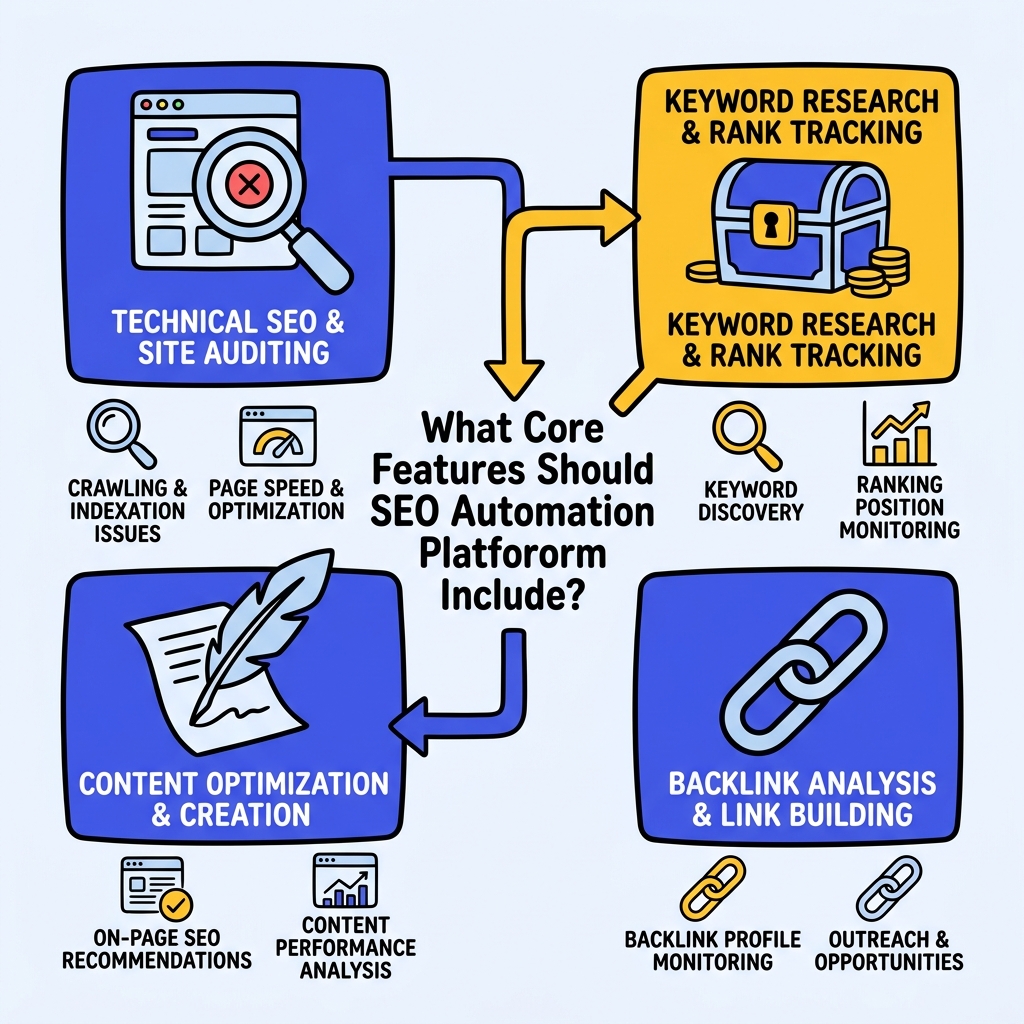
A comprehensive SEO automation platform should encompass several critical functionality areas to justify the investment and streamline your optimization efforts effectively. The following table outlines essential features and their primary benefits:
| Feature Category | Key Capabilities | Primary Benefits |
|---|---|---|
| Keyword Management | Automated tracking, competitor keyword discovery, search volume analysis | Identifies opportunities, monitors rankings, reduces manual research |
| Content Optimization | AI-powered suggestions, readability analysis, semantic keyword integration | Improves content quality, increases search visibility |
| Technical SEO | Site crawling, error detection, performance monitoring | Maintains site health, prevents ranking penalties |
| Link Building | Prospect identification, outreach automation, backlink monitoring | Scales link acquisition, tracks link quality |
| Reporting & Analytics | Custom dashboards, automated reports, ROI tracking | Demonstrates value, enables data-driven decisions |
How Important Is Integration Capability?
Integration capability represents one of the most crucial factors when selecting an SEO automation platform. Your chosen solution should seamlessly connect with existing tools in your marketing stack, including content management systems, analytics platforms, social media tools, and email marketing software.
Look for platforms that offer robust API access and pre-built integrations with popular tools like Google Analytics, Google Search Console, WordPress, HubSpot, and Salesforce. These connections enable data flow between systems, creating a unified view of your marketing performance and eliminating data silos that can hinder decision-making.
How Do You Evaluate Different SEO Automation Platform Options?
The evaluation process requires a systematic approach to compare platforms objectively and identify the best fit for your specific requirements. Begin by creating a shortlist of 3-5 platforms that meet your basic criteria, then request demos or free trials to gain hands-on experience with each solution.
During your evaluation, pay close attention to the platform's user interface and overall user experience. A powerful platform becomes useless if your team finds it too complicated or time-consuming to navigate. Test how quickly you can complete common tasks and assess whether the learning curve aligns with your team's available training time.
Examine the quality and accuracy of each platform's data sources. The most sophisticated automation features become counterproductive if they're based on inaccurate or outdated information. Verify that platforms source data from reputable providers and update their databases regularly to maintain reliability.
What Questions Should You Ask During Platform Demos?
Prepare a comprehensive list of questions before scheduling platform demonstrations to maximize the value of these sessions. Focus on understanding not just what features exist, but how they work in practice and what level of customization is available.
Key areas to explore include data accuracy and update frequency, scalability limitations, customer support quality, training resources availability, and the platform's roadmap for future feature development. Ask for specific examples of how the platform has helped similar businesses achieve their SEO goals, and request references you can contact independently.
How Do You Implement Your Chosen SEO Automation Platform Successfully?

Successful implementation requires careful planning and a phased approach to minimize disruption to your existing SEO efforts. Start by establishing clear goals and success metrics for the platform adoption, ensuring all team members understand how the new system will improve their workflows and contribute to overall business objectives.
Create a detailed implementation timeline that includes data migration, team training, and gradual feature rollout. Avoid the temptation to activate all features simultaneously, as this approach often leads to confusion and reduced adoption rates. Instead, focus on implementing core features first and expanding functionality as your team becomes comfortable with the platform.
Designate platform champions within your team who can become expert users and provide ongoing support to colleagues. These champions should receive advanced training and serve as the primary point of contact with the platform's customer success team during the initial implementation period.
How Do You Train Your Team Effectively?
Effective training extends beyond basic platform navigation to include strategic thinking about how automation can enhance existing processes. Develop role-specific training modules that focus on the features most relevant to each team member's responsibilities, rather than attempting to train everyone on every feature.
Consider the relationship between your SEO automation platform and your broader content creation strategy, ensuring team members understand how automated insights should inform content planning and optimization decisions. This integration approach maximizes the platform's value and ensures consistent application across all marketing activities.
What Metrics Should You Track to Measure Platform Success?
Establishing clear success metrics before implementation enables you to measure ROI accurately and identify areas where the platform delivers the most value. Focus on both efficiency metrics that demonstrate time savings and performance metrics that show improved SEO results.
Efficiency metrics should include time spent on routine SEO tasks, number of keywords tracked, frequency of competitor analysis, and speed of identifying technical issues. Performance metrics encompass organic traffic growth, keyword ranking improvements, conversion rate increases, and overall search visibility expansion.
According to Search Engine Journal's 2026 SEO automation study, businesses that implement comprehensive tracking systems see 40% better ROI from their SEO automation platforms compared to those that rely on basic metrics alone. This data underscores the importance of establishing robust measurement frameworks from the beginning.
How Do You Optimize Your SEO Automation Platform Over Time?
Platform optimization is an ongoing process that requires regular review and adjustment of automated processes to maintain effectiveness. Schedule monthly reviews to assess which automated tasks are delivering the expected results and identify opportunities for refinement or expansion.
Stay informed about new features and updates released by your platform provider, as these additions often address common user requests or respond to changes in the SEO landscape. Participate in user communities and attend platform-sponsored webinars to learn best practices from other users and discover advanced techniques that could benefit your implementation.
Consider how your SEO automation platform integrates with other content marketing tools and strategies to ensure you're maximizing the synergies between different aspects of your digital marketing efforts. This holistic approach often reveals optimization opportunities that aren't apparent when examining the platform in isolation.
Conclusion
Choosing the right SEO automation platform requires careful consideration of your specific needs, thorough evaluation of available options, and strategic implementation planning. The investment in a quality platform pays dividends through improved efficiency, better data-driven decision making, and enhanced SEO performance that drives sustainable business growth.
Remember that the most expensive or feature-rich platform isn't necessarily the best choice for your business. Focus on finding a solution that aligns with your team's capabilities, integrates well with your existing tools, and provides the specific automation features that will have the greatest impact on your SEO efforts.
Ready to transform your SEO processes with automation? Start by conducting the needs assessment outlined in this guide, then reach out to platform providers for demonstrations that will help you make an informed decision. The right SEO automation platform will become an invaluable asset that scales with your business and keeps you competitive in the evolving digital landscape.

Stefan Winter
Founder & SEO Expert
Founder of Fast SEO Fix and SEO automation expert. Stefan built Fast SEO Fix to solve the tedious problem of manual SEO work. He specializes in SEO optimized content generation, keyword research, and automated SEO strategies.
