What Makes an AI Writing Assistant the "Best" Choice?
Posted by
 Stefan Winter
TL;DR
The best AI writing assistant isn't about having the most features or highest price, but rather finding a tool that aligns with your specific content goals, budget, and workflow. When evaluating options, prioritize advanced language models, seamless integration with existing tools, SEO capabilities, and hands-on testing with your actual content requirements.
How to Choose the Best AI Writing Assistant for Your Content Strategy in 2026
Finding the right AI writing assistant can transform your content creation process, but with dozens of tools claiming to be the best, how do you choose? This comprehensive guide will walk you through everything you need to know about selecting the best AI writing assistant for your specific needs, from evaluating key features to implementing the tool effectively in your workflow.
What Makes an AI Writing Assistant the "Best" Choice?
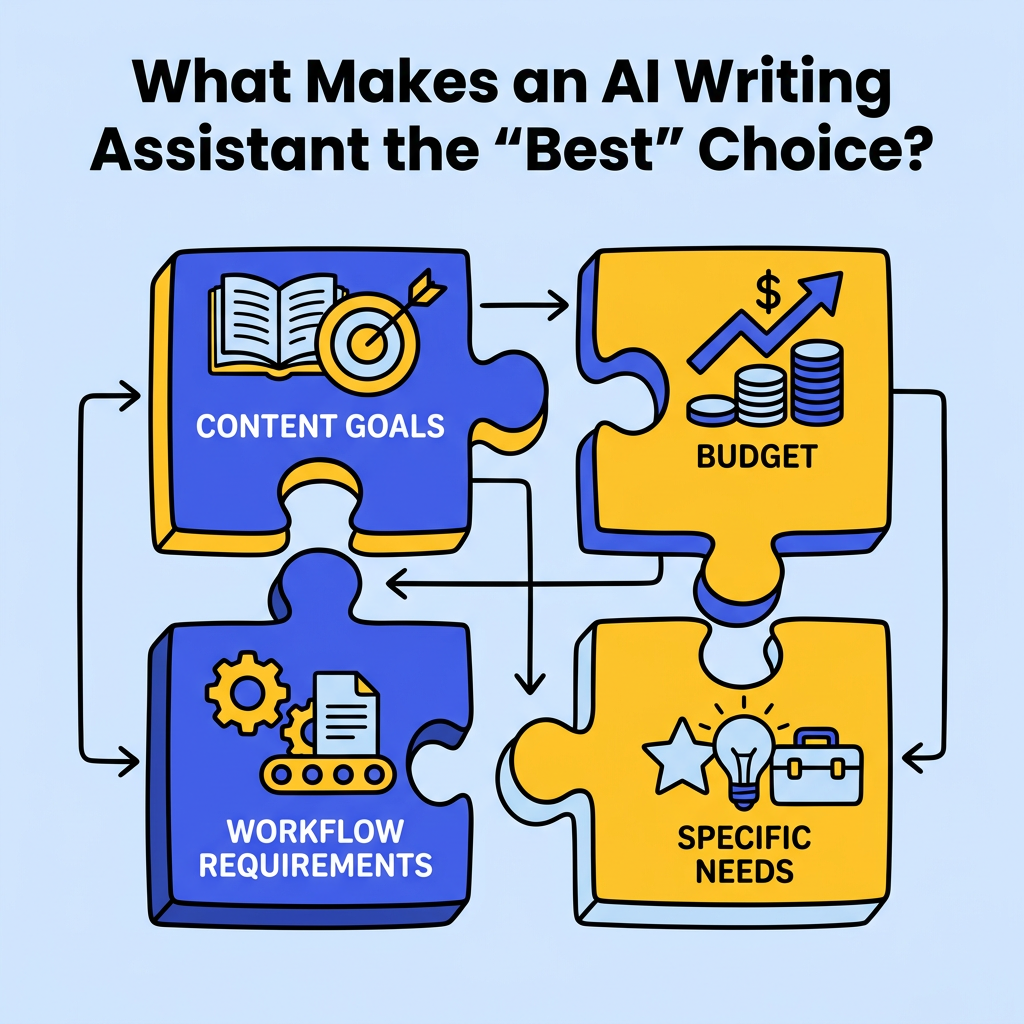
The best AI writing assistant isn't necessarily the most expensive or feature-packed option. Instead, it's the tool that aligns perfectly with your content goals, budget, and workflow requirements. When evaluating AI writing tools, you need to consider several critical factors that separate truly effective assistants from basic text generators.
First, look for advanced language models that understand context and nuance. The best AI writing assistants in 2026 use sophisticated neural networks trained on diverse, high-quality datasets. They can maintain consistent tone throughout long-form content, understand industry-specific terminology, and adapt their writing style to match your brand voice.
Second, prioritize tools that offer seamless integration with your existing content workflow. Whether you're creating blog posts, social media content, or email campaigns, the best AI writing assistant should enhance your process rather than complicate it.
How to Evaluate AI Writing Assistant Features That Matter
Core Writing Capabilities
When assessing the best AI writing assistant options, start with fundamental writing capabilities. Test each tool's ability to generate coherent, engaging content across different formats. The most effective AI writing assistants excel at various content types, from short-form social media posts to comprehensive blog articles.
Pay attention to how well the AI maintains consistency in tone and style throughout longer pieces. The best AI writing assistant tools can remember context from earlier paragraphs and maintain logical flow throughout entire articles. This capability becomes crucial when you're producing content at scale.
SEO and Optimization Features
Modern content creation requires SEO awareness, and the best AI writing assistant tools recognize this need. Look for features like keyword integration suggestions, readability scoring, and meta description generation. These capabilities help ensure your AI-generated content performs well in search results.
Some advanced AI writing assistants also provide content optimization recommendations based on top-performing articles in your niche. This feature can significantly improve your content's competitive potential. For more insights on optimizing your content creation process, explore our guide on SEO content creation strategies.
Step-by-Step Process for Testing AI Writing Assistants
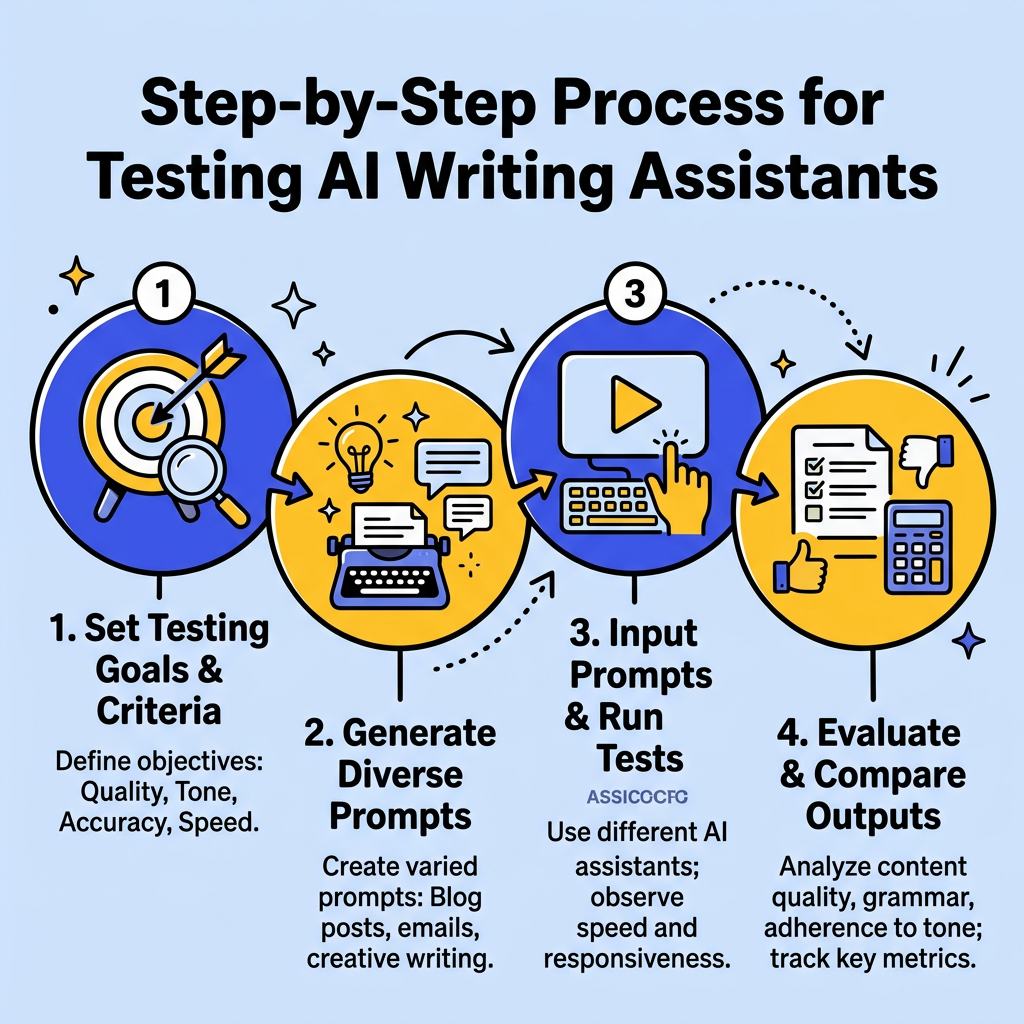
Step 1: Define Your Content Requirements
Before testing any AI writing assistant, clearly outline your content needs. Consider the types of content you create most frequently, your target audience, and your typical content volume. This foundation helps you evaluate which features matter most for your specific use case.
Create a test brief that includes your typical content requirements. Include details like target word count, desired tone, key topics, and any specific formatting needs. You'll use this brief to test each AI writing assistant consistently.
Step 2: Conduct Hands-On Testing
The only way to identify the best AI writing assistant for your needs is through practical testing. Most reputable AI writing tools offer free trials or demo versions. Take advantage of these opportunities to test each tool with your actual content requirements.
During testing, evaluate both the quality of initial outputs and the tool's ability to incorporate your feedback. The best AI writing assistant tools learn from your editing patterns and improve their suggestions over time.
| Feature | Why It Matters | What to Test |
|---|---|---|
| Content Quality | Determines usability of output | Generate 500-word blog post |
| Brand Voice Consistency | Maintains your unique style | Test with brand guidelines |
| SEO Integration | Improves search performance | Check keyword optimization |
| Editing Capabilities | Streamlines revision process | Make substantial edits |
| Speed and Reliability | Affects workflow efficiency | Test during peak hours |
Step 3: Evaluate Integration Capabilities
The best AI writing assistant should integrate smoothly with your existing tools and workflows. Test how well each option connects with your content management system, project management tools, and collaboration platforms.
Consider the learning curve involved in adopting each tool. Even the most powerful AI writing assistant won't benefit your team if it's too complex to implement effectively. Look for intuitive interfaces and comprehensive onboarding resources.
What Should You Expect from Premium AI Writing Features?
Premium AI writing assistants offer advanced capabilities that justify their higher price points. These typically include custom AI model training, advanced collaboration features, and priority customer support. However, not every content creator needs these premium features.
Advanced AI writing assistants often provide detailed analytics about your content performance, helping you understand which writing styles and topics resonate most with your audience. Some tools even offer predictive insights about content trends in your industry.
For teams managing multiple content projects, look for AI writing assistants with robust project management features. The best options allow multiple users to collaborate on content while maintaining version control and edit tracking. To complement your AI writing efforts, consider exploring SEO automation tools that can streamline your entire content workflow.
How to Implement Your Chosen AI Writing Assistant Effectively
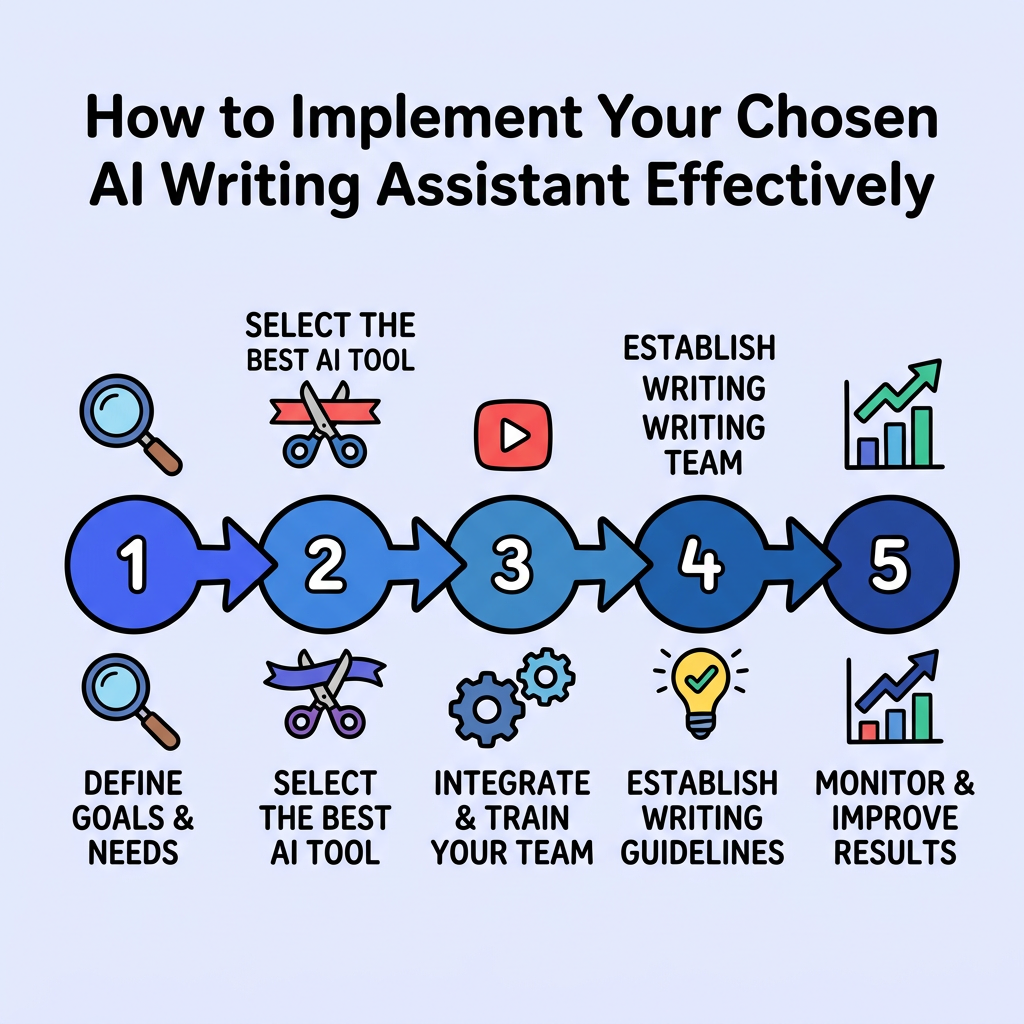
Setting Up Your AI Writing Workflow
Once you've selected the best AI writing assistant for your needs, proper implementation becomes crucial. Start by establishing clear guidelines for when and how your team will use the AI tool. Not every writing task requires AI assistance, and knowing when to use the tool maximizes its value.
Create templates and prompts that consistently produce high-quality outputs from your AI writing assistant. The most effective users develop a library of proven prompts for different content types and purposes. This approach ensures consistent quality and reduces the time spent refining AI-generated content.
Training Your Team on AI Writing Best Practices
The best AI writing assistant becomes even more powerful when your entire team understands how to use it effectively. Provide comprehensive training that covers both the technical aspects of using the tool and the strategic considerations for AI-assisted content creation.
Establish quality control processes that ensure AI-generated content meets your standards before publication. Even the best AI writing assistant produces content that requires human review and refinement. Develop checklists and review processes that maintain content quality while leveraging AI efficiency.
Common Mistakes to Avoid When Choosing AI Writing Tools
Many content creators focus too heavily on features they'll rarely use while overlooking essential capabilities they need daily. The best AI writing assistant for your situation might not be the tool with the most features. Instead, prioritize tools that excel at your most common content creation tasks.
Another common mistake involves inadequate testing before committing to a paid plan. Take time to thoroughly evaluate each AI writing assistant with realistic content scenarios. What works well for simple blog posts might struggle with complex technical content or specific industry terminology.
Don't overlook the importance of ongoing support and updates. The AI writing landscape evolves rapidly, and the best AI writing assistant providers consistently improve their tools based on user feedback and technological advances. Choose providers with strong track records of innovation and customer support.
Measuring Success with Your AI Writing Assistant
Key Performance Indicators to Track
After implementing your chosen AI writing assistant, establish metrics to measure its impact on your content creation process. Track both efficiency gains and quality improvements to ensure you're getting value from your investment.
Monitor metrics like content production speed, editing time required for AI-generated content, and overall content performance. The best AI writing assistant should demonstrably improve these metrics within the first few months of use.
Continuous Optimization Strategies
Your relationship with your AI writing assistant should evolve over time. Regularly review and refine your prompts, templates, and workflows based on results and feedback. The most successful users treat their AI writing assistant as a collaborative partner that improves with guidance and feedback.
Stay informed about new features and capabilities as AI writing technology continues advancing. The best AI writing assistant providers regularly add new functionality that could further enhance your content creation process.
Conclusion
Choosing the best AI writing assistant requires careful evaluation of your specific needs, thorough testing of available options, and strategic implementation. The right tool can dramatically improve your content creation efficiency while maintaining the quality and authenticity your audience expects.
Remember that the best AI writing assistant is the one that seamlessly integrates into your workflow and consistently produces content that aligns with your goals. Take time to properly evaluate your options, and don't hesitate to switch tools if your initial choice doesn't meet expectations.
Ready to transform your content creation process? Start by clearly defining your requirements, then systematically test the AI writing assistants that best match your needs. The investment in finding the right tool will pay dividends in improved efficiency and content quality throughout 2026 and beyond.
Frequently Asked Questions
Focus on advanced language models that understand context and nuance, seamless integration with your existing tools, SEO optimization features, content quality across multiple formats, and the ability to maintain consistent brand voice throughout longer pieces.
Define your specific content requirements first, then take advantage of free trials to conduct hands-on testing with your actual content needs. Test the tool's ability to incorporate feedback, evaluate integration capabilities with your existing systems, and assess the learning curve for your team.
No, the best AI writing assistant is the one that aligns with your specific needs and budget, not necessarily the most expensive or feature-packed option. Evaluate what features actually matter for your content strategy rather than paying for premium capabilities you won't use.
Premium features typically include custom AI model training, advanced collaboration tools for teams, priority customer support, detailed content performance analytics, and predictive insights about industry trends. These are most valuable for larger teams managing multiple content projects.
SEO integration is crucial for modern content creation, as it helps ensure your AI-generated content performs well in search results. Look for features like keyword integration suggestions, readability scoring, meta description generation, and optimization recommendations based on top-performing content in your niche.

Stefan Winter
Founder & SEO Expert
Founder of Fast SEO Fix and SEO automation expert. Stefan built Fast SEO Fix to solve the tedious problem of manual SEO work. He specializes in SEO optimized content generation, keyword research, and automated SEO strategies.
