What Exactly Is Small SEO and Why Does It Matter?
Posted by
 Stefan Winter
How to Master Small SEO for Big Results in 2026
Small businesses often feel overwhelmed by the complexity of search engine optimization, but small SEO doesn't have to be complicated or expensive. In fact, implementing focused, strategic SEO practices tailored specifically for smaller operations can deliver impressive results without requiring massive budgets or extensive technical expertise. This comprehensive guide will walk you through proven small SEO strategies that help local businesses, startups, and niche websites compete effectively against larger competitors while maximizing their limited resources.
What Exactly Is Small SEO and Why Does It Matter?
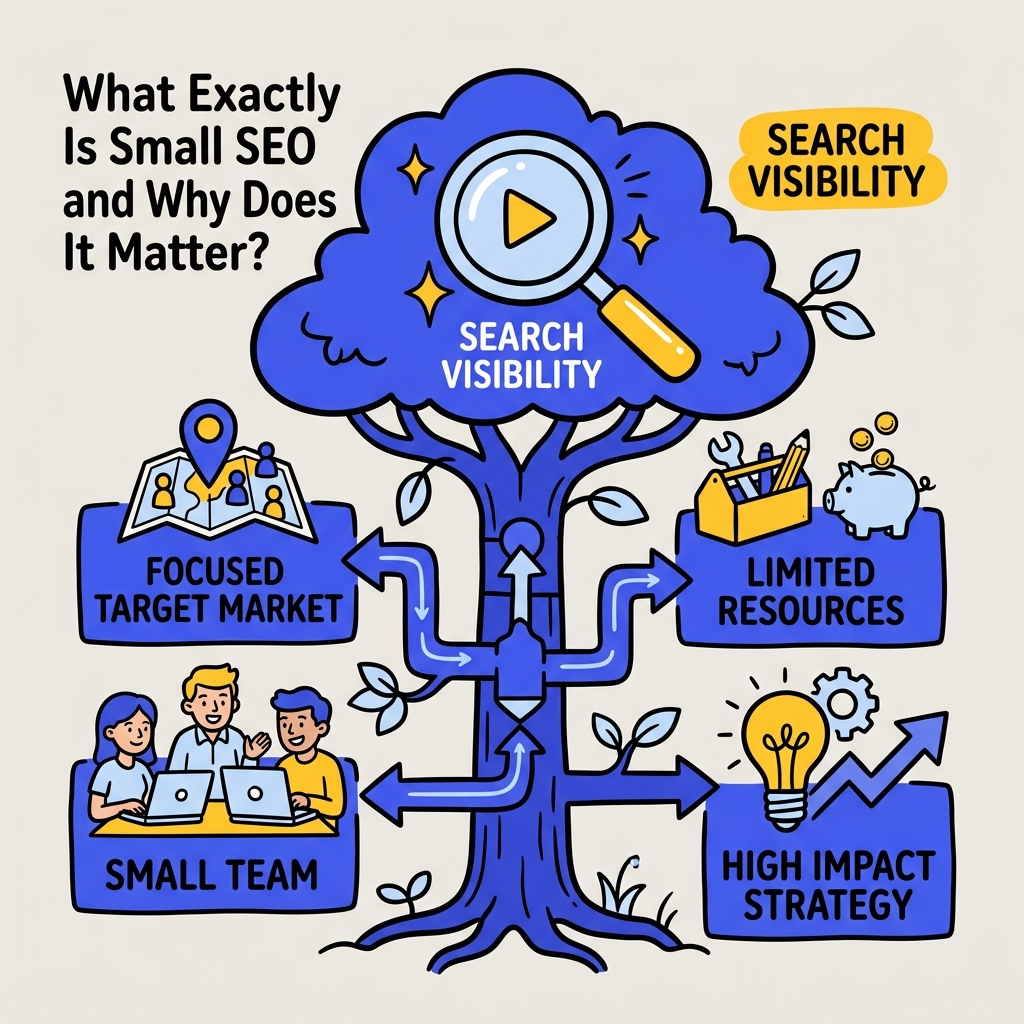
Small SEO refers to search engine optimization strategies specifically designed for businesses with limited resources, smaller teams, and focused target markets. Unlike enterprise SEO that often involves complex technical implementations and large-scale content operations, small SEO prioritizes high-impact, cost-effective tactics that deliver measurable results quickly.
The beauty of small SEO lies in its focused approach. Rather than trying to rank for thousands of keywords, small businesses can dominate specific niches by targeting long-tail keywords with lower competition but higher conversion potential. This targeted strategy often proves more profitable than broad, expensive campaigns that larger companies pursue.
According to Google's small business research, 76% of people who search for something nearby on their smartphone visit a business within a day. This statistic highlights why small SEO strategies focusing on local and niche optimization can be incredibly powerful for smaller operations.
How to Identify Your Small SEO Opportunities
The first step in successful small SEO involves identifying opportunities that larger competitors might overlook. Start by conducting keyword research focused on long-tail phrases that include location modifiers, specific product features, or niche terminology your target audience uses.
Use tools like Google's Keyword Planner or Ubersuggest to find keywords with search volumes between 100-1,000 monthly searches and low competition scores. These "small SEO sweet spots" often convert better than high-volume keywords because they capture users with specific intent.
Create a spreadsheet listing 20-30 target keywords, their monthly search volumes, competition levels, and current ranking positions. This becomes your small SEO roadmap for the next six months.
Building Your Small SEO Keyword Strategy
Focus on three types of keywords for maximum small SEO impact:
- Local keywords: "best [your service] in [your city]"
- Problem-solving keywords: "how to fix [specific problem]"
- Buying intent keywords: "[product] reviews" or "cheap [service] near me"
Step-by-Step Small SEO Implementation Process
Step 1: Optimize Your Google Business Profile
Your Google Business Profile serves as the foundation of effective small SEO. Ensure your profile includes complete business information, high-quality photos, regular posts, and encourages customer reviews. This free tool often provides the biggest small SEO impact for local businesses.
Step 2: Create Location-Specific Content
Develop content that speaks directly to your local market. Write blog posts about local events, community partnerships, or region-specific challenges your business solves. Our guide on what is content creation for SEO and why does it matter provides detailed strategies for creating content that ranks well in local searches.
Step 3: Build Strategic Local Citations
Submit your business information to relevant local directories, industry-specific platforms, and review sites. Consistency across all platforms strengthens your small SEO foundation and improves local search visibility.
Small SEO Content Strategies That Actually Work
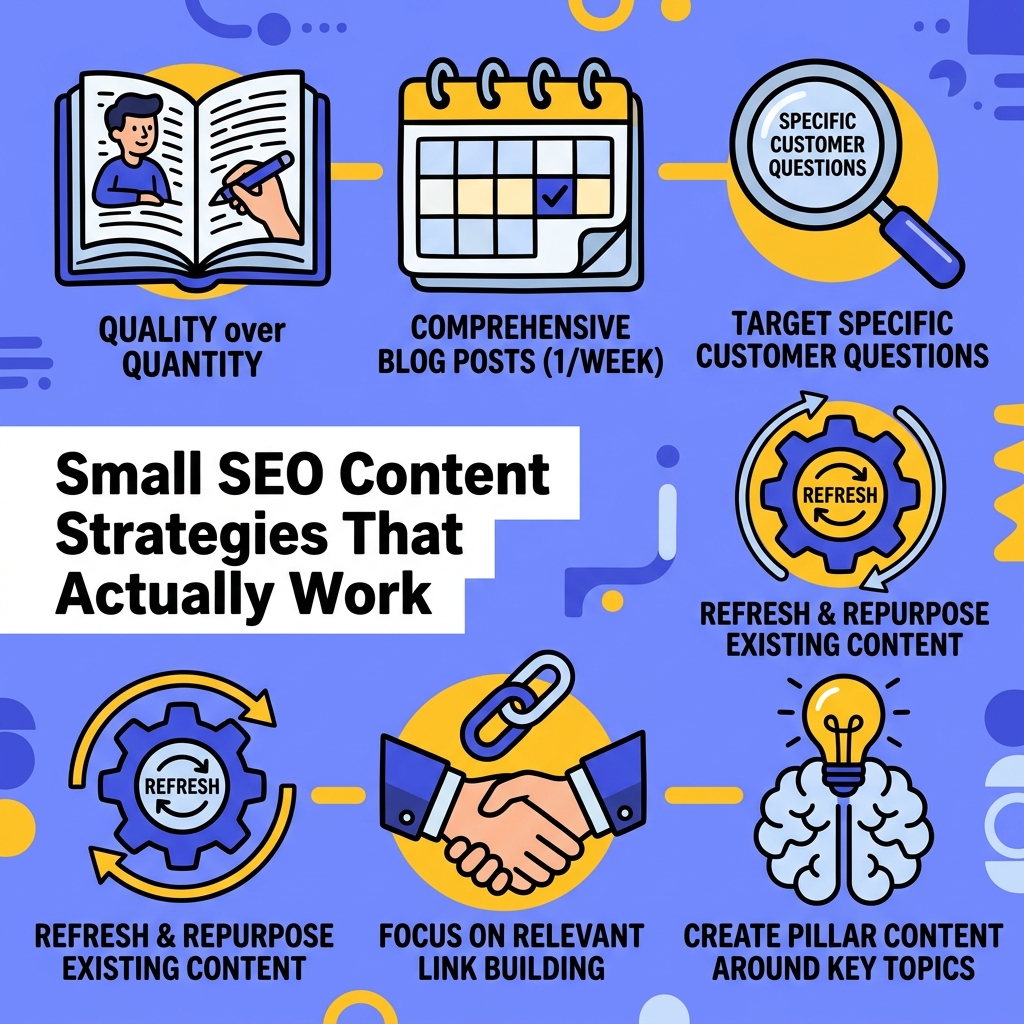
Content creation for small SEO requires a different approach than enterprise content marketing. Focus on quality over quantity, creating in-depth pieces that thoroughly address specific customer questions or problems.
Develop a content calendar featuring one comprehensive blog post per week rather than multiple shallow pieces. Each post should target one primary keyword from your small SEO list while naturally incorporating related terms. This focused approach allows you to build topical authority without overwhelming your resources.
Consider implementing professional content marketing services if creating consistent, high-quality content becomes challenging with limited internal resources.
Small SEO Content Types That Drive Results
| Content Type | Small SEO Benefit | Implementation Difficulty | Expected Timeline |
|---|---|---|---|
| Local Guide Posts | High local visibility | Easy | 2-4 weeks |
| FAQ Pages | Captures long-tail searches | Easy | 1-2 weeks |
| Customer Case Studies | Builds trust and authority | Medium | 3-6 weeks |
| How-to Tutorials | Attracts problem-solving searches | Medium | 2-4 weeks |
| Local Event Coverage | Timely local relevance | Easy | 1 week |
How to Measure Small SEO Success
Tracking small SEO performance requires focusing on metrics that matter most to smaller businesses. Rather than getting lost in vanity metrics, concentrate on measurements that directly impact your bottom line.
Monitor local search rankings for your target keywords monthly using tools like Google Search Console or affordable rank tracking software. Track organic traffic growth, but pay special attention to traffic from local searches and long-tail keywords.
Set up Google Analytics goals for key actions like contact form submissions, phone calls, or appointment bookings. These conversion metrics tell the real story of your small SEO success.
Key Small SEO Metrics to Track
- Local search ranking positions
- Organic traffic from target keywords
- Google Business Profile views and actions
- Conversion rate from organic traffic
- Average time on site for organic visitors
- Number of pages viewed per organic session
Advanced Small SEO Techniques for 2026
As search engines become more sophisticated, small SEO strategies must evolve beyond basic optimization. Voice search optimization becomes increasingly important, with more users asking conversational questions through smart devices.
Optimize for voice search by creating FAQ sections that answer questions in natural, conversational language. Structure content to directly answer common customer questions, as voice search results often pull from featured snippets.
Implement schema markup to help search engines better understand your content and business information. This technical small SEO element can significantly improve your visibility in local search results and rich snippets.
Leveraging Small SEO Automation
Modern small SEO benefits greatly from automation tools that handle repetitive tasks efficiently. Consider using SEO automation platforms to monitor rankings, track mentions, and identify new keyword opportunities without manual effort.
These tools allow small businesses to compete more effectively by automating time-consuming SEO tasks, freeing up resources for strategic planning and content creation.
Common Small SEO Mistakes to Avoid
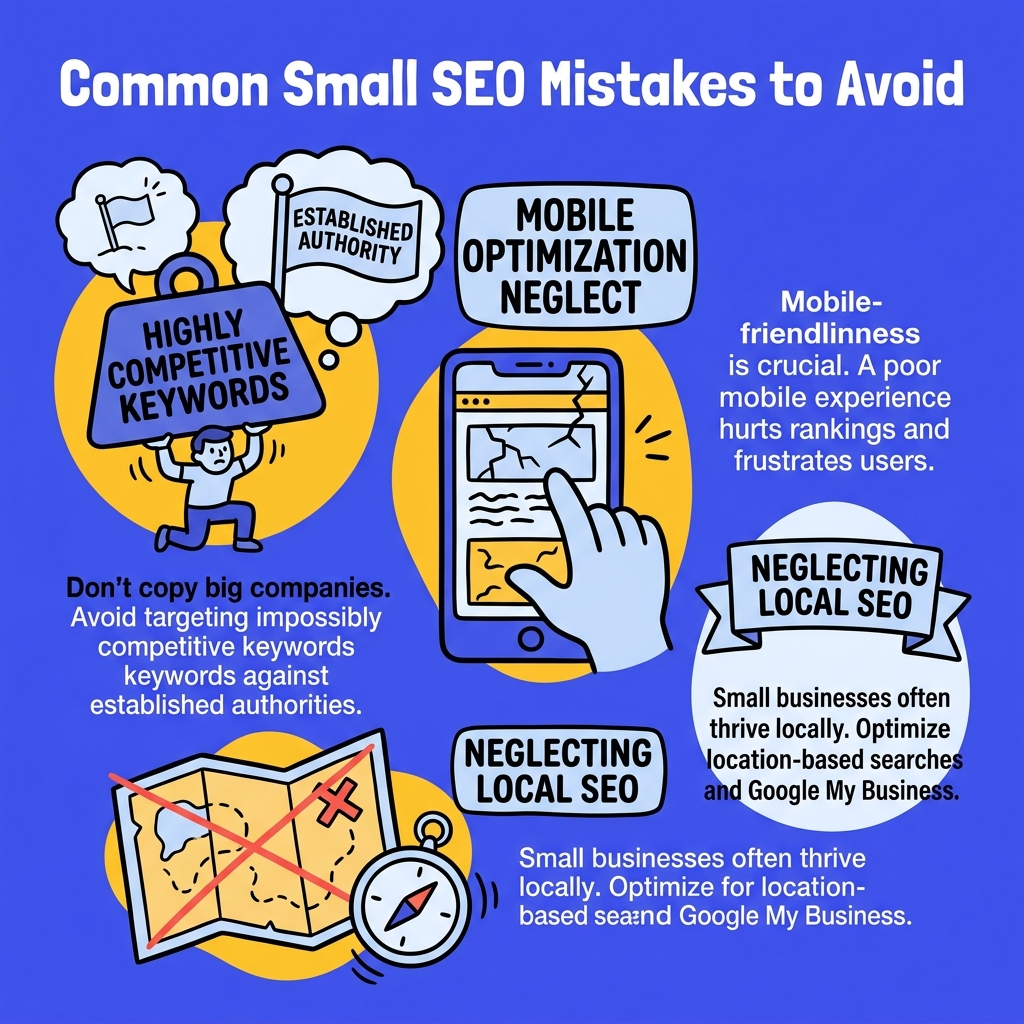
Many small businesses sabotage their SEO efforts by trying to copy strategies designed for larger companies. Avoid targeting highly competitive keywords where you'll struggle to rank against established authorities with massive link profiles and content teams.
Don't neglect mobile optimization, as mobile searches often have higher local intent. Ensure your website loads quickly on mobile devices and provides an excellent user experience across all screen sizes.
Resist the temptation to buy cheap backlinks or participate in link schemes. These tactics can result in penalties that devastate small business visibility. Instead, focus on earning natural links through quality content and local partnerships.
Building Long-Term Small SEO Success
Sustainable small SEO requires consistent effort and patience. Search engines reward websites that regularly publish helpful content and maintain accurate business information across all platforms.
Develop relationships with other local businesses, industry bloggers, and community organizations. These connections often lead to natural link-building opportunities and increased local visibility.
Stay informed about SEO best practices through reputable industry publications and Google's official documentation. Small SEO strategies must adapt as search algorithms evolve, but the fundamentals of providing value to users remain constant.
Conclusion
Small SEO success comes from focusing your limited resources on high-impact strategies that deliver measurable results. By targeting long-tail keywords, optimizing for local search, and creating valuable content consistently, small businesses can achieve remarkable search visibility without massive budgets.
Remember that small SEO is a marathon, not a sprint. Start with the foundational elements like Google Business Profile optimization and local citations, then gradually expand your content creation and technical optimization efforts. The key lies in consistent implementation rather than trying to do everything at once.
Ready to transform your small business visibility through strategic SEO? Start by implementing the keyword research strategies outlined in this guide, then gradually build your small SEO foundation one step at a time. Your future customers are searching for exactly what you offer – make sure they can find you.

Stefan Winter
Founder & SEO Expert
Founder of Fast SEO Fix and SEO automation expert. Stefan built Fast SEO Fix to solve the tedious problem of manual SEO work. He specializes in SEO optimized content generation, keyword research, and automated SEO strategies.
