What Exactly Is Paid Search and Why Should You Care?
Posted by
 Stefan Winter
TL;DR
Paid search advertising allows businesses to display ads in search results when users query specific keywords, offering intent-driven marketing with an average ROAS of $2 for every $1 spent. Success requires strategic keyword selection, compelling ad copy, and optimized landing pages that deliver on the ad's promise to convert clicks into customers.
How to Master Paid Search Campaigns That Actually Convert in 2026
Paid search advertising continues to evolve at breakneck speed, with new platforms, targeting options, and automation features emerging regularly. If you're struggling to create paid search campaigns that deliver real results, you're not alone. Many businesses waste thousands of dollars on poorly optimized campaigns that generate clicks but fail to convert visitors into customers.
This comprehensive guide will walk you through the essential steps to build, optimize, and scale paid search campaigns that drive meaningful business growth. You'll learn proven strategies that work across Google Ads, Microsoft Advertising, and other major platforms, plus discover how to integrate your paid efforts with your broader digital marketing strategy.
What Exactly Is Paid Search and Why Should You Care?
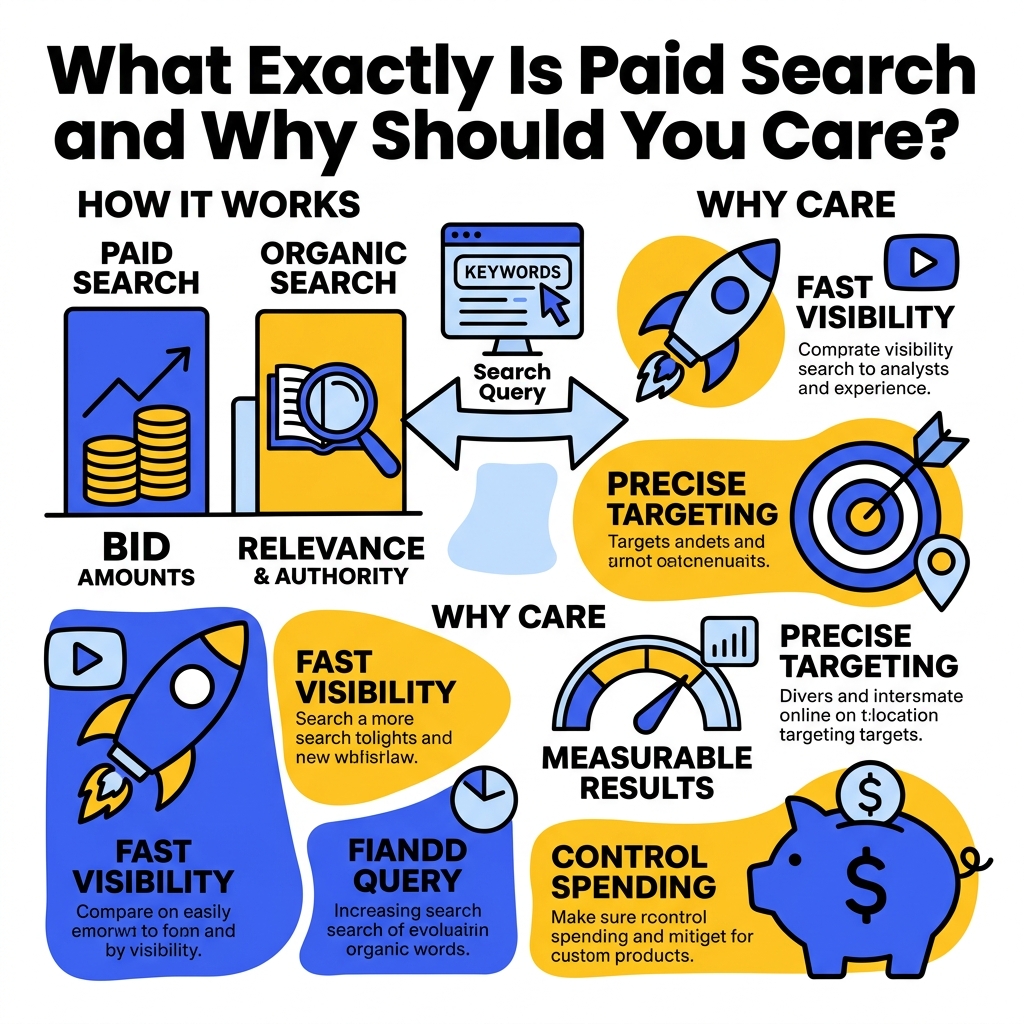
Paid search refers to the practice of paying search engines to display your advertisements in search results when users query specific keywords. Unlike organic search results, which appear based on relevance and authority, paid search ads are positioned based on bid amounts, ad quality, and relevance scores.
The beauty of paid search lies in its intent-driven nature. When someone searches for "best running shoes for marathon training," they're actively looking for a solution. Your well-crafted ad can appear at the exact moment they're ready to make a purchase decision. This timing advantage makes paid search one of the most effective digital marketing channels, with an average return on ad spend (ROAS) of $2 for every $1 invested, according to Google Economic Impact data.
Modern paid search platforms offer sophisticated targeting options that go far beyond simple keyword matching. You can target users based on their location, device type, time of day, previous website interactions, and even their likelihood to convert based on machine learning algorithms.
How Do You Choose the Right Keywords for Maximum Impact?
Keyword selection forms the foundation of every successful paid search campaign. The goal isn't to target the most popular keywords, but rather to find the sweet spot between search volume, competition, and commercial intent.
Start by brainstorming seed keywords that directly relate to your products or services. Use tools like Google Keyword Planner, SEMrush, or Ahrefs to expand this list and discover related terms your potential customers might use. Pay special attention to long-tail keywords, which often have lower competition and higher conversion rates despite smaller search volumes.
Consider the user's intent when selecting keywords. Navigational keywords (like "Amazon login") typically aren't valuable for most businesses, while commercial keywords (like "buy wireless headphones online") signal strong purchase intent. Informational keywords can be valuable for building awareness, but they usually require different ad copy and landing page approaches.
| Keyword Type | Example | Competition Level | Conversion Potential |
|---|---|---|---|
| Branded | "Nike running shoes" | Medium | High |
| Commercial | "buy running shoes online" | High | Very High |
| Long-tail | "best trail running shoes for wide feet" | Low | High |
| Informational | "how to choose running shoes" | Medium | Low |
What's the Secret to Writing Ad Copy That Converts?
Compelling ad copy bridges the gap between a user's search query and your solution. Your ads need to grab attention, communicate value, and encourage clicks within the character limits imposed by each platform.
Start with a headline that directly addresses the searcher's intent. If someone searches for "emergency plumber near me," your headline should immediately confirm that you provide emergency plumbing services in their area. Use dynamic keyword insertion sparingly and only when it creates natural-sounding copy.
Your ad description should highlight your unique value proposition. What makes your business different from competitors? Maybe you offer 24/7 service, have the lowest prices, or provide industry-leading warranties. Include specific benefits rather than generic features. Instead of "Quality products," try "30-day money-back guarantee" or "Free shipping on orders over $50."
Call-to-action phrases significantly impact click-through rates. Test different approaches like "Shop Now," "Get Free Quote," "Learn More," or "Start Your Free Trial." The best CTA depends on your business model and where users are in the buying journey. When developing your ad copy strategy, consider how it aligns with your overall content planning approach, as consistent messaging across all touchpoints improves conversion rates.
How Do You Optimize Landing Pages for Paid Search Traffic?
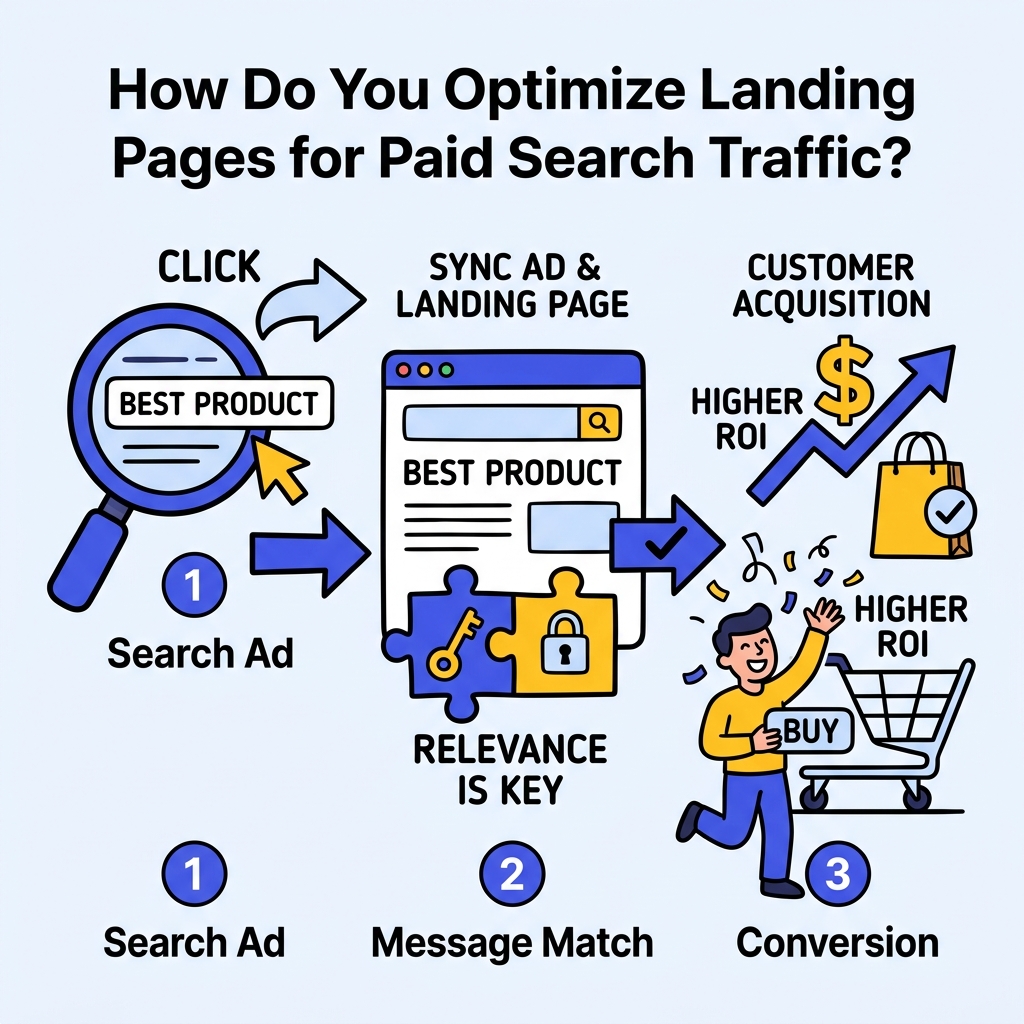
Your landing page experience determines whether paid search clicks convert into customers. Even the most compelling ad will fail if it leads to a poor landing page that doesn't deliver on the ad's promise.
Message match represents the most critical element of landing page optimization. Your landing page headline and main content should directly relate to the ad copy and keywords that brought users to your site. If your ad promotes "50% off winter coats," your landing page should prominently feature discounted winter coats, not your general clothing catalog.
Page loading speed dramatically affects conversion rates, especially for mobile users. According to Google's research on mobile page speed, the probability of bounce increases by 32% when page load time increases from 1 to 3 seconds. Optimize images, minimize redirects, and consider using accelerated mobile pages (AMP) for better performance.
Your landing page should have a single, clear goal. Remove navigation menus, sidebar links, and other distractions that might lead visitors away from your desired conversion action. Use contrasting colors for your call-to-action buttons and place them prominently above the fold.
What Bidding Strategies Actually Work in 2026?
Modern paid search platforms offer numerous automated bidding strategies powered by machine learning algorithms. Understanding when and how to use each strategy can significantly impact your campaign performance and budget efficiency.
Target CPA (Cost Per Acquisition) bidding works well when you have clear conversion tracking and sufficient historical data. The algorithm automatically adjusts bids to achieve your target cost per conversion. However, this strategy requires at least 30 conversions in the past 30 days to function effectively.
Target ROAS (Return on Ad Spend) makes sense for ecommerce businesses with varying product values. You set a target return ratio, and the platform optimizes bids to achieve that goal. For example, if you want to make $4 for every $1 spent on ads, you'd set a 400% target ROAS.
Enhanced CPC (Cost Per Click) provides a middle ground between manual bidding and full automation. You set maximum CPC bids, but the platform can increase or decrease them by up to 30% based on the likelihood of conversion. This strategy works well for businesses transitioning from manual to automated bidding.
Smart Bidding strategies require proper conversion tracking setup. Without accurate data, these algorithms can't optimize effectively. Make sure you're tracking all valuable actions, not just purchases. Newsletter signups, quote requests, and phone calls might all represent valuable conversions for your business.
How Can You Track and Measure Paid Search Success?
Effective measurement goes beyond basic metrics like clicks and impressions. You need to understand which campaigns, keywords, and ads drive real business value. This requires setting up comprehensive tracking systems and analyzing the right metrics for your goals.
Conversion tracking should capture your most important business outcomes. For ecommerce sites, this typically includes purchases, but don't ignore micro-conversions like email signups or product page views. Service businesses might track form submissions, phone calls, or appointment bookings. Use Google Analytics 4 and platform-specific tracking to get a complete picture of user behavior.
Attribution modeling helps you understand the customer journey across multiple touchpoints. A user might see your display ad, click a paid search ad, and then convert after visiting your site directly. Last-click attribution would credit only the direct visit, while data-driven attribution considers all interactions. Choose an attribution model that reflects your typical customer journey length and complexity.
Quality Score monitoring provides insights into ad relevance and user experience. Higher Quality Scores typically result in lower costs and better ad positions. Focus on improving expected click-through rate, ad relevance, and landing page experience to boost your scores. This optimization work often overlaps with your broader SEO content creation efforts, as both channels benefit from relevant, high-quality content.
What Advanced Strategies Separate Winners from Losers?
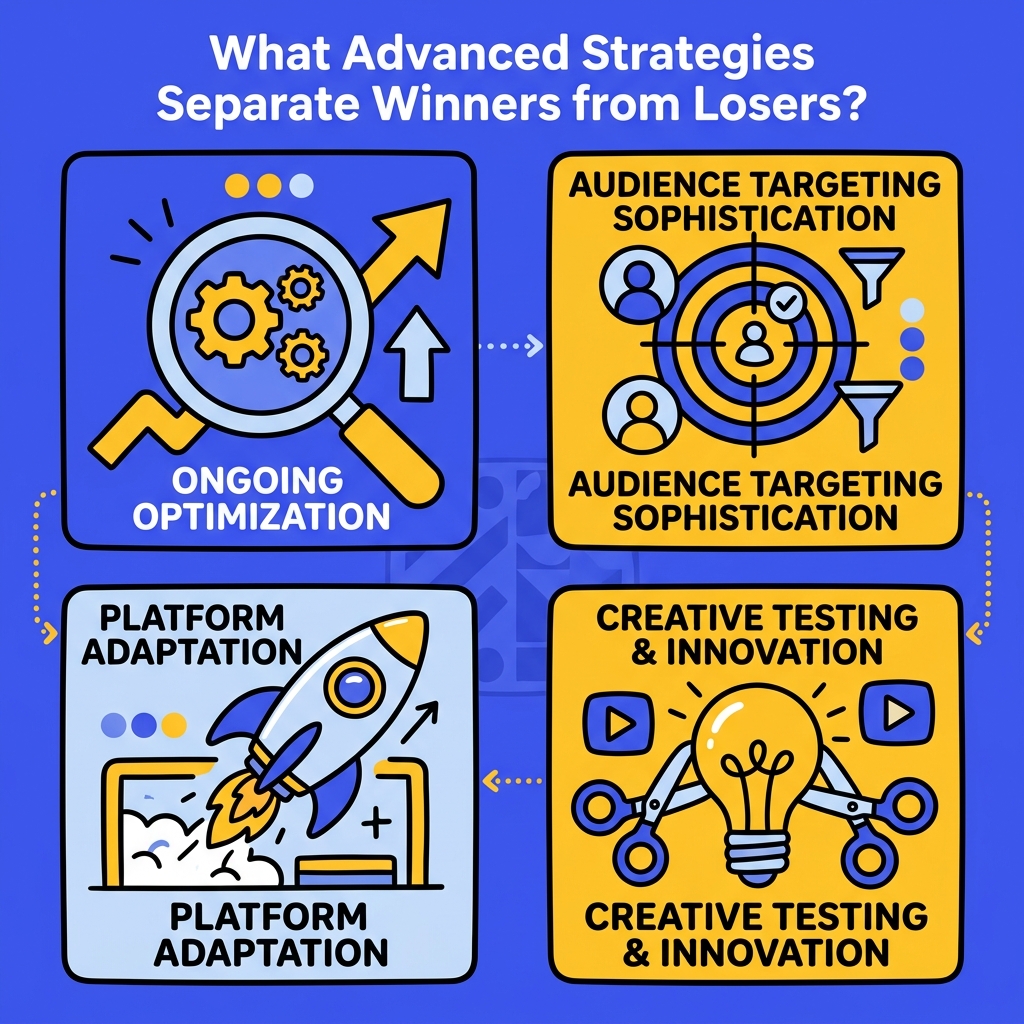
Successful paid search campaigns require ongoing optimization and testing. The strategies that worked last year might not be effective today, so you need to stay current with platform changes and emerging best practices.
Audience targeting has become increasingly sophisticated. You can target users who have visited specific pages on your website, people similar to your existing customers, or users who have interacted with your YouTube videos. Combine audience targeting with keyword targeting for more precise reach. For example, target your "past purchasers" audience with keywords related to complementary products.
Ad extensions provide additional real estate and information in your ads. Use sitelink extensions to highlight specific product categories, callout extensions to emphasize unique selling points, and structured snippet extensions to showcase service types or product brands. Extensions can significantly improve click-through rates and Quality Scores when used strategically.
Dayparting and geo-targeting optimization can dramatically improve campaign efficiency. Analyze your conversion data by time of day, day of week, and geographic location. You might discover that your ads perform better on weekday mornings or in specific metropolitan areas. Adjust your bids accordingly to maximize performance during high-converting periods and locations.
Cross-platform coordination ensures your paid search efforts complement other marketing channels. If you're running a brand awareness campaign on social media, consider how it might affect your paid search performance. Users exposed to your brand through multiple channels often convert at higher rates, so track assisted conversions to understand the full impact of your integrated approach.
How Do You Scale Successful Campaigns Without Breaking the Bank?
Once you've identified winning campaigns, keywords, and audiences, the next challenge is scaling those successes without sacrificing efficiency. Rapid scaling can lead to increased costs and decreased performance if not handled carefully.
Start by gradually increasing budgets for your best-performing campaigns. A 20-30% weekly budget increase allows the platform's algorithms to adjust without shocking the system. Monitor performance closely during scaling periods, as increased competition for your target keywords might require bid adjustments or ad copy improvements.
Expand your keyword lists systematically by analyzing search term reports. Look for queries that triggered your ads and converted well, then add them as exact match keywords with appropriate bids. This gives you more control over these valuable terms and often improves performance.
Geographic expansion should be data-driven rather than assumption-based. If your campaigns perform well in major metropolitan areas, test expansion to similar cities rather than rural areas. Use location bid adjustments to gradually test new markets without fully committing budget until you understand their performance potential.
Testing different platforms can provide additional scale opportunities. If Google Ads campaigns are performing well, consider expanding to Microsoft Advertising, which often has lower competition and costs. The same keywords and ad copy might perform differently across platforms, so treat each as a separate testing opportunity.
Conclusion
Mastering paid search requires a systematic approach that combines strategic planning, continuous optimization, and data-driven decision making. The key is to start with solid fundamentals like proper keyword research and compelling ad copy, then gradually implement more advanced strategies as you gather performance data.
Remember that paid search success doesn't happen overnight. Plan to spend at least 30-60 days gathering data before making major optimization decisions. Focus on improving one element at a time, whether that's landing page experience, ad copy, or bidding strategy, so you can accurately measure the impact of each change.
The paid search landscape will continue evolving, with new features, platforms, and best practices emerging regularly. Stay informed about industry changes, but don't chase every new trend. Instead, focus on mastering the fundamentals outlined in this guide, and you'll build a solid foundation for long-term paid search success.
Ready to transform your paid search performance? Start by auditing your current campaigns against the strategies outlined here, then prioritize the areas with the biggest improvement opportunities. Your bottom line will thank you for the focused effort.
Frequently Asked Questions
Paid search ads are positioned based on bid amounts, ad quality, and relevance scores, while organic search results appear based on relevance and authority. Paid search provides immediate visibility, whereas organic results take time to build but don't require ongoing ad spend.
According to Google Economic Impact data, the average ROAS for paid search is $2 for every $1 invested. However, the ideal ROAS varies by industry and business model, so you should benchmark against your specific goals and competitors.
Long-tail keywords typically have lower competition and higher conversion rates despite smaller search volumes. They also tend to be more specific to user intent, making them more cost-effective and valuable for driving qualified traffic.
Message match means your landing page headline and content directly relate to the ad copy and keywords that brought users to your site. This alignment ensures users find what they expected, improving conversion rates and overall campaign performance.
Negative keywords prevent your ads from showing for irrelevant searches, which saves budget and improves campaign performance by filtering out low-intent traffic. For example, adding 'free' as a negative keyword prevents your premium product ads from appearing in searches for free alternatives.

Stefan Winter
Founder & SEO Expert
Founder of Fast SEO Fix and SEO automation expert. Stefan built Fast SEO Fix to solve the tedious problem of manual SEO work. He specializes in SEO optimized content generation, keyword research, and automated SEO strategies.
