What Exactly Is Content Spinning?
Posted by
 Stefan Winter
What Is Content Spinning and How Does It Work?
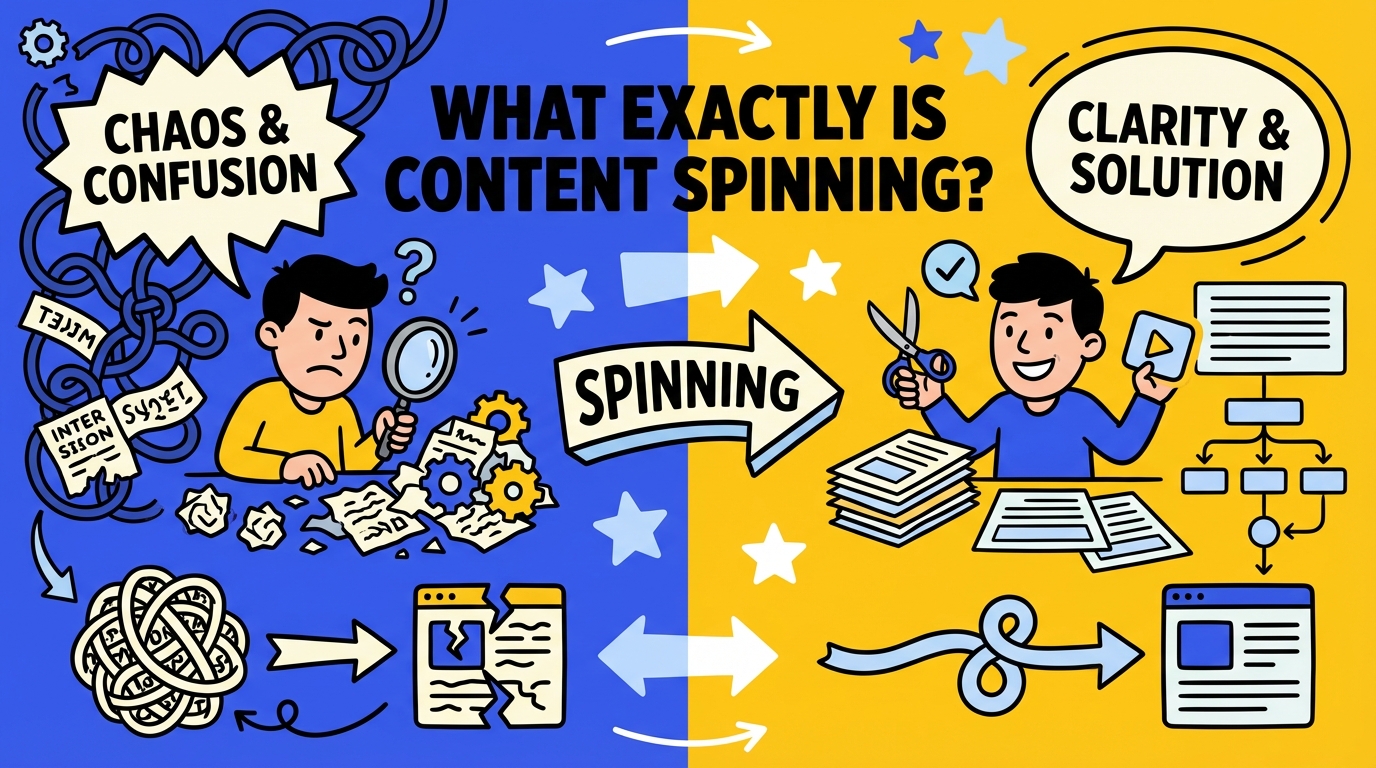
Content spinning has become a controversial topic in the digital marketing world, with many website owners curious about its potential benefits and risks. If you're wondering what content spinning actually involves and whether it has a place in modern SEO strategies, you're not alone. This comprehensive guide will explain the mechanics behind content spinning, explore its various applications, and help you understand why most SEO professionals recommend avoiding this practice in 2026.
What Exactly Is Content Spinning?
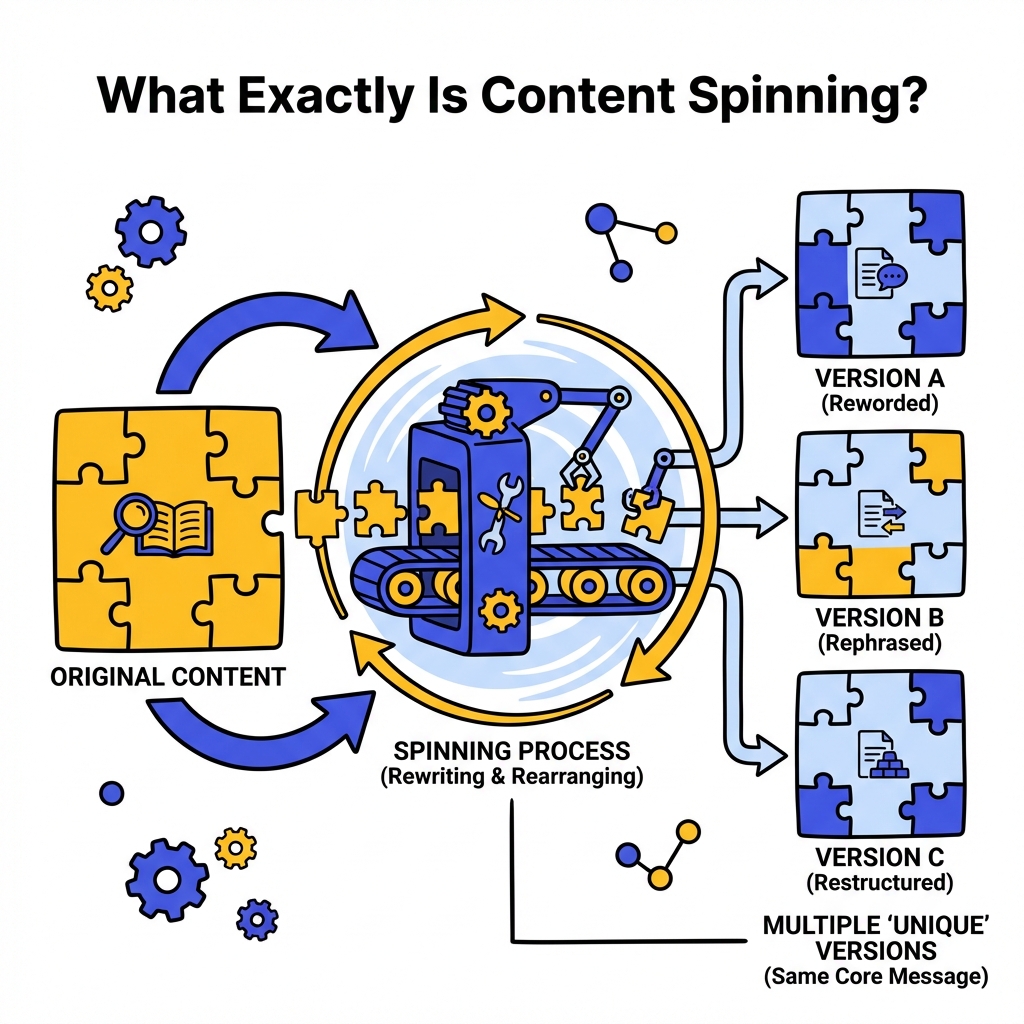
Content spinning is a technique that involves taking existing written content and systematically rewriting it to create multiple "unique" versions while maintaining the same core message and information. This process can be done manually by human writers or automatically using specialized software tools called content spinners or article spinners.
The fundamental concept behind content spinning revolves around synonym replacement, sentence restructuring, and paragraph reordering. For example, the phrase "search engine optimization is crucial for website success" might be spun into "SEO remains essential for online business growth" or "website optimization through search engines proves vital for digital success."
Content spinning software typically uses spintax (spinning syntax), a markup language that allows writers to create multiple variations within a single piece of content. The software then randomly selects from these variations to generate what appears to be original content, though the underlying information remains identical.
How Does the Content Spinning Process Work?
Manual Content Spinning
Manual content spinning involves human writers who carefully rewrite existing articles by changing words, restructuring sentences, and reorganizing paragraphs. This approach typically produces higher quality results because humans can maintain context, tone, and readability while making substantive changes to the original text.
The manual process usually follows these steps: identifying the source content, analyzing key concepts and messages, researching alternative ways to express the same ideas, rewriting each section with different vocabulary and sentence structures, and reviewing the final product for coherence and accuracy.
Automated Content Spinning
Automated content spinning relies on software algorithms to generate multiple versions of the same content. These tools analyze the original text and automatically substitute synonyms, rearrange sentence components, and sometimes reorder paragraphs or sections.
Most spinning software requires users to input spintax markup, which looks like this: "{SEO|search engine optimization|website optimization} is {important|crucial|essential} for {online success|digital marketing|web visibility}." The software then creates variations by selecting different options from each bracketed section.
Common Content Spinning Techniques and Methods
| Technique | Description | Quality Level | Detection Risk |
|---|---|---|---|
| Synonym Replacement | Swapping words with similar meanings | Low | High |
| Sentence Restructuring | Changing word order and grammar | Medium | Medium |
| Paragraph Reordering | Moving sections around | Medium | Medium |
| Concept Rewriting | Expressing ideas differently | High | Low |
| Format Changes | Altering lists, headings, structure | Medium | Low |
Word-Level Spinning
The most basic form of content spinning involves replacing individual words with synonyms or similar terms. While this approach is quick and easy to implement, it often produces awkward phrasing and can change the intended meaning of sentences. Search engines have become sophisticated at detecting this type of manipulation.
Sentence-Level Spinning
More advanced spinning techniques focus on restructuring entire sentences while preserving their meaning. This might involve changing active voice to passive voice, combining short sentences into longer ones, or breaking complex sentences into simpler components.
Paragraph-Level Spinning
The most sophisticated spinning approaches involve rewriting entire paragraphs or sections, often requiring a deeper understanding of the subject matter. This technique can produce more natural-sounding content but requires significantly more time and effort.
Why Do People Use Content Spinning?
Content spinning gained popularity primarily because of the perceived need for large volumes of unique content across multiple websites or platforms. Many digital marketers believed that having hundreds or thousands of "unique" articles would improve their search engine rankings and increase their online visibility.
The appeal of content spinning lies in its promise of efficiency and scale. Instead of creating dozens of original articles from scratch, marketers could theoretically spin one well-researched piece into multiple variations, saving time and resources while maintaining what appeared to be content diversity.
Some practitioners also used content spinning to avoid duplicate content penalties, believing that spun articles would be different enough to escape detection by search engine algorithms. Others employed spinning techniques to create multiple versions of product descriptions, blog posts, or marketing materials for different websites or campaigns.
What Are the Major Problems with Content Spinning?
Search Engine Penalties and Detection
Modern search engines, particularly Google, have developed sophisticated algorithms that can easily identify spun content. The search giant's updates over the years have specifically targeted low-quality, duplicated, and artificially generated content, often resulting in significant ranking penalties or complete removal from search results.
Google's helpful content guidelines emphasize the importance of creating original, valuable content for users rather than search engines. Content spinning directly contradicts these principles by prioritizing quantity over quality and manipulation over genuine value creation.Quality and Readability Issues
Spun content frequently suffers from grammatical errors, awkward phrasing, and logical inconsistencies. Automated spinning tools often create sentences that are technically correct but sound unnatural or confusing to human readers. This poor quality can damage your brand reputation and reduce user engagement metrics.
The context and nuance that make content truly valuable are often lost in the spinning process. Important details may be changed or omitted, and the overall coherence of the piece can suffer when individual components are altered without considering their relationship to the whole.
Legal and Ethical Concerns
Content spinning often involves taking someone else's original work and creating derivative versions without permission. This practice can raise copyright infringement issues, particularly when the spun content closely resembles the original source material.
From an ethical standpoint, content spinning represents a form of deception, presenting recycled information as original work. This approach undermines the principles of authentic content creation and can damage trust between businesses and their audiences.
How Do Search Engines Detect Spun Content?
Search engines employ multiple sophisticated methods to identify spun content, making it increasingly difficult for such material to rank well in search results. Understanding these detection methods helps explain why content spinning has become largely ineffective as an SEO strategy.
Algorithmic analysis forms the backbone of content spinning detection. Search engines compare new content against their vast databases of existing material, looking for patterns that suggest spinning. They analyze sentence structure, word choice, and overall content flow to identify artificially generated variations.
Machine learning algorithms have become particularly effective at recognizing the telltale signs of spun content. These systems can identify unusual word combinations, unnatural phrasing, and the repetitive patterns that often characterize spun articles, even when human readers might not immediately notice these issues.
What Should You Do Instead of Content Spinning?
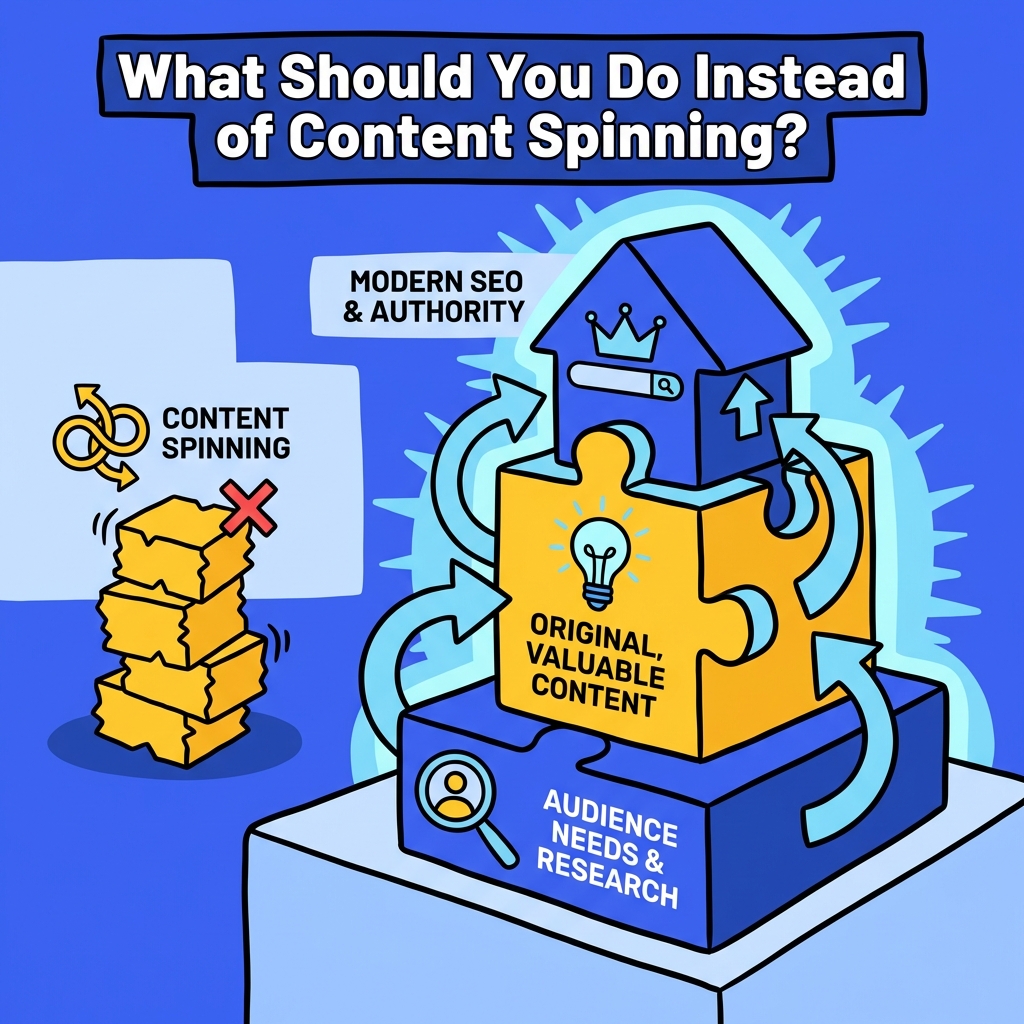
Rather than relying on content spinning, focus on creating genuinely original, valuable content that serves your audience's needs. This approach aligns with modern SEO best practices and builds long-term authority for your website. Consider developing a comprehensive content marketing strategy that works alongside your SEO efforts to maximize your results.
Invest time in thorough keyword research and topic exploration to identify unique angles and perspectives for your content. Instead of spinning existing articles, create fresh pieces that address different aspects of your main topics or target related long-tail keywords. Professional SEO blog writing services can help you develop high-quality, original content at scale.
Consider implementing SEO automation tools that can help streamline your content creation process without compromising quality. These legitimate automation solutions focus on research, optimization, and distribution rather than content manipulation.
Is Content Spinning Ever Acceptable?
While content spinning has largely fallen out of favor in the SEO community, there are very limited scenarios where modified versions of this technique might be acceptable. These situations typically involve creating multiple versions of the same factual information for different audiences or platforms, with substantial manual rewriting and original additions.
For example, a company might create different versions of a product announcement for various industry publications, each tailored to the specific audience and publication requirements. However, this process should involve significant original writing and genuine customization rather than simple word substitution.
The key distinction lies in intent and execution. Acceptable content variation focuses on genuinely improving the content for different contexts, while traditional content spinning prioritizes quantity and manipulation over quality and value.
Conclusion
Content spinning represents an outdated approach to SEO that fails to deliver sustainable results in 2026's search landscape. While the technique might seem appealing for its promise of quick content generation, the risks far outweigh any potential benefits. Search engines have become increasingly sophisticated at detecting and penalizing spun content, making this strategy more likely to harm your rankings than help them.
Instead of pursuing shortcuts like content spinning, invest your time and resources in creating genuinely valuable, original content that serves your audience's needs. Focus on quality over quantity, and build your SEO strategy around authentic content creation, comprehensive keyword research, and user-focused optimization.
Ready to develop a legitimate content strategy that drives real results? Fast SEO Fix specializes in helping businesses create authentic, high-performing content that ranks well and engages audiences. Contact us today to learn how we can help you build a sustainable SEO foundation without resorting to risky tactics like content spinning.

Stefan Winter
Founder & SEO Expert
Founder of Fast SEO Fix and SEO automation expert. Stefan built Fast SEO Fix to solve the tedious problem of manual SEO work. He specializes in SEO optimized content generation, keyword research, and automated SEO strategies.
