What Are Small SEO Tools and Why Do They Matter?
Posted by
 Stefan Winter
How to Choose and Use Small SEO Tools That Actually Deliver Results
Small businesses and individual website owners often feel overwhelmed by the complexity and cost of enterprise SEO solutions. The good news? You don't need expensive, feature-heavy platforms to improve your search rankings. Small SEO tools can provide targeted functionality that addresses specific optimization needs without breaking the bank or requiring extensive technical knowledge. This guide will walk you through selecting the right compact SEO tools and maximizing their impact on your website's performance.
What Are Small SEO Tools and Why Do They Matter?
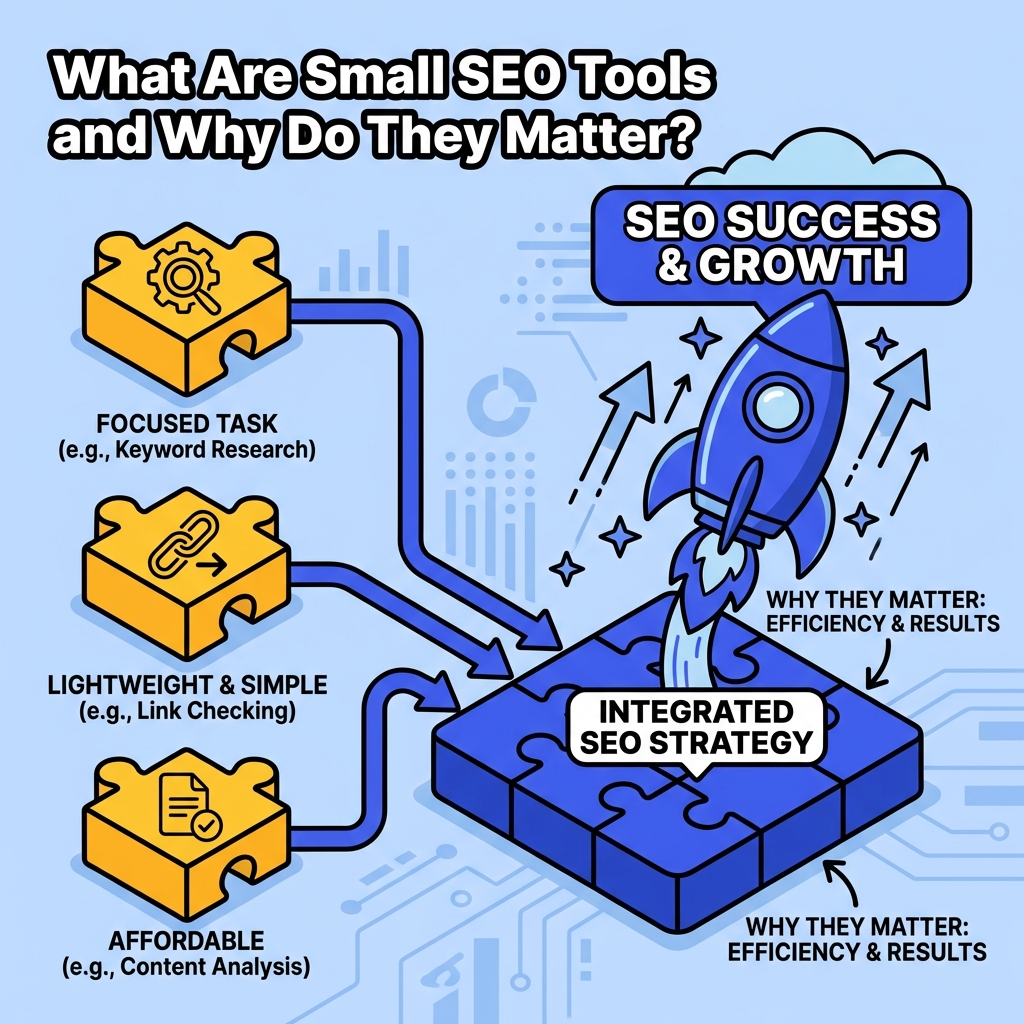
Small SEO tools are lightweight, focused applications designed to handle specific search engine optimization tasks. Unlike comprehensive platforms that offer dozens of features, these tools excel at doing one or two things exceptionally well. They typically feature simplified interfaces, affordable pricing, and quick implementation.
These specialized tools matter because they allow you to address immediate SEO challenges without the learning curve or financial commitment of larger platforms. Whether you need to check keyword density, analyze page speed, or monitor backlinks, small SEO tools provide targeted solutions that integrate seamlessly into your existing workflow.
The beauty of these compact solutions lies in their accessibility. Small business owners, freelancers, and marketing teams can quickly adopt them to fill specific gaps in their SEO strategy without requiring extensive training or budget approval.
How to Identify Your Specific SEO Tool Needs?
Before diving into tool selection, conduct an honest assessment of your current SEO challenges. Start by auditing your website's performance across key areas: technical health, content optimization, keyword tracking, and link building. This evaluation will reveal which aspects need immediate attention and which tools can provide the most value.
Consider your technical skill level and available time. If you're managing SEO alongside other responsibilities, prioritize tools with intuitive interfaces and automated features. Advanced users might prefer tools offering more granular control and detailed reporting capabilities.
Budget constraints play a crucial role in tool selection. Create a realistic monthly or annual budget for SEO tools, keeping in mind that effective optimization often requires 2-3 specialized tools rather than one expensive suite. Many small SEO tools offer free tiers or trial periods, allowing you to test functionality before committing financially.
Step-by-Step Process for Selecting the Right Small SEO Tools
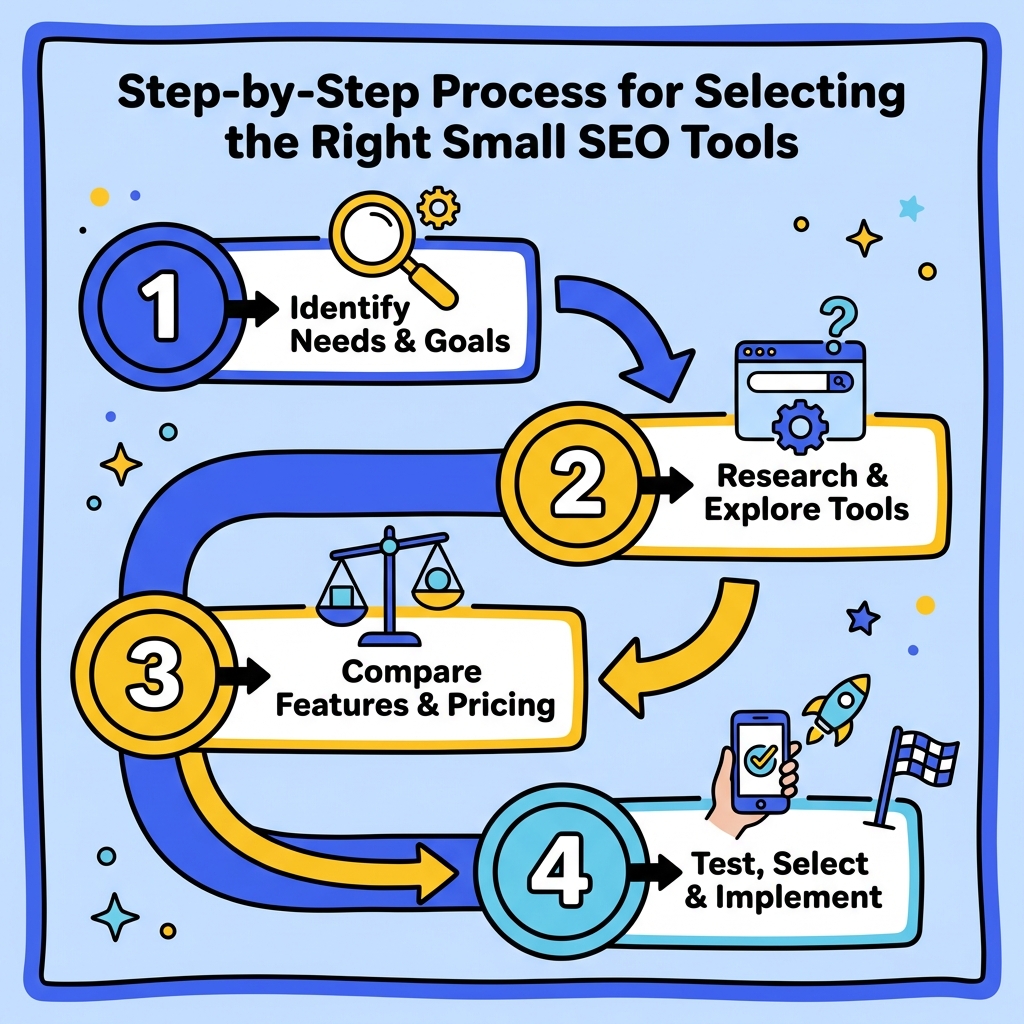
Step 1: Categorize Your Tool Requirements
Break down your SEO needs into specific categories: keyword research, technical auditing, content optimization, rank tracking, and link analysis. This categorization helps you avoid redundant features and ensures comprehensive coverage of essential SEO functions.
For keyword research, look for tools that provide search volume data, competition analysis, and related keyword suggestions. Technical auditing tools should identify crawl errors, page speed issues, and mobile optimization problems. Content optimization tools need to analyze keyword density, readability, and meta tag effectiveness.
Step 2: Research and Compare Options
Create a comparison matrix listing potential tools against your specific requirements. Include factors like pricing, feature set, ease of use, customer support quality, and integration capabilities. Pay attention to user reviews from businesses similar to yours, as they often highlight practical advantages and limitations.
| Tool Category | Key Features to Compare | Price Range | Best For |
|---|---|---|---|
| Keyword Research | Search volume, competition data, suggestions | $10-50/month | Content planning |
| Technical Audit | Crawl analysis, speed testing, mobile check | $15-40/month | Site health |
| Rank Tracking | Position monitoring, competitor analysis | $20-60/month | Performance monitoring |
| Content Optimization | Keyword density, readability, meta analysis | $5-30/month | On-page SEO |
Step 3: Test Before Committing
Take advantage of free trials and freemium versions to evaluate tools in real-world scenarios. Test each tool with your actual website data rather than generic examples. This hands-on approach reveals how well the tool integrates with your workflow and whether its insights are actionable for your specific situation.
Document your testing experience, noting which tools provide the most valuable insights and which feel intuitive to use. Consider how long it takes to generate reports and whether the data presentation format meets your needs. When evaluating SEO tool investments, remember that the most feature-rich option isn't always the best fit.
How to Maximize Results from Your Small SEO Tool Stack?
Create an Integrated Workflow
Develop a systematic approach to using your selected tools. Schedule regular audits using technical SEO tools, perform weekly keyword research sessions, and set up automated rank tracking reports. This structured approach ensures consistent monitoring and prevents important optimization opportunities from slipping through the cracks.
Establish clear processes for acting on tool insights. When your technical audit tool identifies page speed issues, have a predetermined action plan for addressing them. Similarly, when keyword research reveals new opportunities, integrate them into your content optimization checklist immediately.
Leverage Tool Integration and Automation
Many small SEO tools offer API access or integration capabilities with popular platforms like Google Analytics, Search Console, or content management systems. These connections eliminate manual data entry and provide more comprehensive insights by combining data sources.
Set up automated alerts and reports wherever possible. Most rank tracking tools can send weekly position updates, while technical audit tools can notify you immediately when critical issues arise. This automation ensures you stay informed about your SEO performance without constantly monitoring multiple dashboards.
According to Google's Search Quality Guidelines, consistent monitoring and optimization based on data-driven insights significantly impact search performance more than sporadic efforts.
What Common Mistakes Should You Avoid?

Over-Relying on Single Metrics
Small SEO tools often excel at tracking specific metrics, but focusing exclusively on one measurement can lead to skewed optimization efforts. Avoid obsessing over keyword density while ignoring user experience factors, or prioritizing rank positions without considering organic traffic quality.
Balance quantitative data from your tools with qualitative insights about user behavior and content effectiveness. Tools provide valuable direction, but they should inform decisions rather than dictate them entirely.
Neglecting Tool Updates and New Features
Small SEO tool developers frequently release updates that improve accuracy, add functionality, or address algorithm changes. Stay informed about these updates through tool newsletters, blog posts, or user communities. Failing to utilize new features often means missing optimization opportunities or working with outdated data.
Regularly review your tool stack to ensure it still meets your evolving needs. As your website grows and your SEO knowledge expands, you might need different functionality or more advanced features.
How to Scale Your Small SEO Tool Strategy?
As your website traffic and business grow, your tool requirements will evolve. Start by analyzing which tools provide the most actionable insights and consider upgrading to premium versions with enhanced features. However, resist the temptation to add tools without clear justification.
Monitor your tool ROI by tracking improvements in organic traffic, keyword rankings, and conversion rates attributable to optimizations guided by your tools. This data-driven approach helps justify tool expenses and guides future investment decisions.
Consider how your growing team might use these tools. Look for options that support multiple user accounts, collaborative features, and role-based access controls. Some small SEO tools offer team plans that provide better value than individual subscriptions.
When your needs outgrow individual small tools, you might benefit from SEO consulting services that can provide strategic guidance on tool consolidation and advanced optimization techniques.
Measuring Success and ROI from Your Tool Investment
Establish baseline metrics before implementing new tools to accurately measure their impact. Track organic traffic growth, keyword ranking improvements, technical issue resolution rates, and content performance enhancements. According to Moz's SEO Learning Center, businesses that consistently track these metrics see 2-3x better optimization results than those relying on intuition alone.
Create monthly reports combining data from your various tools to identify trends and optimization opportunities. This comprehensive view helps you understand which tools contribute most to your SEO success and where you might need additional functionality.
Conclusion
Small SEO tools offer an accessible, cost-effective path to improving your website's search performance without the complexity of enterprise solutions. By carefully assessing your needs, selecting focused tools that excel in specific areas, and creating integrated workflows, you can build a powerful optimization system that grows with your business.
Remember that successful SEO requires consistent effort and data-driven decision making. The right combination of small SEO tools provides the insights you need to make informed optimizations while staying within budget constraints. Start with one or two essential tools, master their functionality, and gradually expand your toolkit as your needs evolve.
Ready to optimize your website with the right SEO tools? Fast SEO Fix can help you identify the perfect tool combination for your specific needs and budget. Contact us today to develop a customized SEO strategy that delivers measurable results.

Stefan Winter
Founder & SEO Expert
Founder of Fast SEO Fix and SEO automation expert. Stefan built Fast SEO Fix to solve the tedious problem of manual SEO work. He specializes in SEO optimized content generation, keyword research, and automated SEO strategies.
