What Are Automated SEO Tools and Why Do They Matter?
Posted by
 Stefan Winter
The Complete Guide to Automated SEO Tools: Transform Your Digital Marketing Strategy

Digital marketing success requires constant optimization, monitoring, and adjustment of your SEO strategy. However, manually tracking rankings, analyzing competitors, and optimizing content for hundreds or thousands of keywords can quickly become overwhelming. This is where automated SEO tools step in to revolutionize your approach. In this comprehensive guide, you'll discover how to leverage automated SEO tools to streamline your workflow, improve your search rankings, and scale your digital marketing efforts without burning out your team.
What Are Automated SEO Tools and Why Do They Matter?

Automated SEO tools are software solutions that handle repetitive SEO tasks without constant human intervention. Unlike traditional SEO approaches that require manual keyword research, rank tracking, and content optimization, these tools use algorithms and machine learning to continuously monitor, analyze, and optimize your website's search performance.
The power of automation lies in its ability to process vast amounts of data 24/7. While you sleep, automated SEO tools can track your keyword rankings across multiple search engines, monitor competitor movements, identify new keyword opportunities, and even suggest content improvements. This continuous operation ensures you never miss critical changes in your SEO landscape.
For businesses managing multiple websites or extensive keyword portfolios, automated SEO tools become essential. They eliminate the human error factor in data collection and provide consistent, reliable insights that form the foundation of successful SEO strategies.
How to Choose the Right Automated SEO Tools for Your Business?
Selecting the perfect automated SEO tools requires understanding your specific needs and growth objectives. Start by auditing your current SEO workflow and identifying the most time-consuming tasks that could benefit from automation.
Consider your technical expertise level when evaluating tools. Some automated SEO tools require advanced setup and configuration, while others offer plug-and-play solutions perfect for beginners. The key is finding tools that match your team's capabilities while providing room for growth.
Budget considerations play a crucial role in tool selection. Enterprise-level automated SEO tools offer comprehensive features but come with higher price tags. Smaller businesses might benefit from starting with mid-tier solutions that provide essential automation features without breaking the budget.
Essential Features to Look For
When evaluating automated SEO tools, prioritize these core functionalities:
- Real-time rank tracking across multiple search engines and locations
- Automated competitor analysis that identifies opportunities and threats
- Content optimization suggestions based on current search trends
- Technical SEO monitoring that alerts you to crawl errors and site issues
- Customizable reporting that delivers insights to stakeholders automatically
What Types of Automated SEO Tools Should You Consider?
The automated SEO tools landscape offers specialized solutions for different aspects of search optimization. Understanding these categories helps you build a comprehensive automation strategy.
All-in-one platforms provide comprehensive SEO automation under one roof. These tools typically include rank tracking, keyword research, site auditing, and competitor analysis features. They're ideal for businesses wanting to consolidate their SEO stack and streamline workflows. Specialized automation tools focus on specific SEO tasks like technical auditing, content optimization, or link building. These solutions often provide deeper functionality in their niche areas compared to all-in-one platforms. Many successful SEO strategies combine multiple specialized tools for maximum effectiveness. Content-focused automated SEO tools help optimize existing content and identify new content opportunities. They analyze search intent, suggest topic clusters, and even automate meta tag generation. When combined with effective blog post templates, these tools can significantly accelerate content production while maintaining SEO quality.How to Implement Automated SEO Tools in Your Workflow?
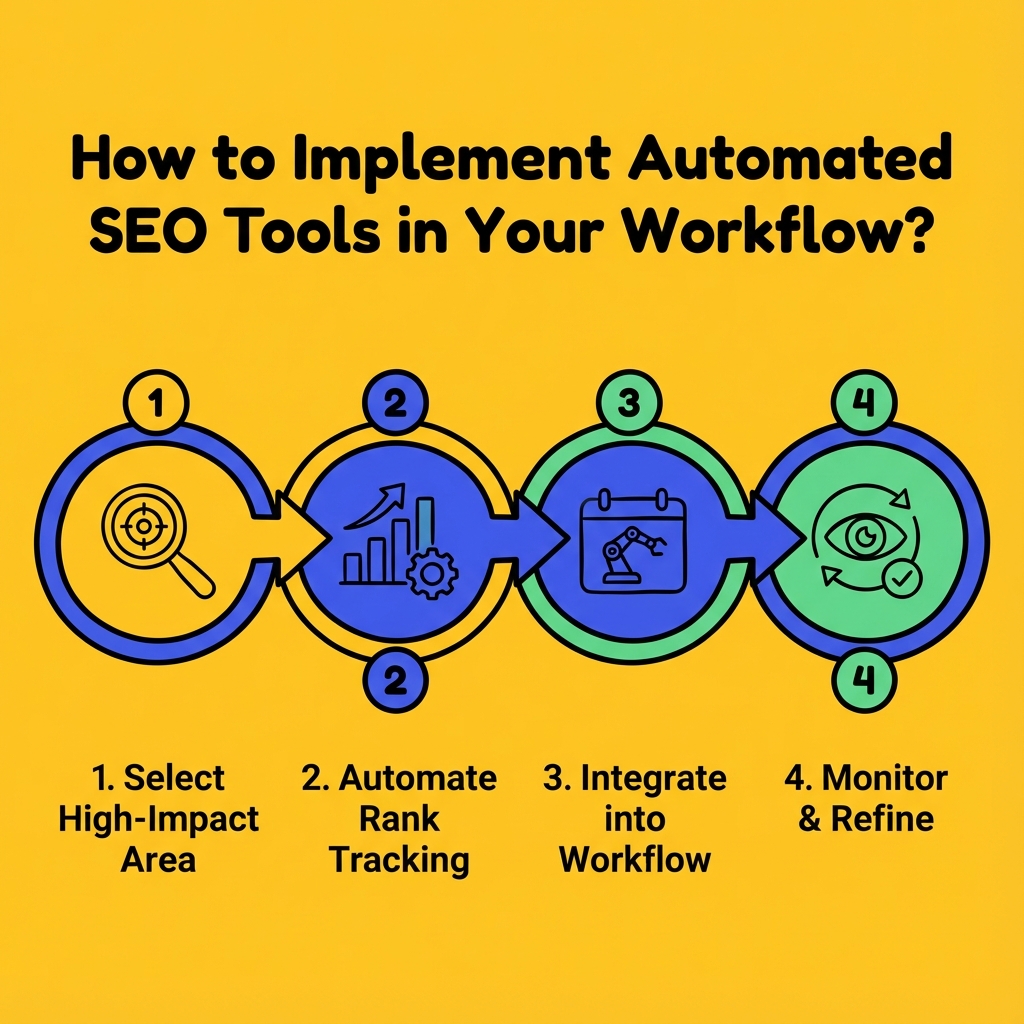
Successfully implementing automated SEO tools requires a strategic approach that gradually integrates automation into your existing processes. Start by selecting one or two high-impact areas where automation can provide immediate value.
Begin with rank tracking automation since it provides foundational data for all other SEO decisions. Set up automated monitoring for your primary keywords and configure alerts for significant ranking changes. This baseline automation immediately frees up time while ensuring you never miss important fluctuations.
Next, implement automated technical SEO monitoring. Configure tools to regularly crawl your website and alert you to issues like broken links, missing meta tags, or page speed problems. This proactive approach prevents small technical issues from becoming major ranking problems.
Setting Up Automated Reporting
Automated reporting transforms how you communicate SEO progress to stakeholders. Configure weekly or monthly reports that automatically compile ranking data, traffic metrics, and competitive insights. This consistent reporting builds confidence in your SEO strategy while reducing manual reporting time.
Customize reports for different audiences. Executive reports should focus on high-level metrics and business impact, while tactical reports for SEO teams can include detailed keyword performance and technical recommendations. Most automated SEO tools offer flexible reporting templates that adapt to various stakeholder needs.
Popular Automated SEO Tools Comparison
| Tool Category | Best For | Key Automation Features | Pricing Range |
|---|---|---|---|
| All-in-One Platforms | Comprehensive SEO management | Rank tracking, site audits, competitor analysis | $99-$999/month |
| Technical SEO Tools | Site optimization and monitoring | Crawl automation, error detection, performance tracking | $49-$299/month |
| Content Optimization | Content strategy and optimization | Topic research, content scoring, meta tag generation | $29-$199/month |
| Rank Tracking | Position monitoring | Daily rank updates, local tracking, competitor comparison | $19-$149/month |
How Do Automated SEO Tools Integrate with Your Existing Strategy?
Automated SEO tools work best when they complement rather than replace human expertise. The goal is to automate data collection and routine tasks while freeing up time for strategic thinking and creative problem-solving.
Integration starts with understanding how different SEO tools serve unique purposes in your overall strategy. Automated tools handle the heavy lifting of data processing, while human insight interprets results and makes strategic decisions based on automated insights.
Consider how automated SEO tools fit into your content creation process. While automation can identify keyword opportunities and optimize existing content, human creativity remains essential for producing engaging, valuable content that resonates with your audience. The combination of automated SEO processes and human insight creates the most effective optimization strategies.
Measuring Automation Success
Track specific metrics to evaluate your automated SEO tools' effectiveness. Monitor time savings by comparing manual task completion times with automated alternatives. Measure accuracy improvements by comparing automated data collection with manual spot checks.
Most importantly, track business impact metrics like organic traffic growth, conversion rate improvements, and keyword ranking progress. According to Moz's State of SEO report, businesses using automated SEO tools report 40% faster implementation of optimization strategies compared to manual approaches.
What Are the Common Pitfalls to Avoid?

Over-reliance on automation represents the biggest risk when implementing automated SEO tools. While these tools excel at data processing and routine tasks, they cannot replace strategic thinking and creative problem-solving. Maintain human oversight of all automated processes to ensure results align with business objectives.
Data accuracy issues can arise when automated tools misinterpret search results or fail to account for personalized search factors. Regular manual verification of automated data helps identify and correct these discrepancies before they impact decision-making.
Integration complexity often surprises businesses new to automated SEO tools. Plan for setup time and potential technical challenges when integrating multiple tools or connecting automation with existing systems. Start simple and gradually expand automation as your team becomes comfortable with new processes.
Advanced Automation Strategies for Experienced Users
Experienced SEO professionals can leverage advanced automation strategies to gain competitive advantages. API integrations allow custom automation workflows that combine data from multiple sources and trigger specific actions based on predefined conditions.
Machine learning-enhanced automated SEO tools can identify patterns in ranking fluctuations and predict future opportunities. These insights enable proactive optimization strategies that position websites ahead of algorithm changes and market shifts.
Consider implementing automated A/B testing for SEO elements like title tags, meta descriptions, and content structures. This systematic approach to optimization testing accelerates learning and improvement cycles while maintaining statistical significance in results.
How to Scale Your SEO Efforts with Automation?
Scaling SEO efforts requires systematic approaches that maintain quality while increasing output. Automated SEO tools enable this scaling by handling increased data volumes and monitoring expanded keyword portfolios without proportional increases in manual effort.
Template-based automation helps maintain consistency across large content portfolios. Create standardized optimization workflows that automated tools can apply to new content, ensuring every piece meets SEO best practices without individual manual optimization.
Geographic scaling becomes manageable with automated local SEO tools that monitor rankings and optimize listings across multiple locations. These tools track local search performance and identify market-specific opportunities that manual monitoring might miss.
Conclusion
Automated SEO tools represent a fundamental shift in how successful businesses approach search optimization. By handling routine tasks and providing continuous monitoring, these tools free up valuable time for strategic planning and creative problem-solving. The key to success lies in thoughtful implementation that combines automation's efficiency with human insight and creativity.
Start your automation journey by identifying high-impact areas where tools can provide immediate value. Focus on rank tracking and technical monitoring as foundational elements, then gradually expand automation to content optimization and competitive analysis. Remember that the most successful SEO strategies use automation to enhance, not replace, human expertise.
Ready to transform your SEO strategy with automation? Begin by auditing your current workflow and identifying the top three time-consuming tasks that could benefit from automated solutions. The investment in automated SEO tools will pay dividends in improved efficiency, better data accuracy, and accelerated growth in organic search performance.

Stefan Winter
Founder & SEO Expert
Founder of Fast SEO Fix and SEO automation expert. Stefan built Fast SEO Fix to solve the tedious problem of manual SEO work. He specializes in SEO optimized content generation, keyword research, and automated SEO strategies.
