What Exactly Is an SEO Tool and Why Do You Need One?
Posted by
 Stefan Winter
How to Choose the Right SEO Tool for Your Website's Success

Selecting the perfect SEO tool can make or break your digital marketing efforts. With hundreds of options available, each promising to boost your rankings and drive traffic, how do you determine which tool deserves your investment? This comprehensive guide walks you through the essential steps to identify, evaluate, and implement the SEO tool that aligns with your specific needs and budget. You'll learn to navigate the crowded marketplace of SEO solutions and make an informed decision that accelerates your website's growth.
What Exactly Is an SEO Tool and Why Do You Need One?

An SEO tool is specialized software designed to help website owners and digital marketers optimize their online presence for search engines. These platforms analyze various aspects of your website, from keyword performance to technical issues, providing actionable insights that improve your search engine rankings.
Modern SEO tools serve multiple functions beyond basic keyword tracking. They monitor your website's health, analyze competitor strategies, identify content opportunities, and track your progress over time. Think of them as your digital marketing command center, consolidating data from multiple sources into actionable recommendations.
The complexity of search engine algorithms makes manual SEO optimization nearly impossible at scale. What exactly constitutes an SEO fix often involves analyzing thousands of data points simultaneously, something only sophisticated tools can accomplish efficiently. Without proper tooling, you're essentially navigating the digital landscape blindfolded.
How to Identify Your Specific SEO Tool Requirements
Before diving into tool comparisons, you need to clearly define your SEO objectives and current challenges. Start by conducting an honest assessment of your website's current performance and identifying the gaps you need to address.
Consider your primary goals: Are you focused on improving local search visibility, tracking keyword rankings, or conducting comprehensive competitor analysis? Different tools excel in different areas, and understanding your priorities helps narrow down your options significantly.
Your technical expertise level also plays a crucial role in tool selection. Some platforms require extensive SEO knowledge to interpret data correctly, while others offer simplified dashboards perfect for beginners. Additionally, consider your team size and whether you need collaboration features or multi-user access.
What's Your Budget Reality?
SEO tools range from free basic versions to enterprise solutions costing thousands monthly. Establish a realistic budget that considers not just the subscription cost but also the time investment required for implementation and training. Remember that the most expensive tool isn't necessarily the best fit for your specific needs.
Many businesses make the mistake of choosing tools based solely on price, either going for the cheapest option or assuming expensive means better. The key is finding the sweet spot where functionality meets affordability for your particular situation.
How to Evaluate SEO Tool Features That Actually Matter
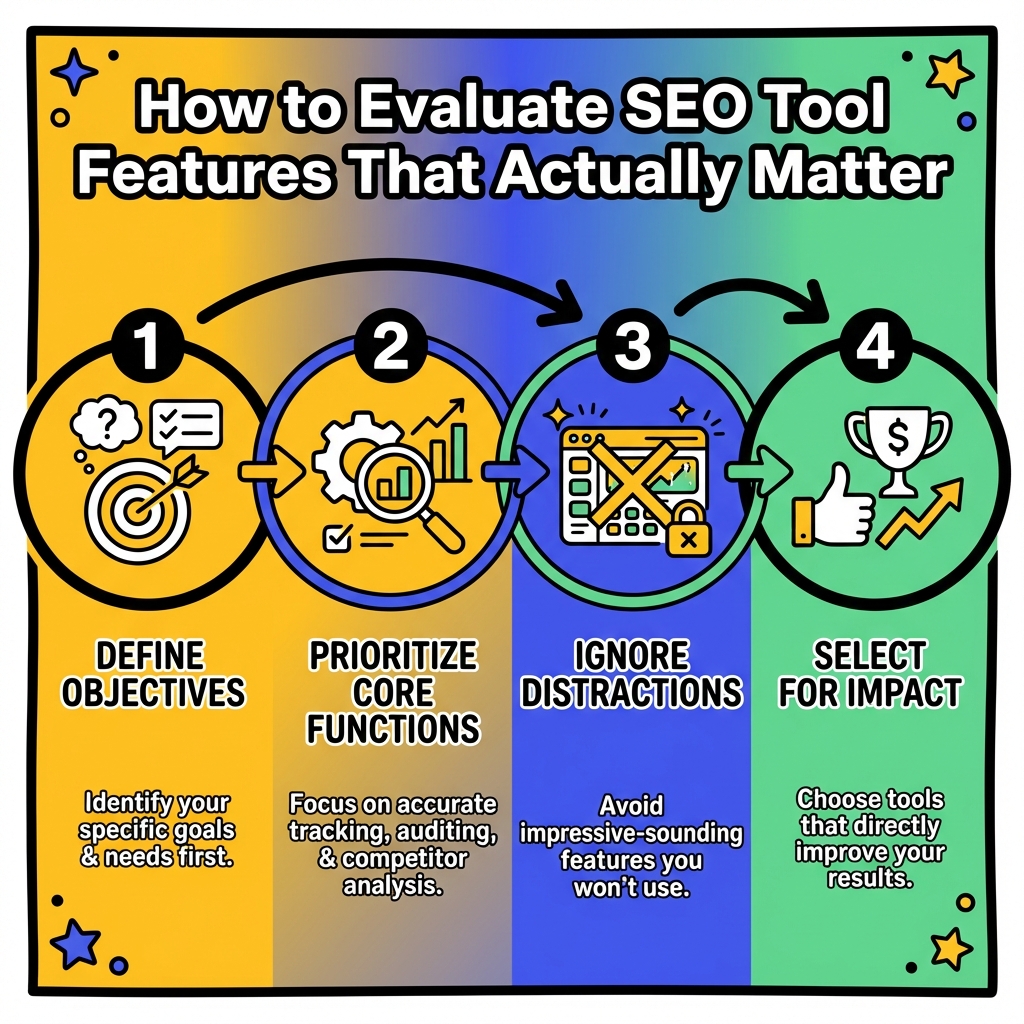
When comparing SEO tools, focus on features that directly impact your identified objectives rather than getting distracted by impressive-sounding capabilities you'll never use. Core functionality should include accurate keyword tracking, comprehensive site auditing, and reliable competitor analysis.
Data accuracy stands as the most critical factor in tool evaluation. According to Google's Search Quality Evaluator Guidelines, search algorithms prioritize websites with accurate, helpful content, making precise data from your SEO tool essential for making informed optimization decisions.
Look for tools that provide historical data and trend analysis, not just current snapshots. Understanding how your SEO metrics change over time helps you identify what strategies work and adjust your approach accordingly. The ability to track organic traffic growth patterns becomes invaluable for long-term strategy development.
Essential Features Comparison Table
| Feature Category | Must-Have | Nice-to-Have | Skip If Budget-Tight |
|---|---|---|---|
| Keyword Research | Accurate search volume, competition data | Long-tail suggestions, SERP features | Advanced filtering options |
| Site Auditing | Technical SEO issues, crawl errors | Page speed insights, mobile optimization | White-label reporting |
| Competitor Analysis | Ranking comparisons, keyword gaps | Content analysis, backlink profiles | Social media monitoring |
| Reporting | Automated reports, key metrics | Custom dashboards, data export | Advanced visualizations |
What Questions Should You Ask During Tool Evaluation?
How frequently does the tool update its data? SEO landscapes shift rapidly, and outdated information can lead to poor strategic decisions. Quality tools update keyword rankings daily and refresh other metrics at least weekly.
Does the platform integrate with your existing marketing stack? Seamless integration with Google Analytics, Google Search Console, and your content management system streamlines workflow and prevents data silos. Tools that work in isolation often create more work than they eliminate.
What level of customer support does the vendor provide? SEO tools can be complex, and having access to knowledgeable support staff makes the difference between quick problem resolution and days of frustration. Look for providers offering multiple support channels and comprehensive documentation.
How Reliable Is the Tool's Data Source?
Different SEO tools use various data sources and methodologies, leading to discrepancies in reported metrics. Research shows that keyword research accuracy varies significantly between platforms, with some tools providing estimates while others use more precise data collection methods.
Ask potential vendors about their data collection processes and update frequencies. Tools that aggregate data from multiple sources typically provide more comprehensive insights than those relying on single data streams.
How to Test SEO Tools Before Making Your Final Decision
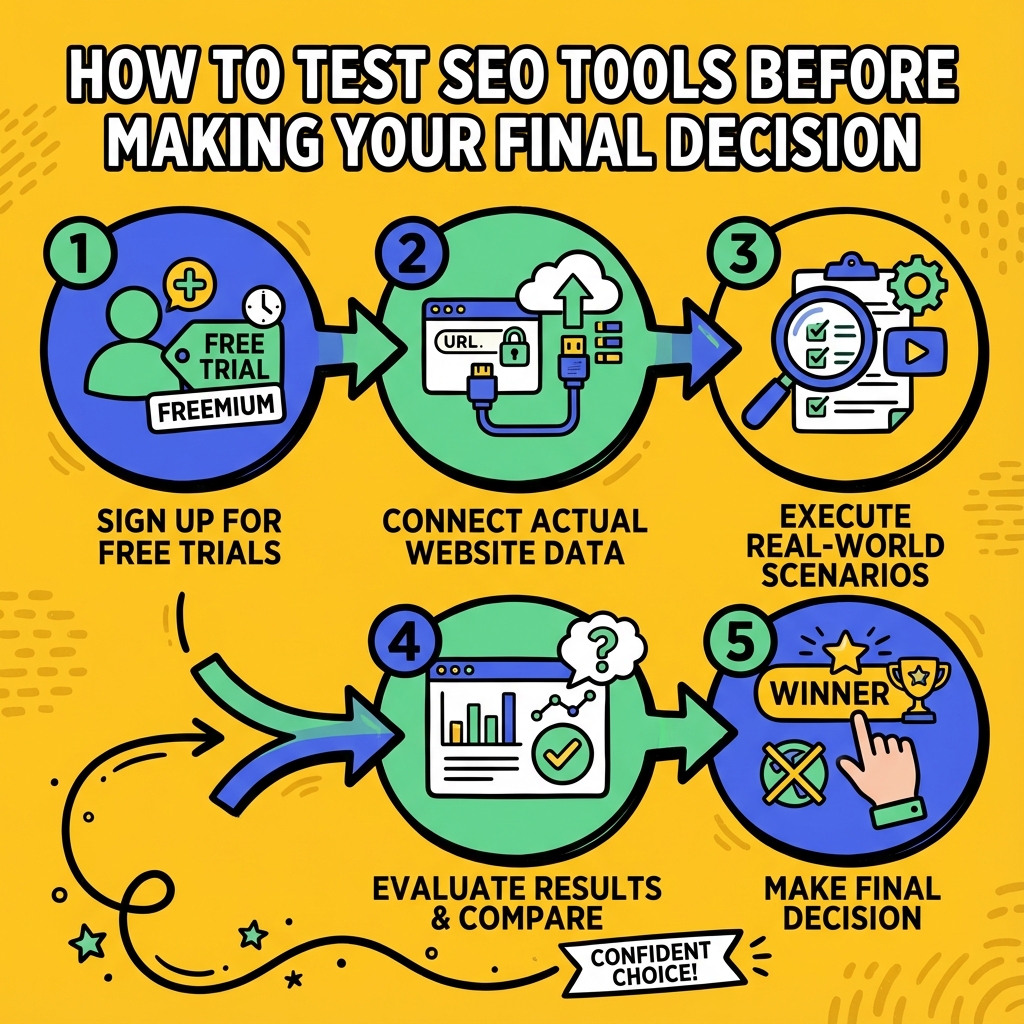
Most reputable SEO tool providers offer free trials or freemium versions that let you evaluate their platform with your actual website data. Take advantage of these opportunities to test functionality with real scenarios rather than relying solely on demos or marketing materials.
During your trial period, focus on testing the features most critical to your identified needs. Run the same analysis across multiple tools to compare data accuracy and presentation. Pay attention to the user interface and whether you can easily find and interpret the information you need.
Create a standardized evaluation process where you test each tool using identical parameters. This approach ensures fair comparisons and helps identify which platform provides the most actionable insights for your specific situation.
How to Implement Your Chosen SEO Tool Effectively
Once you've selected your SEO tool, proper implementation becomes crucial for maximizing its value. Start by connecting all relevant data sources, including Google Analytics, Google Search Console, and any social media accounts you want to monitor.
Configure your tracking parameters to align with your business objectives. Set up custom dashboards that highlight the metrics most important to your goals, and establish baseline measurements for tracking progress over time. According to Moz's SEO Learning Center, proper tool configuration in the first 30 days significantly impacts long-term success rates.
Don't try to use every feature immediately. Focus on mastering core functionality first, then gradually expand your usage as you become more comfortable with the platform. This approach prevents overwhelm and ensures you're getting value from your investment from day one.
What About Integration with Automated SEO Strategies?
Modern SEO tools work exceptionally well with automated SEO approaches, allowing you to set up monitoring and alerting systems that notify you of important changes without constant manual checking. This integration saves time and ensures you never miss critical optimization opportunities.
Consider how your chosen tool fits into broader automation workflows. Can it trigger actions in other systems when certain thresholds are met? Does it provide API access for custom integrations? These capabilities become increasingly valuable as your SEO efforts scale.
Conclusion
Choosing the right SEO tool requires careful consideration of your specific needs, budget constraints, and technical capabilities. By following this systematic approach to evaluation and implementation, you'll select a platform that not only meets your current requirements but also scales with your growing SEO efforts. Remember that the best tool is the one you'll actually use consistently to drive meaningful improvements in your search engine visibility.
Ready to accelerate your SEO success? Fast SEO Fix provides automated SEO solutions that complement any tool stack, helping you implement optimization strategies efficiently and effectively. Start your journey toward better search rankings today.

Stefan Winter
Founder & SEO Expert
Founder of Fast SEO Fix and SEO automation expert. Stefan built Fast SEO Fix to solve the tedious problem of manual SEO work. He specializes in SEO optimized content generation, keyword research, and automated SEO strategies.
