What Makes a Blog Post Template Essential for Content Success?
Posted by
 Stefan Winter
How to Create the Perfect Blog Post Template That Drives Results
Creating compelling blog content consistently can feel overwhelming, especially when you're staring at a blank page. A well-designed blog post template serves as your roadmap to success, ensuring every piece of content you publish follows proven structures that engage readers and perform well in search engines. In this comprehensive guide, you'll discover how to build a blog post template that streamlines your writing process while maximizing your content's impact on organic traffic and SEO performance.
What Makes a Blog Post Template Essential for Content Success?

A blog post template functions as your content creation blueprint, providing structure and consistency across all your published articles. Rather than reinventing the wheel each time you write, templates ensure you include all critical elements that search engines and readers expect.
Professional content creators understand that templates save significant time while improving content quality. When you have a proven framework, you can focus your creative energy on developing unique insights and valuable information instead of worrying about basic structure. This systematic approach helps maintain consistency in your brand voice and ensures you never forget crucial SEO elements like meta descriptions, internal links, or calls-to-action.
Templates also reduce decision fatigue. Writing requires numerous micro-decisions about formatting, structure, and content flow. By establishing these elements in advance, you preserve mental energy for the aspects that truly matter: creating valuable content that serves your audience's needs.
How Do You Choose the Right Template Structure for Your Goals?
Different blog post types require distinct template approaches. Your choice depends on your content objectives, audience preferences, and the specific topics you're covering. Understanding these variations helps you select the most effective framework for each piece.
Consider your primary content goals when selecting a template structure. Are you trying to educate readers, drive product sales, build brand awareness, or establish thought leadership? Each objective benefits from different organizational approaches and content elements.
| Template Type | Best For | Key Elements | Average Length |
|---|---|---|---|
| How-To Guide | Educational content | Numbered steps, screenshots, actionable tips | 1,500-2,500 words |
| Listicle | Quick consumption | Bullet points, subheadings, scannable format | 1,000-2,000 words |
| Case Study | Proof of concept | Problem/solution, data, results | 2,000-3,000 words |
| Opinion/Analysis | Thought leadership | Strong thesis, supporting arguments, conclusion | 1,200-2,000 words |
| Product Review | Purchase decisions | Pros/cons, comparisons, recommendations | 1,500-2,500 words |
What Are the Non-Negotiable Elements Every Template Needs?
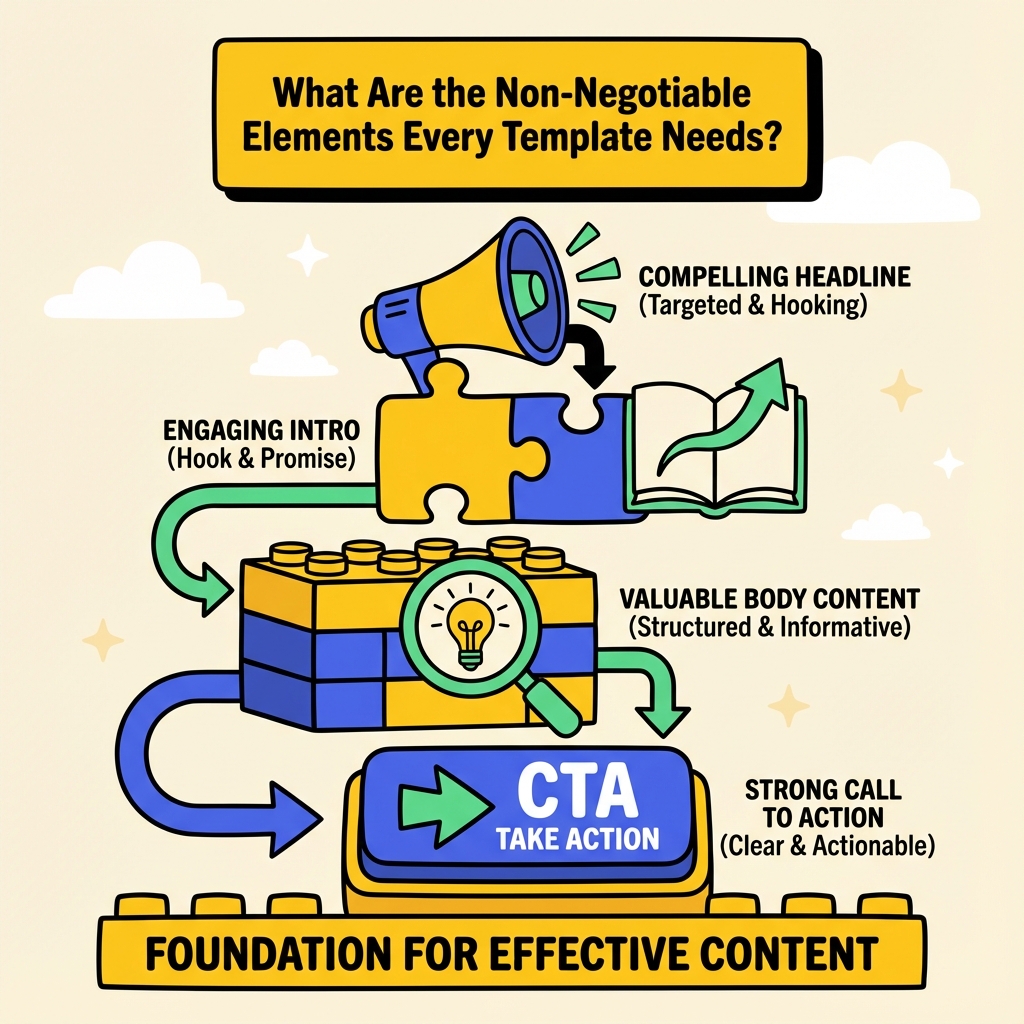
Certain components must appear in every blog post template regardless of your chosen format or topic. These elements form the foundation of effective content that performs well both for readers and search engines.
Your template should always include a compelling headline that incorporates your target keyword naturally. Headlines serve as the first impression for both search engines and potential readers, making them crucial for discoverability and click-through rates. Follow your headline with an engaging introduction that hooks readers and clearly explains what value they'll receive from reading your content.
Essential SEO Components
Every template must incorporate fundamental SEO elements that help search engines understand and rank your content effectively. These technical components work behind the scenes to improve your content's visibility and performance.
Include designated spaces for your target keyword and related terms throughout the template. Plan for natural keyword placement in your introduction, subheadings, and conclusion without forcing awkward repetition. Modern SEO success depends more on comprehensive topic coverage than keyword density, so focus on creating thorough, helpful content that addresses user intent.
Meta elements deserve dedicated template sections. Create standardized fields for your meta title, meta description, and URL slug. These elements significantly impact click-through rates from search results and help search engines categorize your content appropriately.
Reader Experience Elements
User experience components ensure your content remains engaging and accessible across different devices and reading preferences. These elements keep visitors on your page longer and encourage them to explore more of your content.
Structure your template with scannable formatting including subheadings, bullet points, and short paragraphs. Most online readers scan content before deciding whether to read thoroughly, so your template should accommodate this behavior with clear visual hierarchy and digestible content chunks.
Include designated spaces for internal and external links within your template. Strategic internal linking helps readers discover related content while improving your site's SEO performance. External links to authoritative sources build credibility and provide additional value to your audience.
How Can You Build Templates That Scale Across Different Content Types?
Creating scalable templates requires balancing consistency with flexibility. Your templates should maintain brand coherence while adapting to various content formats and topics without feeling restrictive or formulaic.
Develop a master template framework that includes universal elements like introduction structure, SEO components, and conclusion format. Then create specialized variations for different content types, maintaining the core framework while adjusting specific sections to match each format's unique requirements.
Consider creating modular template components that you can mix and match based on your content needs. For example, develop separate modules for product comparisons, step-by-step instructions, case study data, and FAQ sections. This modular approach allows maximum flexibility while maintaining consistency across your content library.
What Tools and Resources Support Effective Template Creation?
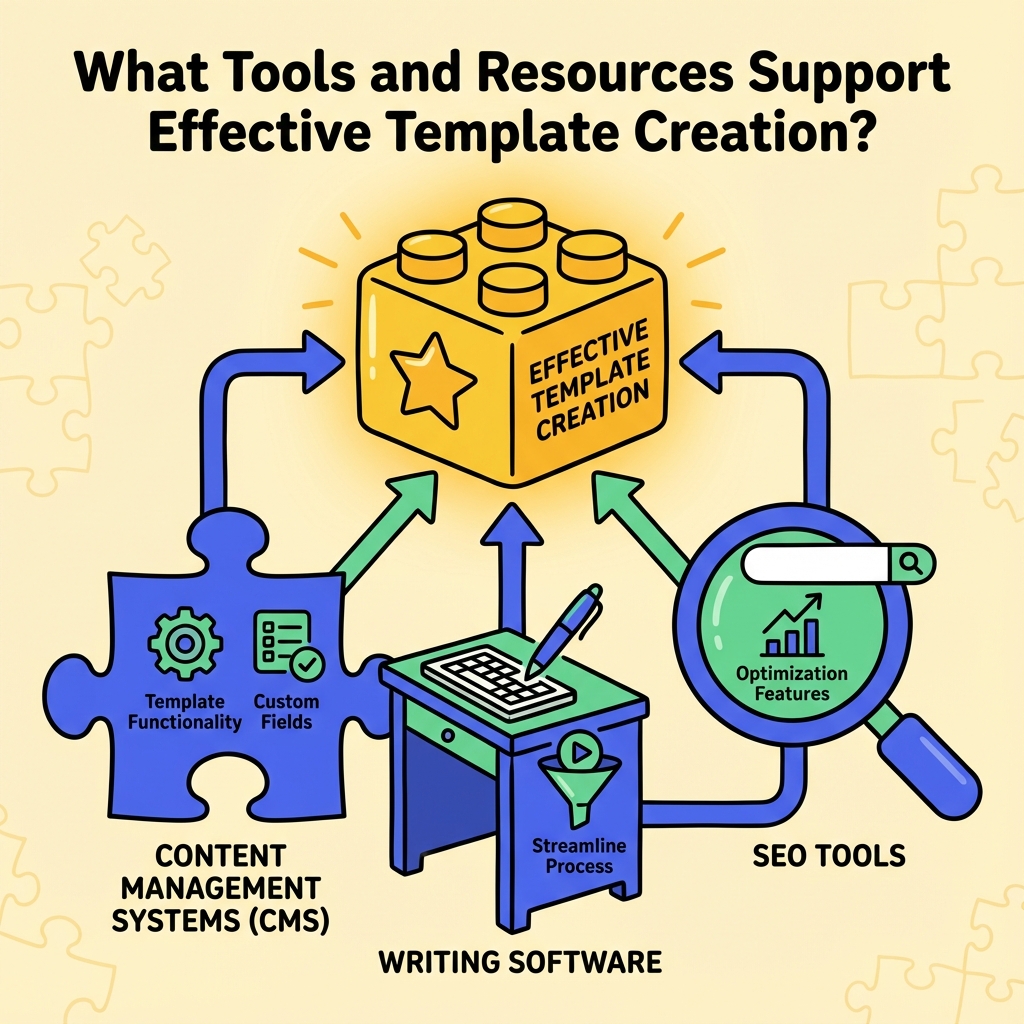
Several tools can streamline your template creation and implementation process. Content management systems, writing software, and SEO tools all offer features that support template-based content creation.
Most modern content management systems include template functionality or custom field options that support standardized content creation. WordPress, for instance, offers custom post types and fields that can enforce template structure while providing flexibility for unique content elements.
According to HubSpot's content marketing research, companies that blog regularly receive 97% more links to their websites than those that don't, highlighting the importance of consistent, well-structured content creation that templates facilitate.
Writing tools like Google Docs, Notion, or specialized content platforms often include template features that can store and replicate your preferred formats. These tools help maintain consistency across team members and ensure no critical elements get overlooked during the writing process.
How Do You Test and Optimize Your Blog Post Templates?
Template optimization requires ongoing testing and refinement based on performance data and user feedback. The most effective templates evolve over time as you learn what resonates with your specific audience and achieves your content goals.
Monitor key performance metrics for content created with different template variations. Track metrics like time on page, bounce rate, social shares, and conversion rates to identify which template elements drive the best results. Understanding these performance indicators helps you refine your templates for maximum impact.
A/B Testing Template Elements
Systematic testing of individual template components helps you optimize performance without making dramatic changes that might disrupt successful elements. Focus on testing one variable at a time to isolate the impact of specific modifications.
Test different introduction formats, heading structures, call-to-action placements, and content lengths. Small adjustments often yield significant improvements in reader engagement and search engine performance. Document your testing results to build a knowledge base of what works best for your specific audience and content topics.
Consider seasonal or topic-based template variations based on your testing results. Certain template elements might perform better for technical topics versus lifestyle content, or during different times of the year when user behavior patterns shift.
What Common Template Mistakes Should You Avoid?
Several common pitfalls can undermine your template's effectiveness and hurt your content performance. Recognizing these mistakes helps you create more successful templates from the start and avoid time-consuming revisions later.
Overly rigid templates that don't allow for content-specific adjustments often result in formulaic, boring content that fails to engage readers. While consistency is important, your templates should provide structure without stifling creativity or preventing you from adapting to unique topics or audience needs.
Another frequent mistake involves neglecting mobile optimization in template design. With mobile traffic accounting for over half of all web browsing according to Statista's mobile internet usage data, your templates must prioritize mobile-friendly formatting including short paragraphs, clear headings, and easily tappable elements.
Ignoring loading speed considerations in template design can significantly impact user experience and search rankings. Avoid templates that require excessive images, complex formatting, or heavy multimedia elements unless they're essential for your content goals.
Conclusion
A well-crafted blog post template serves as the foundation for consistent, high-performing content that engages readers and ranks well in search results. By incorporating essential SEO elements, prioritizing user experience, and maintaining flexibility for different content types, your templates become powerful tools for scaling your content marketing efforts.
Remember that effective templates evolve over time based on performance data and changing audience needs. Start with the fundamental elements outlined in this guide, then continuously test and refine your approach based on real-world results. The time invested in creating robust blog post templates pays dividends through improved writing efficiency, better content performance, and more consistent results across your entire content library.
Ready to transform your content creation process? Start by implementing one template type that matches your most common content format, then expand your template library as you gain experience and identify additional needs. Consistent, well-structured content creation is one of the most reliable ways to build organic traffic and establish your expertise in your industry.

Stefan Winter
Founder & SEO Expert
Founder of Fast SEO Fix and SEO automation expert. Stefan built Fast SEO Fix to solve the tedious problem of manual SEO work. He specializes in SEO optimized content generation, keyword research, and automated SEO strategies.
