What Should Beginners Look for in SEO Tools?
Posted by
 Stefan Winter
How to Choose the Best SEO Tools for Beginners: A Complete Getting Started Guide
Starting your SEO journey can feel overwhelming, especially when faced with hundreds of tools promising to boost your rankings. As a beginner, you don't need every advanced feature available. You need reliable, user-friendly tools that help you understand the basics while delivering real results. This guide will walk you through selecting the best SEO tools for beginners, focusing on essential features, budget considerations, and practical implementation strategies that actually work.
What Should Beginners Look for in SEO Tools?
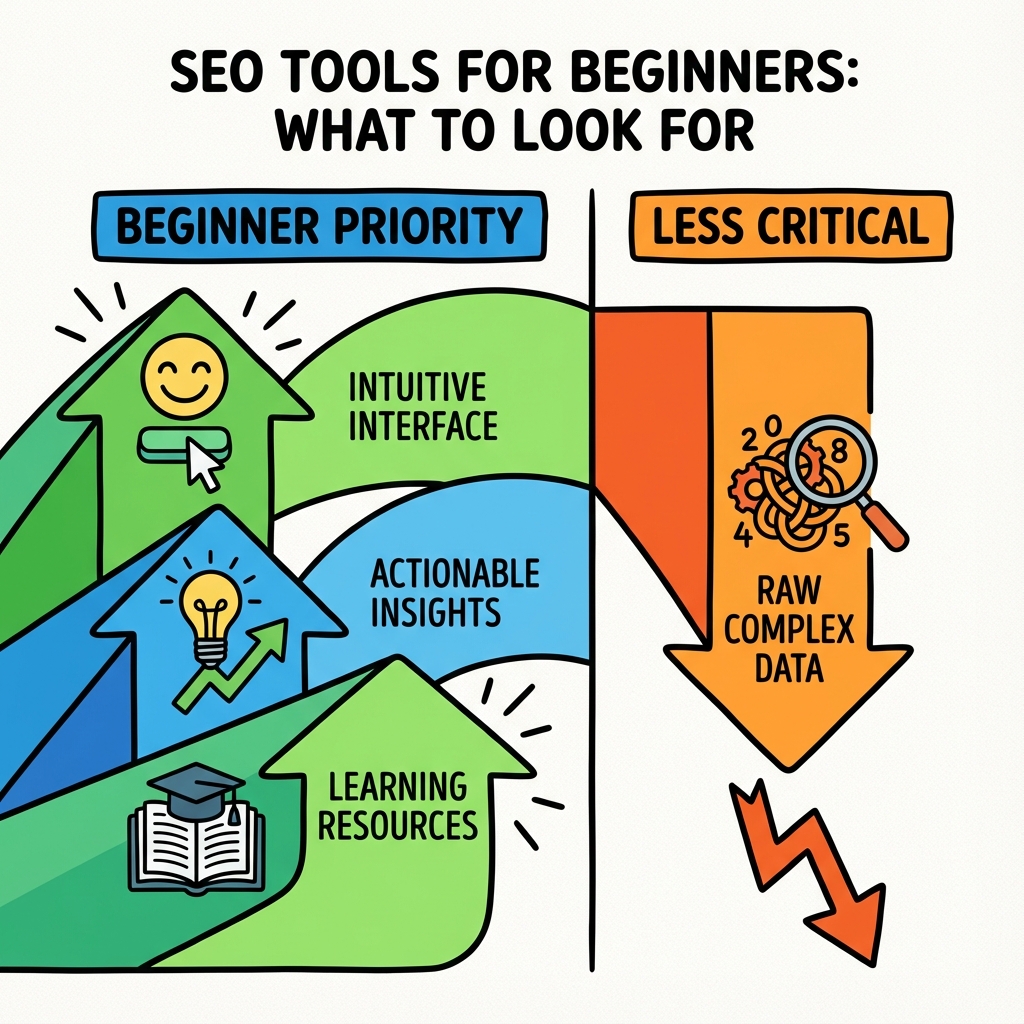
When evaluating SEO tools as a beginner, prioritize simplicity over complexity. The best tools for newcomers offer intuitive interfaces, clear reporting, and educational resources that help you understand what the data means. Look for platforms that provide actionable recommendations rather than just raw data dumps.
Essential features for beginners include keyword research capabilities, basic site auditing, rank tracking, and competitor analysis. These core functions will cover 80% of your initial SEO needs without overwhelming you with advanced features you're not ready to use yet. The tool should also offer reliable customer support and learning resources, as you'll likely have questions during your first few months.
Budget is another crucial consideration. Many beginners make the mistake of either choosing the cheapest option available or investing in expensive enterprise tools they can't fully utilize. The sweet spot lies in finding tools that offer good value for essential features while providing room to grow as your skills develop.
How Do Free SEO Tools Compare to Paid Options for Beginners?
Free SEO tools can be excellent starting points for beginners, offering valuable insights without financial commitment. Google Search Console and Google Analytics provide foundational data about your website's performance, while tools like Google Keyword Planner offer basic keyword research capabilities. These free options help you understand core SEO concepts without spending money upfront.
However, free tools typically come with limitations. You might face restricted data access, limited queries per day, or basic reporting features. For serious beginners who want comprehensive insights, investing in affordable paid tools often provides better long-term value. Paid tools usually offer more detailed competitor analysis, historical data, and user-friendly interfaces that make learning easier.
The key is understanding your commitment level. If you're testing the waters, start with free tools to build foundational knowledge. Once you're serious about SEO and ready to invest time consistently, upgrading to paid tools will accelerate your learning and results. For a deeper dive into free options, check out our analysis of what makes free SEO software tools valuable for beginners.
Which Free Tools Should Every Beginner Start With?
Google Search Console tops the list of essential free tools for beginners. It shows how Google sees your website, reveals which keywords drive traffic, and identifies technical issues that might hurt your rankings. The interface is beginner-friendly, and the data comes directly from Google, making it incredibly reliable.
Google Analytics complements Search Console by showing user behavior on your site. You can see which pages perform best, how long visitors stay, and where your traffic comes from. Understanding these metrics helps you make informed decisions about content creation and optimization priorities.
Ubersuggest offers a generous free tier that includes keyword research, site audits, and competitor analysis. While limited compared to paid versions, it provides enough functionality for beginners to conduct meaningful research and identify optimization opportunities.
What Are the Top Paid SEO Tools for Beginners?
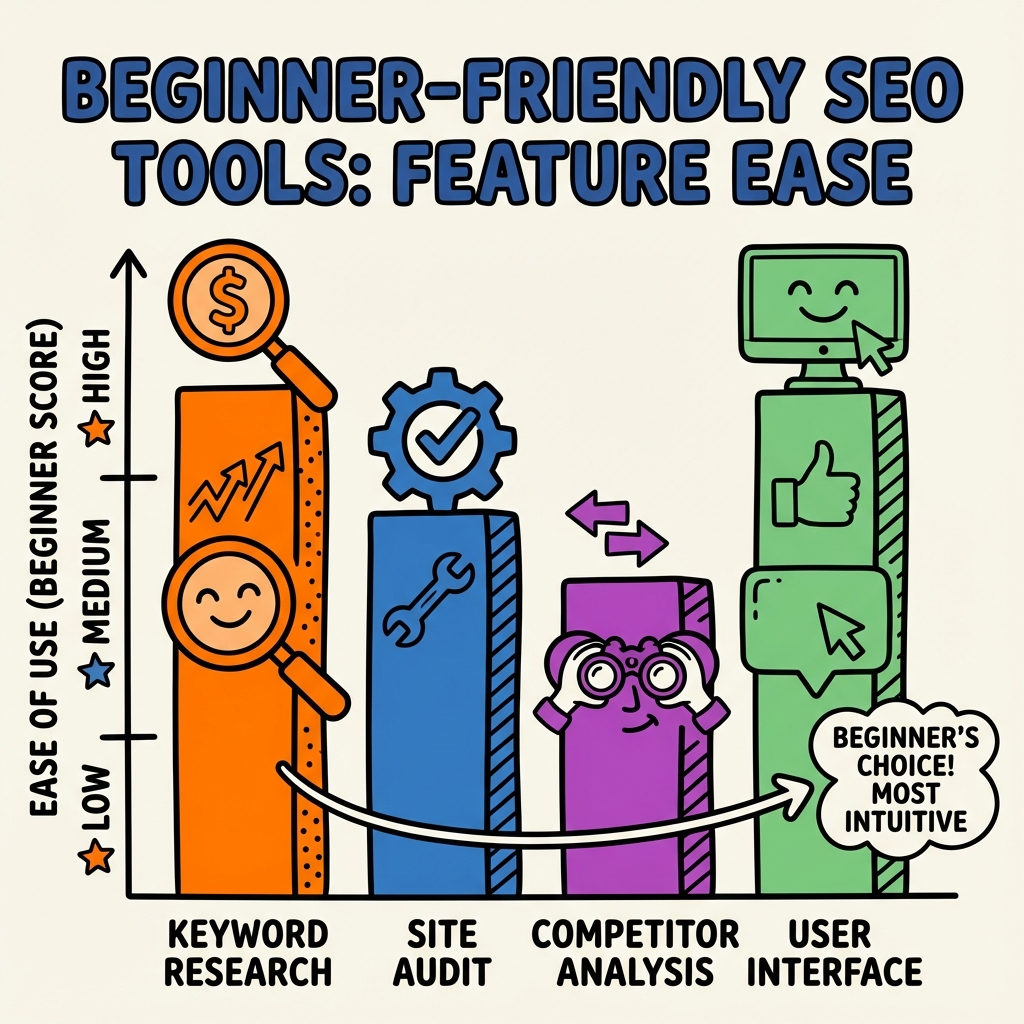
Semrush stands out as one of the most beginner-friendly comprehensive SEO platforms available. Its interface strikes the right balance between powerful functionality and ease of use. The keyword research tools provide clear difficulty scores and search volume data, while the site audit feature explains issues in plain English with specific fix recommendations.
Ahrefs offers exceptional backlink analysis and keyword research capabilities, though it has a steeper learning curve than Semrush. The tool excels at competitor analysis, showing you exactly which keywords your competitors rank for and which websites link to them. Their educational content, including tutorials and case studies, helps beginners understand advanced concepts gradually.
Moz Pro caters specifically to beginners with its user-friendly interface and excellent educational resources. The keyword difficulty scores are particularly reliable, and the site crawl feature identifies technical issues with clear explanations. Moz's blog and learning center provide valuable SEO education that complements the tool's functionality.
According to Moz's Beginner's Guide to SEO, understanding your tools is just as important as having access to them, making their educational approach particularly valuable for newcomers.
How Much Should Beginners Expect to Spend on SEO Tools?
Budget planning for SEO tools depends on your goals and business size. Individual bloggers and small business owners can start effectively with $50-100 monthly budgets, which provide access to essential features from major platforms. This investment typically covers keyword research for hundreds of terms, basic site auditing, and rank tracking for key pages.
Growing businesses or those serious about competitive SEO might need $150-300 monthly budgets to access more comprehensive data and additional features like advanced competitor analysis and historical keyword data. This higher tier usually includes more frequent data updates and larger query limits.
Remember that most platforms offer free trials or money-back guarantees. Take advantage of these offers to test multiple tools before committing. The right tool for you depends on your specific needs, technical comfort level, and learning preferences.
How Should Beginners Implement Their First SEO Tool?
Start by setting up Google Search Console and Google Analytics if you haven't already. These free tools provide the foundation for understanding your current SEO performance and should be your first priority. Verify your website ownership and let these tools collect data for at least two weeks before making major decisions.
Once you have baseline data, choose one paid tool to complement your free options. Avoid the temptation to sign up for multiple paid tools simultaneously. Master one platform thoroughly before expanding your toolkit. This focused approach prevents information overload and helps you develop deeper expertise with your chosen tool.
Begin with keyword research for your most important pages. Identify 10-20 primary keywords that represent your core topics, then use your tool to find related keywords and assess competition levels. This initial research will guide your content strategy and help you understand how SEO tools translate data into actionable insights.
Understanding the broader context of SEO implementation helps maximize your tool effectiveness. Our guide on what it really means to improve SEO on Google provides valuable context for applying tool insights effectively.
What Features Matter Most for Beginner Success?
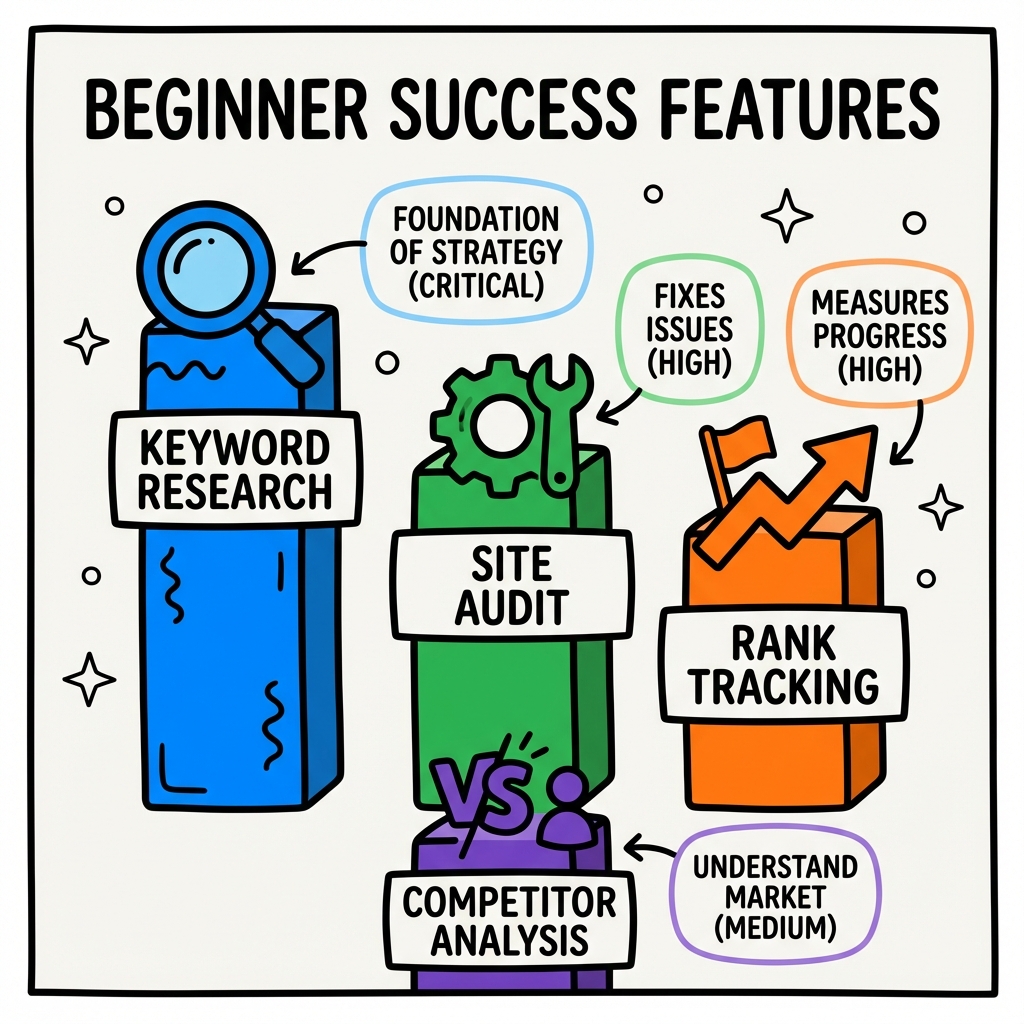
| Feature | Importance | Why It Matters |
|---|---|---|
| Keyword Research | Critical | Foundation of all SEO strategy |
| Site Audit | High | Identifies technical issues hurting rankings |
| Rank Tracking | High | Measures progress and success |
| Competitor Analysis | Medium | Reveals opportunities and gaps |
| Backlink Analysis | Medium | Important but complex for beginners |
| Content Optimization | Low | Advanced feature, not essential initially |
Site auditing features help identify technical issues that might prevent your content from ranking well. Beginners should prioritize tools that explain issues clearly and provide specific fix recommendations. Avoid tools that simply list problems without context or solutions, as these create confusion rather than clarity.
Rank tracking allows you to monitor progress and understand which optimization efforts produce results. Choose tools that track rankings across different devices and locations, as search results can vary significantly. Daily tracking isn't necessary for beginners; weekly updates provide sufficient insight while keeping costs reasonable.
How Can Beginners Avoid Common SEO Tool Mistakes?
The biggest mistake beginners make is trying to track too many keywords initially. Start with 20-50 keywords maximum, focusing on terms directly related to your core business or content topics. Tracking hundreds of keywords creates noise that makes it difficult to identify meaningful trends and improvements.
Another common error is obsessing over daily ranking fluctuations. Search rankings naturally fluctuate due to various factors, and daily changes rarely indicate significant problems or successes. Focus on weekly or monthly trends instead, which provide more reliable insights into your SEO progress.
Many beginners also make the mistake of switching tools too frequently. Each platform has unique methodologies for calculating metrics like keyword difficulty and search volume. Constantly switching tools makes it impossible to establish consistent baselines or track progress accurately. Commit to one primary tool for at least six months before considering alternatives.
For those interested in automated solutions, understanding what automated SEO tools can and cannot do helps set realistic expectations and avoid over-reliance on automation.
Which Tool Categories Should Beginners Prioritize?
Start with all-in-one platforms rather than specialized tools. Comprehensive platforms like Semrush, Ahrefs, or Moz Pro provide multiple functionalities in one interface, reducing the learning curve and subscription costs. These platforms offer sufficient depth for beginners while maintaining user-friendly interfaces.
Keyword research tools deserve your second priority, especially if your chosen all-in-one platform has limitations in this area. Effective keyword research drives content strategy and optimization priorities. Tools like KWFinder or Long Tail Pro offer beginner-friendly approaches to keyword discovery and analysis.
Technical SEO tools can wait until you've mastered content optimization basics. While site speed and technical factors matter, beginners often achieve better results by focusing on content quality and basic optimization before diving into advanced technical improvements.
According to Google's Search Quality Evaluator Guidelines, content quality and user experience remain primary ranking factors, supporting this prioritization approach.
Conclusion
Choosing the best SEO tools for beginners doesn't require the most expensive or feature-rich options available. Success comes from selecting tools that match your current skill level while providing room for growth. Start with free tools like Google Search Console and Analytics to build foundational knowledge, then invest in one comprehensive paid platform that offers keyword research, site auditing, and rank tracking capabilities.
Remember that tools are only as effective as your ability to interpret and act on their insights. Focus on mastering one platform thoroughly rather than collecting multiple subscriptions you can't fully utilize. As your SEO knowledge grows, you can always expand your toolkit with specialized solutions for specific needs.
Ready to start improving your website's search visibility? Begin with the free tools mentioned in this guide, then consider upgrading to a paid platform once you've established consistent SEO habits. The key to SEO success lies not in having the most tools, but in using the right tools effectively and consistently.

Stefan Winter
Founder & SEO Expert
Founder of Fast SEO Fix and SEO automation expert. Stefan built Fast SEO Fix to solve the tedious problem of manual SEO work. He specializes in SEO optimized content generation, keyword research, and automated SEO strategies.
