What Is Ask Marketing and Why Does It Matter?
Posted by
 Stefan Winter
TL;DR
Ask marketing is a customer-centric strategy that gathers insights directly from your audience through questions, surveys, and interactive content, creating two-way dialogue that increases engagement and builds stronger brand relationships. By implementing ask marketing across multiple channels like social media, email, and websites, businesses can collect valuable feedback while demonstrating that customer voices matter in decision-making.
How to Master Ask Marketing: A Strategic Guide for Modern Businesses
Ask marketing represents one of the most underutilized yet powerful strategies in today's digital landscape. This approach focuses on directly engaging your audience through questions, surveys, and interactive content to gather insights while building meaningful connections. Whether you're looking to improve customer understanding, boost engagement rates, or create more targeted campaigns, ask marketing provides a direct pathway to authentic audience interaction. In this comprehensive guide, you'll discover how to implement effective ask marketing strategies that drive real results for your business.
What Is Ask Marketing and Why Does It Matter?
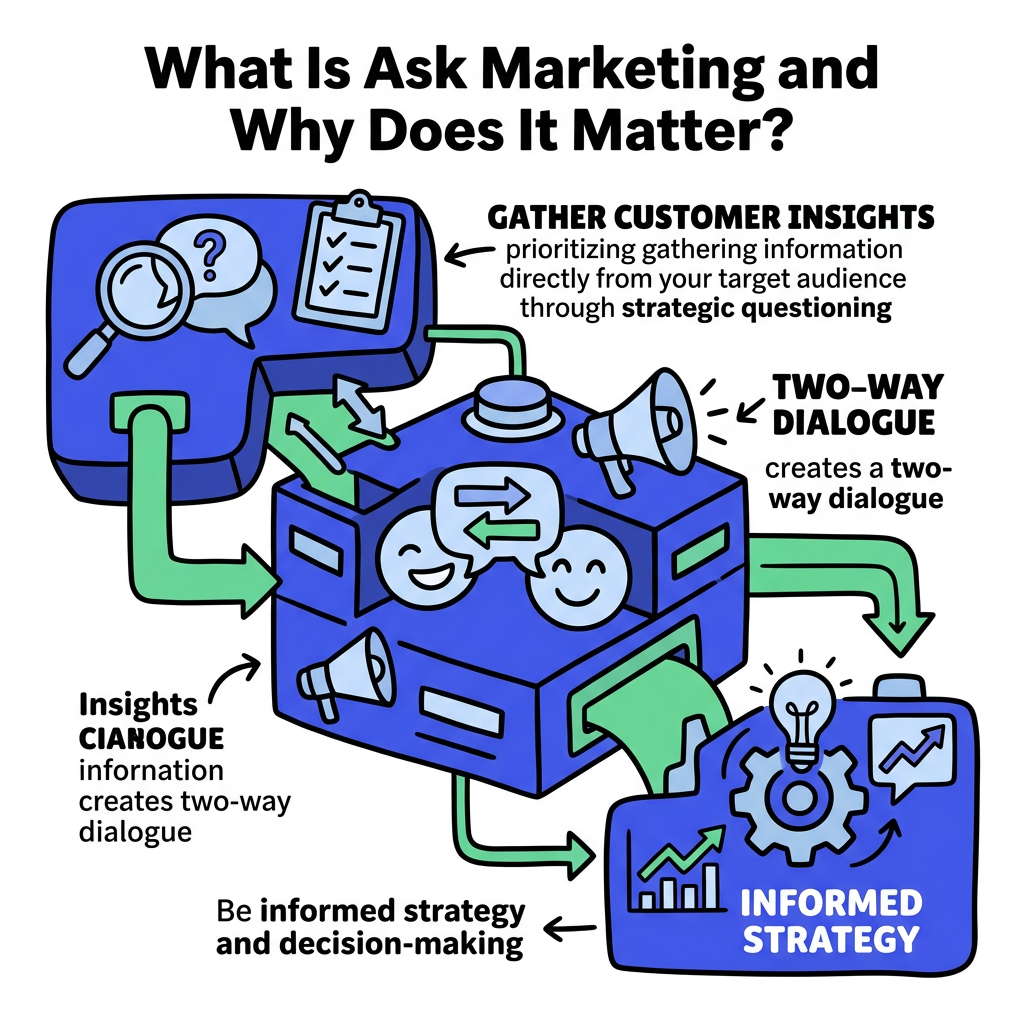
Ask marketing is a customer-centric approach that prioritizes gathering information directly from your target audience through strategic questioning and interactive engagement. Unlike traditional marketing methods that push messages outward, ask marketing creates a two-way dialogue that benefits both businesses and customers.
This strategy works because it addresses a fundamental human need: people want to be heard and valued. When you ask for opinions, feedback, or preferences, you're not just collecting data. You're demonstrating that customer voices matter in your decision-making process. Research from the Content Marketing Institute shows that interactive content generates twice as much engagement as static content, making ask marketing a crucial component of modern digital strategies.
The beauty of ask marketing lies in its versatility. You can implement it across multiple channels, from social media polls to email surveys, website pop-ups to video content that encourages responses. Each interaction provides valuable insights while strengthening the relationship between your brand and your audience.
How to Identify the Right Questions for Your Ask Marketing Strategy
The foundation of successful ask marketing begins with asking the right questions. Your questions should align with specific business objectives while providing genuine value to respondents. Start by identifying what information would be most valuable for your marketing efforts and business growth.
Consider your customer journey and identify key decision points where additional insights would be helpful. For example, if you're struggling with product positioning, ask customers about their primary pain points and how they currently solve those problems. If you need content ideas, inquire about the topics or challenges they'd like to see addressed.
Effective ask marketing questions fall into several categories:
- Preference questions: Help you understand customer tastes and choices
- Feedback questions: Gather opinions on existing products or services
- Behavioral questions: Reveal how customers interact with your brand
- Predictive questions: Uncover future needs and intentions
- Demographic questions: Provide context for other responses
Which Channels Work Best for Ask Marketing Implementation?
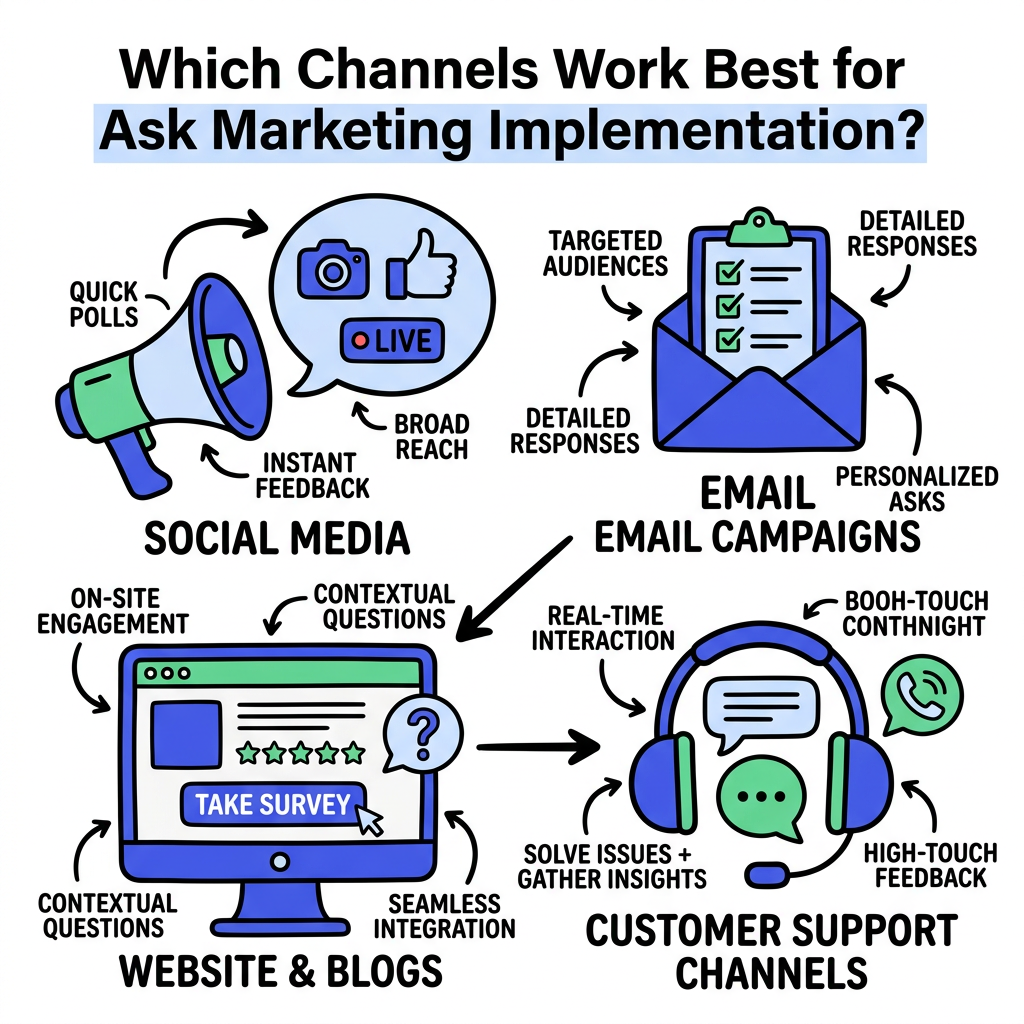
Selecting the right channels for your ask marketing efforts can make or break your campaign's success. Each platform offers unique advantages and reaches different segments of your audience. Understanding these nuances helps you maximize response rates and gather more comprehensive insights.
Social media platforms excel at quick, engaging polls and questions. Instagram Stories polls, Twitter surveys, and LinkedIn discussion posts generate immediate feedback while increasing your content's visibility. These platforms work particularly well for preference-based questions and trend-related inquiries.
Email marketing provides a more intimate setting for detailed surveys and feedback requests. Your email subscribers have already shown interest in your brand, making them more likely to participate in longer questionnaires. This channel works best for comprehensive feedback collection and customer satisfaction surveys.
| Channel | Best For | Response Rate | Implementation Effort |
|---|---|---|---|
| Social Media | Quick polls, trend insights | High | Low |
| Detailed surveys, feedback | Medium | Medium | |
| Website Pop-ups | User experience data | Medium | Low |
| Video Content | Engagement, opinions | High | High |
| Webinars | Expert insights, Q&A | Very High | High |
How to Create Compelling Ask Marketing Content That Drives Responses
Creating ask marketing content that people actually want to engage with requires a strategic blend of value proposition and user experience design. Your content must clearly communicate why participation benefits the respondent while making the process as frictionless as possible.
Start with a compelling hook that explains the purpose and value of participation. Instead of simply asking "Please take our survey," try "Help us create the content you actually want to see" or "Share your experience to help others like you." This approach transforms a request into an opportunity for meaningful contribution.
Visual design plays a crucial role in response rates. Use clean, mobile-friendly layouts with progress indicators for longer surveys. Incorporate your brand colors and fonts to maintain consistency, but avoid overwhelming designs that distract from the questions themselves. Interactive elements like sliders, drag-and-drop features, or image selection can make the experience more engaging.
Timing and context matter significantly in ask marketing success. Present questions when they're most relevant to the user's current experience. For example, ask about content preferences immediately after someone reads a blog post, or request feedback about a product right after purchase confirmation.
What Incentives Work Best for Ask Marketing Participation?
Incentivizing participation can dramatically improve response rates, but the type of incentive matters more than its monetary value. The most effective incentives align with your audience's interests and your business objectives.
Knowledge-based incentives often perform exceptionally well. Offer to share survey results, provide exclusive insights, or create content based on the responses. This approach attracts genuinely interested participants while positioning your brand as a valuable information source. Many successful ask marketing campaigns promise participants early access to findings or personalized recommendations based on their responses.
Experiential incentives like early access to new features, exclusive webinars, or behind-the-scenes content can be more valuable than monetary rewards. These incentives strengthen the relationship between your brand and participants while providing ongoing engagement opportunities.
How to Analyze and Apply Ask Marketing Data for Maximum Impact
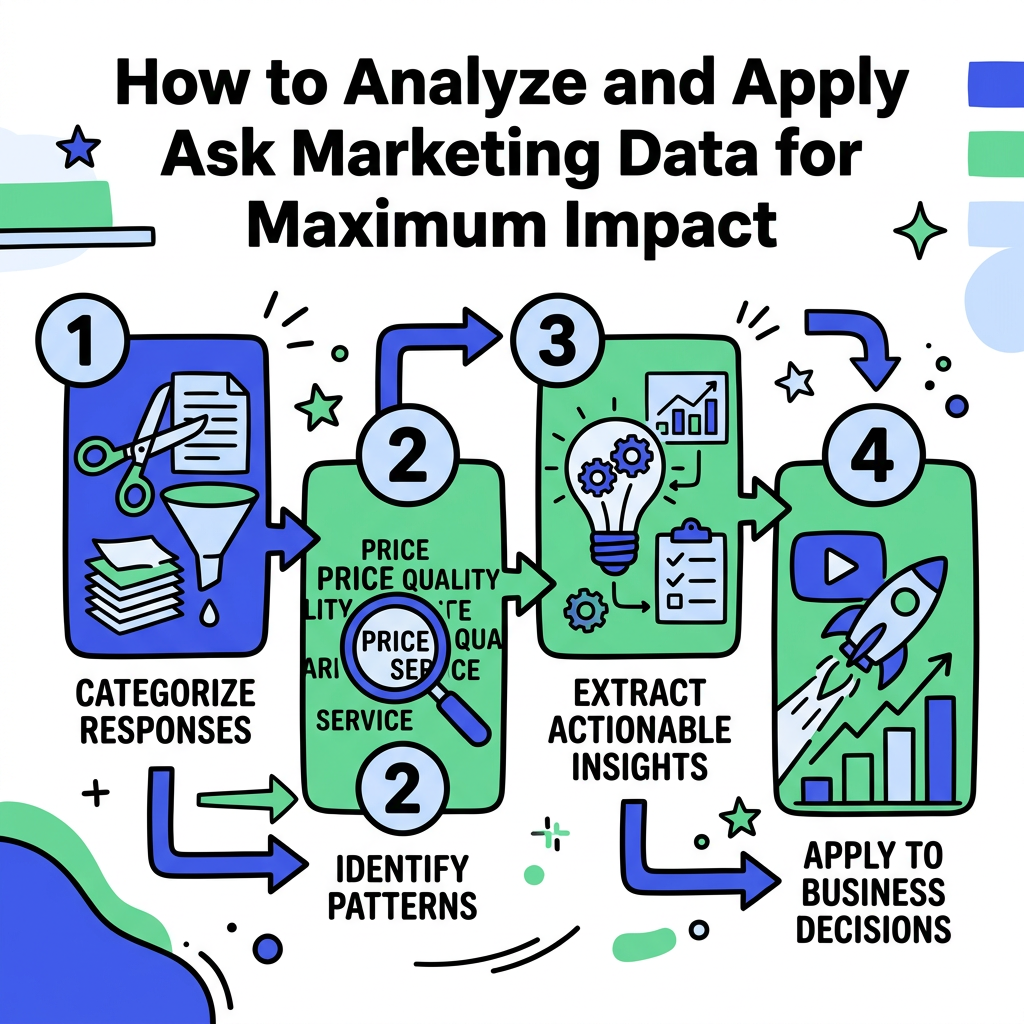
The true value of ask marketing emerges in how you analyze and apply the collected data. Raw responses need systematic analysis to uncover actionable insights that drive business decisions and marketing improvements.
Start by categorizing responses into themes and patterns. Look for recurring words, phrases, or concepts that indicate common experiences or preferences. Quantitative data from rating scales or multiple-choice questions provides clear metrics, while qualitative responses from open-ended questions offer deeper context and nuanced understanding.
Cross-reference ask marketing data with existing analytics to identify correlations and validate findings. For example, if survey respondents indicate preference for video content, check your website analytics to see if video pages have higher engagement rates. This multi-source validation strengthens your insights and supports more confident decision-making.
Create action plans based on your findings, prioritizing changes that address the most common feedback or align with your strategic objectives. Document your implementations and measure their impact to demonstrate the ROI of your ask marketing efforts. This documentation also helps refine future ask marketing campaigns by showing which questions and approaches yield the most valuable insights.
When developing your ask marketing strategy, consider how it integrates with broader content optimization efforts. Tools like SEMrush Writing Assistant can help you create more engaging survey content and follow-up materials based on the insights you gather.
How to Scale Your Ask Marketing Efforts Across Multiple Touchpoints
Scaling ask marketing requires systematic approaches that maintain quality while increasing reach and frequency. The key lies in creating templates, workflows, and automation that support consistent execution across all customer touchpoints.
Develop a content calendar that incorporates ask marketing elements into your regular publishing schedule. This might include monthly customer feedback surveys, weekly social media polls, or quarterly comprehensive research projects. Regular scheduling ensures continuous data collection while preventing survey fatigue among your audience.
Create question banks organized by topic, campaign type, and customer journey stage. This resource enables quick campaign creation while maintaining strategic alignment with business objectives. Include both evergreen questions that provide ongoing insights and timely questions that capture current trends or events.
Automation tools can streamline many ask marketing processes, from survey distribution to initial data analysis. However, maintain human oversight for response analysis and strategy development. The nuanced insights that drive successful ask marketing campaigns require human interpretation and creative application.
Integration with your existing marketing technology stack amplifies ask marketing effectiveness. Connect survey data with your CRM system, email marketing platform, and analytics tools to create comprehensive customer profiles and more personalized marketing experiences.
Conclusion
Ask marketing transforms the traditional marketer-customer relationship into a collaborative partnership that benefits everyone involved. By systematically gathering insights directly from your audience, you create more relevant content, develop better products, and build stronger customer relationships. The strategies outlined in this guide provide a roadmap for implementing ask marketing across your organization, from initial question development through data analysis and application.
Remember that successful ask marketing requires ongoing commitment and refinement. Start with small experiments, measure results carefully, and gradually expand your efforts as you develop expertise and see positive outcomes. The insights you gather will not only improve your marketing effectiveness but also demonstrate genuine customer focus that builds long-term brand loyalty.
Ready to transform your marketing approach with ask marketing strategies? Begin by identifying one key question your business needs answered, choose the most appropriate channel for your audience, and launch your first ask marketing campaign this week.
Frequently Asked Questions
Ask marketing is a customer-centric approach that prioritizes gathering information directly from your audience through strategic questioning and interactive engagement. Unlike traditional marketing that pushes messages outward, ask marketing creates a two-way dialogue that benefits both businesses and customers by demonstrating that customer voices matter.
Ask marketing addresses a fundamental human need to be heard and valued. Research shows that interactive content generates twice as much engagement as static content, making ask marketing crucial for improving customer understanding, boosting engagement rates, and creating more targeted campaigns.
Effective ask marketing questions fall into five categories: preference questions (customer tastes), feedback questions (opinions on products), behavioral questions (how customers interact with your brand), predictive questions (future needs), and demographic questions (context for responses). Questions should be specific, actionable, and relevant without leading respondents toward predetermined answers.
Different channels serve different purposes: social media excels at quick polls with high response rates, email provides intimate settings for detailed surveys, website pop-ups capture users at crucial moments, video content drives high engagement, and webinars offer expert insights. Choose channels based on your specific goals and target audience segments.
Create compelling hooks that explain the purpose and value of participation, use clean mobile-friendly layouts with progress indicators, and make the process as frictionless as possible. Transform requests into opportunities for meaningful contribution by showing how participation benefits the respondent, not just your business.

Stefan Winter
Founder & SEO Expert
Founder of Fast SEO Fix and SEO automation expert. Stefan built Fast SEO Fix to solve the tedious problem of manual SEO work. He specializes in SEO optimized content generation, keyword research, and automated SEO strategies.
