What Are SEO Automation Tools and Why Do They Matter?
Posted by
 Stefan Winter
How to Choose the Right SEO Automation Tools for Maximum Results
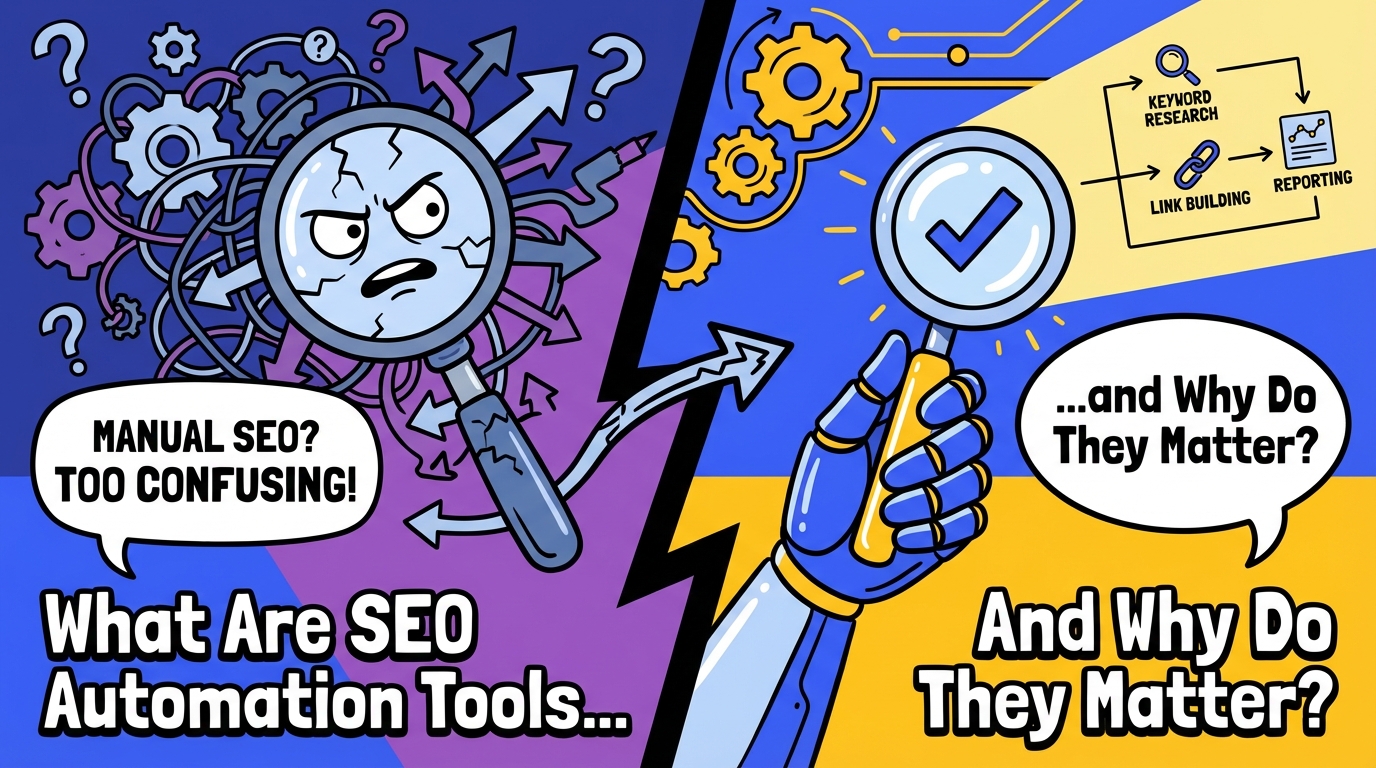
The digital marketing landscape has transformed dramatically, and manual SEO tasks that once consumed entire workdays can now be completed in minutes with the right SEO automation tools. If you're spending hours on repetitive optimization tasks while your competitors are scaling their efforts through automation, you're falling behind in the race for search engine visibility.
This comprehensive guide will walk you through everything you need to know about selecting and implementing SEO automation tools that deliver measurable results. You'll discover how to evaluate different platforms, implement automated workflows, and maximize your return on investment while avoiding common pitfalls that waste both time and money.
What Are SEO Automation Tools and Why Do They Matter?
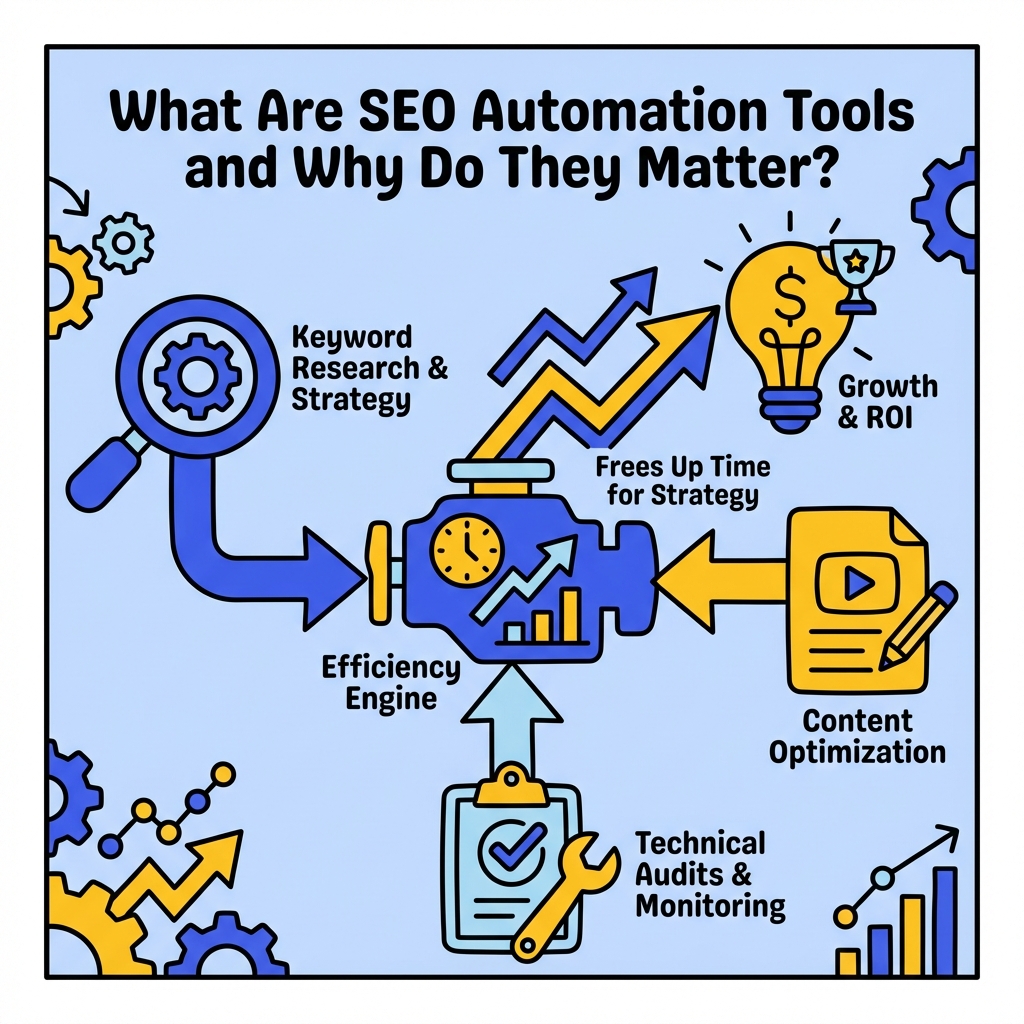
SEO automation tools are software platforms designed to streamline and automate repetitive search engine optimization tasks. These powerful solutions handle everything from keyword research and content optimization to technical audits and performance monitoring, freeing up valuable time for strategic planning and creative work.
The importance of these tools extends far beyond simple time savings. Modern search engines process billions of queries daily, and staying competitive requires monitoring hundreds of ranking factors across multiple pages and keywords. Manual processes simply cannot match the speed and accuracy that automation provides.
Consider this: a single website audit that might take an SEO professional eight hours to complete manually can be finished by automation tools in under 30 minutes. This efficiency gain allows marketing teams to focus on high-level strategy, creative content development, and relationship building rather than getting bogged down in data collection and routine optimizations.
How to Identify Your Specific Automation Needs?
Before diving into tool selection, you must clearly define what aspects of your SEO workflow need automation. Different businesses have varying requirements based on their size, industry, and current optimization maturity level.
Start by conducting a thorough audit of your current SEO processes. Document how much time your team spends on tasks like keyword research, rank tracking, technical audits, content optimization, and reporting. Identify bottlenecks where manual work creates delays or inconsistencies in your optimization efforts.
Consider your team's expertise level as well. If you're working with SEO consulting services, you might need more advanced automation capabilities. Conversely, smaller teams might benefit from user-friendly platforms that combine multiple functions in a single interface.
What Budget Considerations Should Guide Your Decision?
Budget planning for SEO automation tools requires balancing upfront costs with long-term value creation. Enterprise-level platforms can cost thousands of dollars monthly, while smaller tools might range from $50 to $500 per month.
Calculate the true cost of manual processes by multiplying the hours spent on SEO tasks by your team's hourly rates. Most businesses discover that even premium automation tools pay for themselves within the first few months through improved efficiency and better results.
How to Evaluate Key Features in SEO Automation Tools?

The most effective SEO automation tools share several critical features that separate them from basic utilities. Understanding these capabilities will help you make informed decisions that align with your optimization goals.
Comprehensive keyword research automation stands as perhaps the most valuable feature. Look for tools that can automatically identify keyword opportunities, analyze search intent, and track ranking changes across thousands of terms simultaneously. The best platforms integrate with search engine marketing services to provide holistic campaign insights.
Technical SEO automation capabilities are equally important. Your chosen tools should automatically crawl websites, identify technical issues, monitor page speed, and flag problems that could impact search engine visibility. This includes automated monitoring of mobile usability, structured data implementation, and core web vitals performance.
| Feature Category | Essential Capabilities | Advanced Options |
|---|---|---|
| Keyword Research | Auto-discovery, rank tracking, competitor analysis | Search intent analysis, seasonal trends |
| Technical SEO | Site crawling, error detection, speed monitoring | Core web vitals, mobile optimization |
| Content Optimization | On-page analysis, readability scoring | AI content suggestions, semantic analysis |
| Reporting | Automated dashboards, scheduled reports | Custom metrics, client portals |
What Integration Capabilities Matter Most?
Modern SEO automation tools must integrate seamlessly with your existing marketing technology stack. Look for platforms that connect with Google Analytics, Google Search Console, content management systems, and social media platforms.
API access becomes crucial for larger organizations that need custom integrations or want to build proprietary dashboards. The most valuable tools offer robust APIs that allow data sharing between platforms without manual export and import processes.
How to Implement SEO Automation Tools Effectively?
Successful implementation of SEO automation tools requires careful planning and phased rollouts. Rushing into full automation without proper setup often leads to inaccurate data and missed opportunities for optimization.
Begin with a pilot program focusing on one specific area of your SEO workflow. For example, start by automating rank tracking for your most important keywords before expanding to technical audits or content optimization. This approach allows you to learn the platform's capabilities while minimizing disruption to existing processes.
Data accuracy should be your top priority during implementation. Configure tracking parameters carefully, ensure proper website verification, and validate automated reports against manual checks during the initial weeks. Most platforms require 2-4 weeks to establish baseline data before providing reliable insights.
Training your team on the new tools is equally critical. Even the most sophisticated automation platform will underperform if users don't understand its capabilities or how to interpret the data it provides. Invest time in comprehensive training sessions and create documentation for common tasks and troubleshooting procedures.
How to Set Up Automated Workflows That Drive Results?
Effective automated workflows combine multiple tool functions to create comprehensive optimization processes. For instance, you might set up a workflow that automatically identifies new keyword opportunities, analyzes competitor content for those terms, and generates optimization recommendations for your existing pages.
Start with these essential automated workflows:
- Weekly Technical Audits: Automatically scan your website for broken links, missing meta descriptions, and other technical issues
- Competitor Monitoring: Track competitor keyword rankings, content updates, and backlink acquisition
- Content Performance Analysis: Monitor which pages are gaining or losing traffic and identify optimization opportunities
- Rank Tracking Alerts: Receive notifications when important keywords experience significant ranking changes
How to Measure ROI from Your SEO Automation Investment?
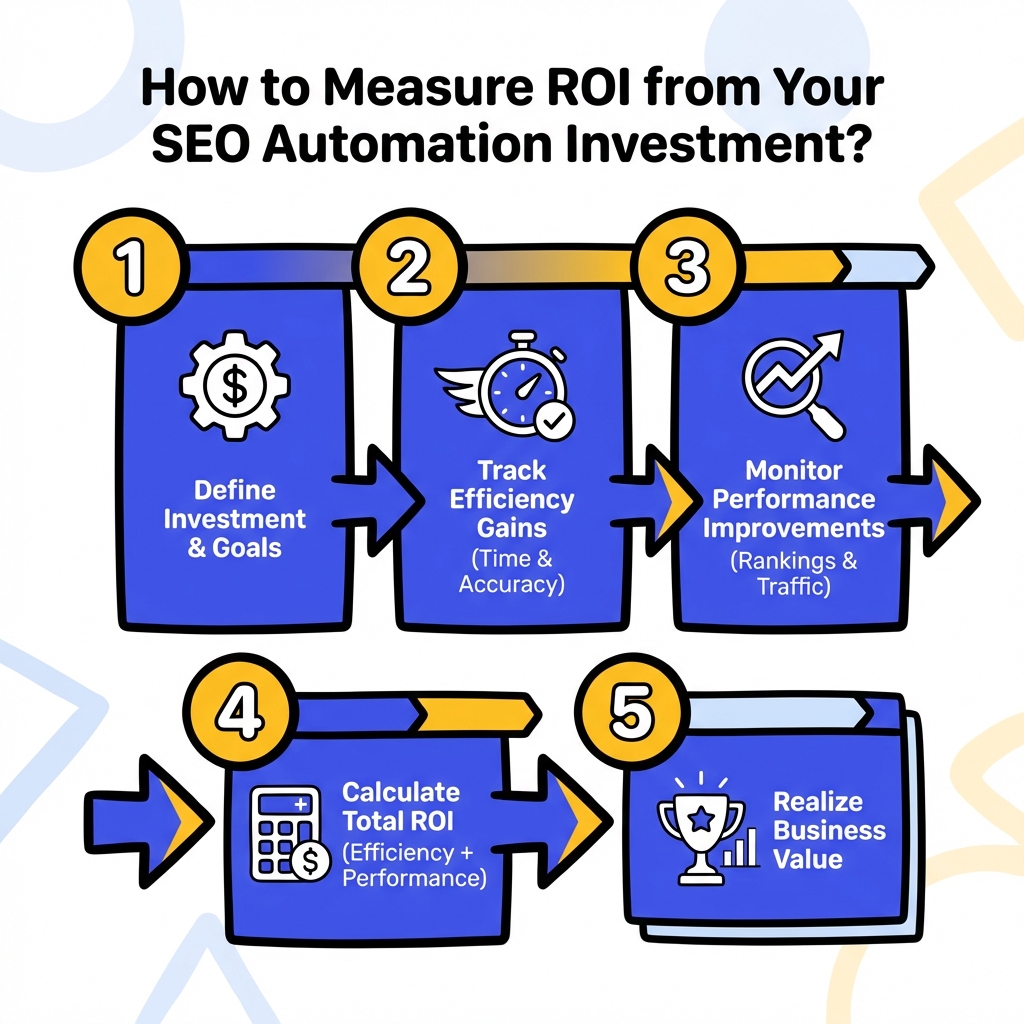
Measuring return on investment from SEO automation tools requires tracking both efficiency gains and performance improvements. Many businesses focus solely on ranking improvements while overlooking the substantial value created through time savings and improved accuracy.
Calculate efficiency ROI by comparing the time required for manual tasks versus automated processes. If automation saves 20 hours per week and your team's loaded hourly rate is $75, that represents $1,500 in weekly value creation. Annualized, this efficiency gain alone justifies significant tool investments.
Performance ROI comes from improved search engine visibility and organic traffic growth. Track metrics like organic traffic increases, keyword ranking improvements, and conversion rate optimization. The best SEO reporting dashboards make it easy to visualize these improvements and connect them to business outcomes.
What Metrics Should You Monitor for Success?
Beyond traditional SEO metrics, monitor automation-specific indicators that reveal tool effectiveness. Track data accuracy by comparing automated reports with manual verification samples. Monitor alert reliability to ensure you're notified about important changes without being overwhelmed by false positives.
User adoption metrics within your team also indicate success. If team members aren't regularly using the automation tools, investigate whether additional training is needed or if the platform isn't meeting actual workflow needs.
How to Avoid Common SEO Automation Pitfalls?
The most frequent mistake in SEO automation is over-relying on tools without maintaining strategic oversight. Automation excels at data collection and routine tasks but cannot replace human judgment in strategy development and creative problem-solving.
Avoid the temptation to automate everything immediately. Some SEO tasks benefit from human insight, particularly those involving content strategy, user experience optimization, and relationship building for link acquisition. The most successful automation implementations combine tool efficiency with human expertise.
Data interpretation represents another common challenge. Automated tools generate vast amounts of data, but extracting actionable insights requires understanding search engine algorithms, user behavior, and business objectives. Invest in training to ensure your team can effectively analyze and act on automated reports.
Conclusion
Choosing the right SEO automation tools transforms your optimization efforts from reactive task management to proactive strategy execution. The key lies in understanding your specific needs, evaluating tools based on essential capabilities rather than flashy features, and implementing automation gradually while maintaining strategic oversight.
Remember that the most expensive tool isn't necessarily the best fit for your organization. Focus on platforms that integrate well with your existing workflows, provide accurate data, and scale with your business growth. When properly implemented, SEO automation tools don't just save time – they enable better decision-making and more consistent optimization results.
Ready to revolutionize your SEO workflow? Start by auditing your current processes and identifying the biggest time drains in your optimization efforts. Then evaluate automation tools based on their ability to address these specific challenges while supporting your long-term growth objectives.

Stefan Winter
Founder & SEO Expert
Founder of Fast SEO Fix and SEO automation expert. Stefan built Fast SEO Fix to solve the tedious problem of manual SEO work. He specializes in SEO optimized content generation, keyword research, and automated SEO strategies.
