What Makes a Keyword Tool Worth Your Investment?
Posted by
 Stefan Winter
How to Choose the Perfect Keyword Tool for Your SEO Success
Finding the right keyword tool can make or break your SEO strategy. With hundreds of options available, from free basic tools to premium enterprise solutions, selecting the perfect keyword tool for your specific needs requires careful consideration of features, budget, and goals. This comprehensive guide will walk you through the essential steps to identify, evaluate, and choose a keyword tool that delivers real results for your website.
What Makes a Keyword Tool Worth Your Investment?
Before diving into specific tools, you need to understand what separates effective keyword research platforms from basic suggestion generators. A quality keyword tool should provide accurate search volume data, competitive analysis, and actionable insights that directly impact your content strategy.
The most valuable keyword tools combine multiple data sources to give you a complete picture of search behavior. They show not just what people are searching for, but how difficult it will be to rank for those terms and what opportunities exist in your niche. This comprehensive approach helps you make informed decisions about where to focus your keyword research efforts.
When evaluating potential tools, consider how they integrate with your existing workflow. The best keyword tool for your needs should complement your content creation process and provide insights that directly translate into better organic traffic growth.
How to Identify Your Keyword Research Requirements?
Start by assessing your current SEO situation and future goals. Are you running a local business targeting geographic-specific terms, or do you need to compete on a national scale? Your scope determines which features matter most in a keyword tool.
Consider your content production capacity and team size. If you're managing multiple websites or creating dozens of articles monthly, you'll need a keyword tool with bulk analysis capabilities and team collaboration features. Smaller operations might prioritize simplicity and cost-effectiveness over advanced functionality.
Think about your technical expertise level as well. Some keyword tools require significant learning curves and offer complex features that might overwhelm beginners. Others provide streamlined interfaces perfect for quick research sessions but lack depth for advanced analysis.
| Requirement Type | Beginner Needs | Advanced Needs |
|---|---|---|
| Search Volume Data | Basic monthly estimates | Historical trends and seasonal patterns |
| Competitor Analysis | Simple difficulty scores | Detailed SERP analysis and gap identification |
| Keyword Suggestions | Related terms and phrases | Long-tail variations and semantic clusters |
| Reporting Features | Basic export options | Custom dashboards and automated reports |
| Integration Options | Standalone functionality | API access and third-party connections |
Which Features Should You Prioritize in a Keyword Tool?
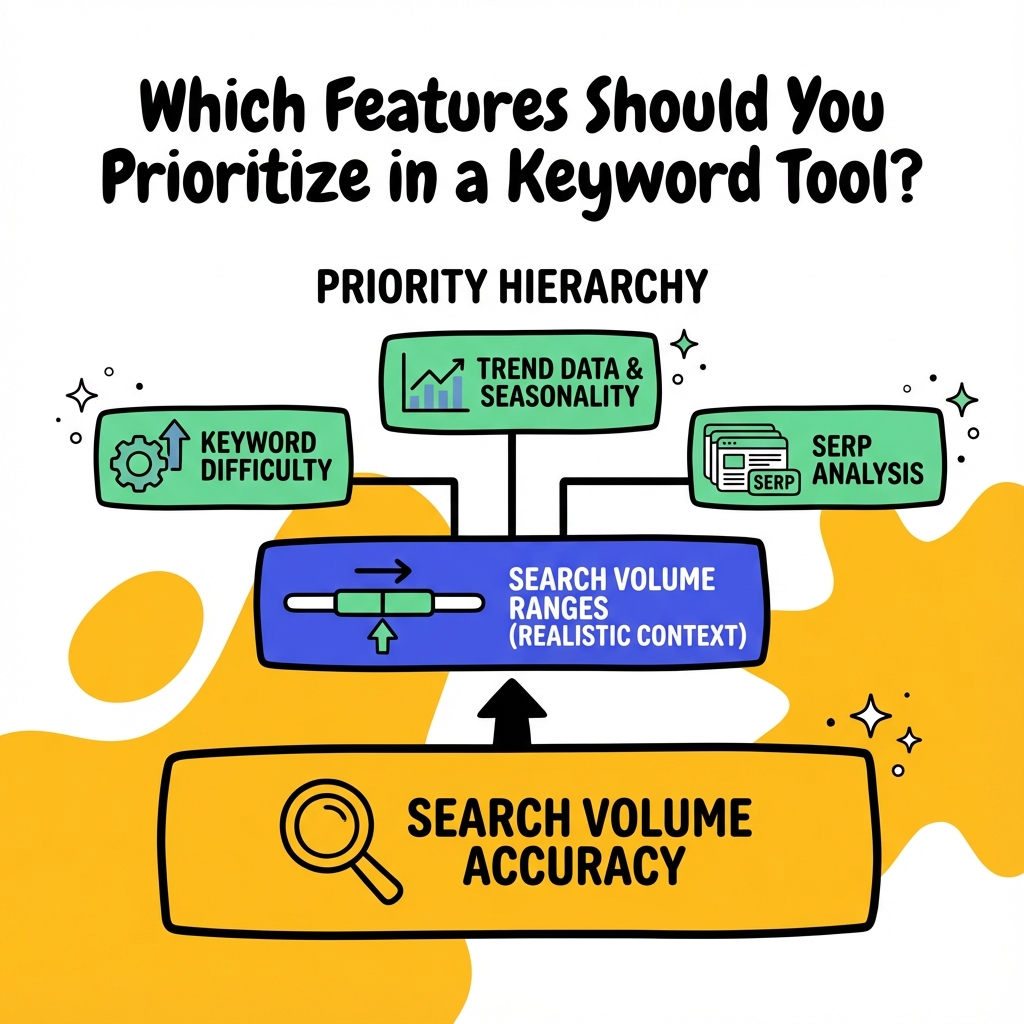
Search volume accuracy stands as the foundation of any reliable keyword tool. However, raw numbers tell only part of the story. Look for tools that provide search volume ranges rather than exact figures, as these tend to be more realistic. According to Google's own documentation, search volumes fluctuate based on seasonality, trends, and user behavior changes.
Keyword difficulty metrics help you understand the competitive landscape for each term. The best keyword tools use multiple factors to calculate difficulty scores, including domain authority of ranking pages, content quality indicators, and backlink profiles. This comprehensive approach gives you a realistic picture of ranking chances.
SERP analysis features within your keyword tool should show you exactly who's ranking for target terms and why. This intelligence helps you identify content gaps, understand user intent, and develop strategies to outperform competitors. Tools that display featured snippets, local packs, and other SERP features provide additional strategic value.
How Important Are Advanced Analytics Features?
Advanced analytics separate professional-grade keyword tools from basic alternatives. Historical trend data helps you identify seasonal patterns and long-term search behavior changes. This information proves invaluable for content planning and budget allocation decisions.
Search intent classification features help you understand whether users are looking for information, products, or services. This insight directly impacts your content strategy and helps align your pages with user expectations. The most sophisticated keyword tools use machine learning to categorize intent automatically.
Geographic and demographic data add another layer of targeting precision. If your business serves specific regions or demographics, these features help you identify location-specific opportunities and understand audience variations across different markets.
How to Evaluate Keyword Tool Pricing and Value?
Keyword tool pricing varies dramatically, from completely free options to enterprise solutions costing thousands monthly. The key lies in matching price to actual value for your specific situation. Free tools often provide basic functionality suitable for small websites or initial research phases.
Mid-tier keyword tools typically offer the best value for most businesses. They provide professional features without enterprise-level costs, making them ideal for growing companies and established websites. These tools usually include API access, bulk analysis, and advanced filtering options.
Enterprise keyword tools justify their higher costs through comprehensive data sets, advanced features, and dedicated support. Consider these options if you're managing large-scale SEO operations, multiple websites, or need white-label reporting capabilities.
Calculate the potential return on investment by considering how better keyword research translates into improved rankings and increased traffic. A keyword tool that helps you identify just one high-value opportunity can pay for itself many times over.
What Red Flags Should You Avoid When Selecting a Keyword Tool?
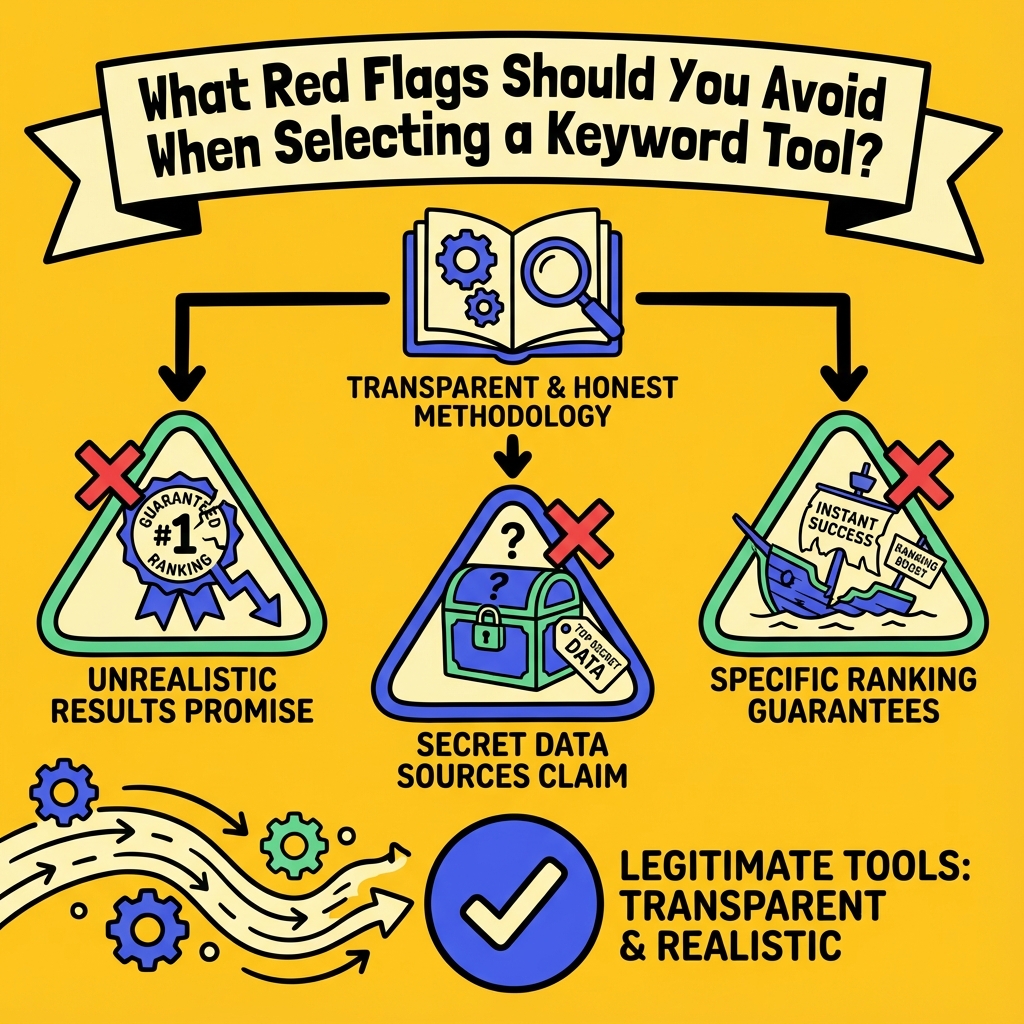
Avoid keyword tools that promise unrealistic results or claim to have "secret" data sources. Legitimate tools are transparent about their data sources and methodology. Be particularly wary of tools that guarantee specific ranking improvements, as SEO success depends on many factors beyond keyword selection.
Tools with outdated interfaces or infrequent updates often indicate declining development support. SEO evolves rapidly, and your keyword tool should keep pace with algorithm changes and new search features. Check when the tool last received significant updates and whether the company actively maintains the platform.
Poor customer support can turn a good keyword tool into a frustrating experience. Look for providers that offer comprehensive documentation, responsive support teams, and active user communities. These resources become invaluable when you encounter technical issues or need guidance on advanced features.
Data accuracy issues represent another major red flag. Test potential keyword tools with terms you already know well to verify their accuracy. Compare search volume estimates and difficulty scores across multiple tools to identify outliers or inconsistencies.
How to Test and Compare Keyword Tools Effectively?
Most reputable keyword tool providers offer free trials or freemium versions. Take advantage of these opportunities to test tools with your actual keywords and projects. This hands-on approach reveals interface preferences, feature usefulness, and data quality issues that specifications alone cannot convey.
Create a standardized testing process using the same set of seed keywords across different tools. Document search volume estimates, keyword suggestions, and difficulty scores for direct comparison. This systematic approach helps you identify which tools provide the most accurate and useful data for your niche.
Pay attention to tool performance and reliability during testing periods. Slow loading times, frequent downtime, or buggy features indicate potential long-term frustrations. Your keyword tool should enhance productivity, not hinder it with technical problems.
Consider integration capabilities during your testing phase. If you use specific content management systems, analytics platforms, or SEO tools, verify that your chosen keyword tool integrates smoothly with your existing workflow. Seamless integration can significantly impact your daily efficiency and overall SEO strategy effectiveness.
Conclusion
Choosing the right keyword tool requires careful evaluation of your specific needs, budget constraints, and growth objectives. The perfect keyword tool for your situation balances comprehensive features with usability, providing accurate data that translates into actionable SEO strategies. Remember that the most expensive option isn't always the best choice, and free tools can sometimes meet basic requirements effectively.
Take time to test multiple options, compare their performance with your actual keywords, and consider how each tool fits into your broader SEO workflow. The investment you make in selecting the right keyword tool will pay dividends through improved content targeting, better rankings, and increased organic traffic.
Ready to transform your SEO results with the right keyword research approach? Start by identifying your specific requirements using the framework outlined in this guide, then test the top contenders with your actual projects to find your perfect match.

Stefan Winter
Founder & SEO Expert
Founder of Fast SEO Fix and SEO automation expert. Stefan built Fast SEO Fix to solve the tedious problem of manual SEO work. He specializes in SEO optimized content generation, keyword research, and automated SEO strategies.
