The Complete Guide to How to Create a Content Strategy That Actually Works
Posted by
 Stefan Winter
TL;DR
A content strategy is a documented plan that connects every piece of content you create to specific business goals and audience needs, rather than publishing randomly. This guide walks you through defining goals and audience, auditing existing content, choosing the right formats and channels, and building an editorial calendar to ensure consistent, purposeful content creation.
The Complete Guide to How to Create a Content Strategy That Actually Works
If you have ever published a blog post, sent a newsletter, or posted on social media and wondered why nothing seemed to stick, you are not alone. Most businesses and creators jump into content production without a clear plan, and the results are predictably scattered. A well-built content strategy changes everything. It gives your efforts direction, your audience a reason to keep coming back, and your brand a consistent voice that builds trust over time. In this complete guide, you will learn exactly how to create a content strategy from the ground up, with practical steps you can start applying today.
What Is a Content Strategy, and Why Does It Matter?
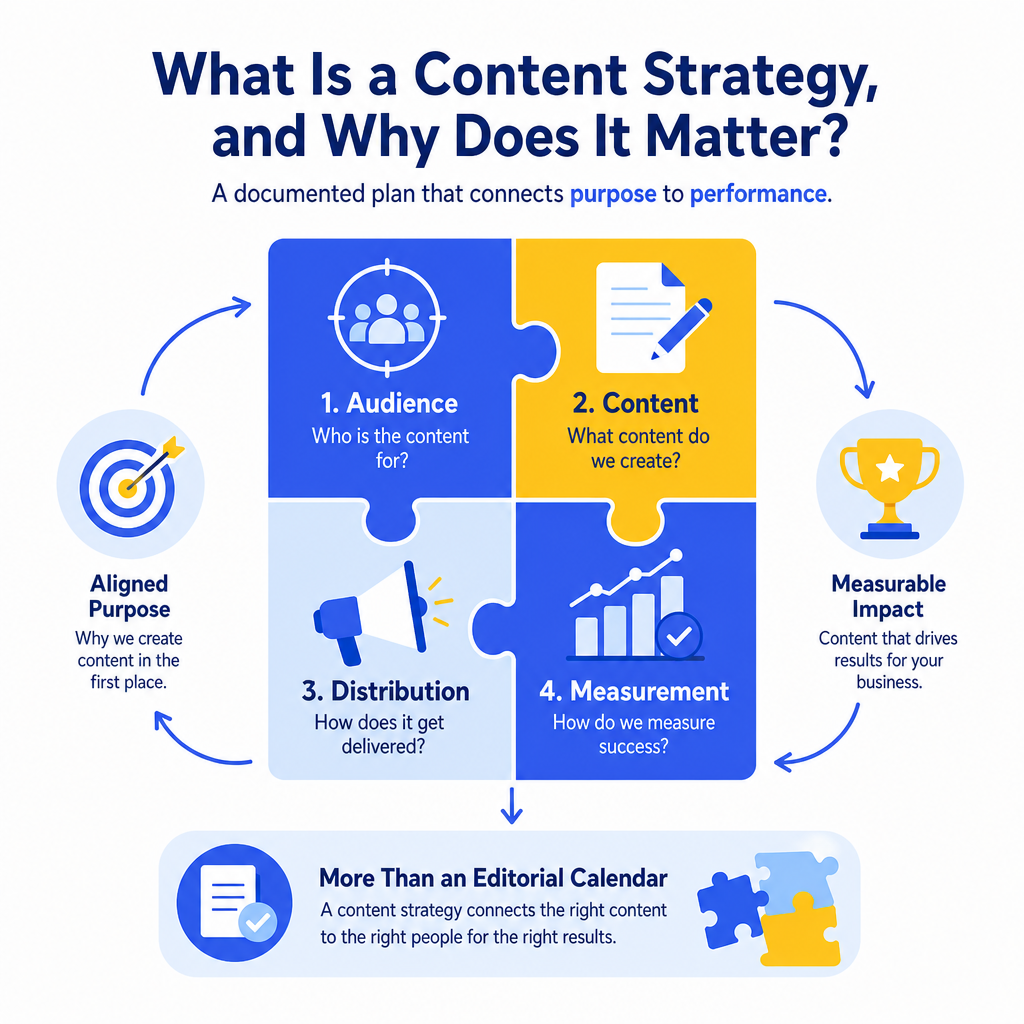
Before diving into the how-to, it helps to understand what a content strategy actually is. A content strategy is a documented plan that defines what content you create, who it is for, how it gets distributed, and how success is measured. It is not just an editorial calendar or a list of blog topics. It is the framework that connects every piece of content you produce to a larger business or communication goal.
Without a strategy, content becomes noise. With one, every article, video, social post, or email serves a purpose. In 2026, audiences are more selective than ever. They have access to endless information, and they gravitate toward sources that consistently deliver value. A strong content strategy is what separates brands that build loyal audiences from those that simply add to the clutter.
The business case is equally compelling. Research consistently shows that organizations with a documented content strategy are significantly more likely to report success with their content marketing efforts. A strategy helps you allocate resources wisely, avoid duplicating efforts, and create content that supports every stage of the customer journey.
How Do You Define Your Goals and Audience?
The first step in learning how to create a content strategy is getting crystal clear on two things: what you want to achieve and who you are trying to reach. These two elements shape every decision that follows.
Setting Clear Content Goals
Your goals should connect directly to broader business objectives. Ask yourself what you want content to accomplish. Common content goals include:
- Building brand awareness among a new audience segment
- Generating qualified leads for a product or service
- Educating existing customers to reduce churn
- Establishing thought leadership in a specific industry
- Driving organic search traffic to a website
Understanding Your Target Audience
Once your goals are set, you need a detailed picture of who you are creating content for. Go beyond basic demographics. Think about your audience's daily challenges, the questions they type into search engines, the platforms they spend time on, and the type of content they actually consume and share.
Creating audience personas is a practical way to organize this information. A persona is a semi-fictional profile of your ideal reader or viewer, built from real data and research. Interview existing customers, analyze your website analytics, study competitor comment sections, and use tools like Google Search Console or social listening platforms to understand what your audience is already asking.
How Do You Audit Your Existing Content?
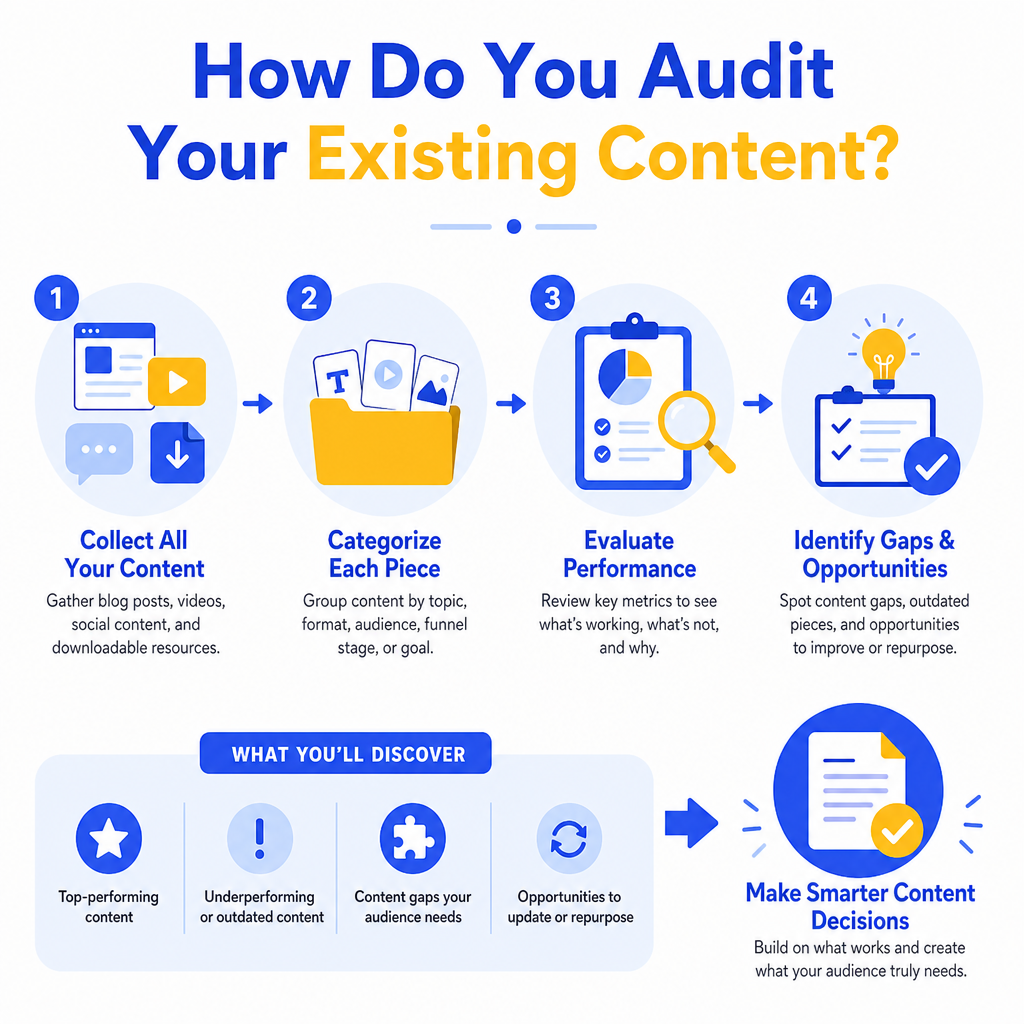
If you already have content published, do not skip this step. A content audit helps you understand what you already have, what is working, and what gaps exist before you create anything new.
Go through your existing blog posts, videos, social content, and downloadable resources. Categorize each piece by topic, format, and performance. Look at metrics like organic traffic, time on page, social shares, and conversion rates. You will likely find that a small percentage of your content drives the majority of your results. That insight is gold.
A content audit also reveals gaps. Maybe you have plenty of awareness-level content but nothing that helps someone in the decision stage. Or perhaps you cover certain topics thoroughly while leaving related questions completely unanswered. These gaps become your content opportunities.
Choosing the Right Content Types and Channels
Not all content formats are created equal, and not every channel makes sense for every audience. Part of knowing how to create a content strategy is making smart choices about where to show up and in what format.
Here is a quick reference table to help match content types to common goals:
| Content Goal | Recommended Content Types | Best Channels |
|---|---|---|
| Brand Awareness | Short videos, social posts, podcasts | Instagram, TikTok, YouTube, LinkedIn |
| Lead Generation | Guides, webinars, email newsletters | Blog, email, LinkedIn |
| SEO Traffic | Long-form articles, how-to guides | Website blog, Google Search |
| Customer Education | Tutorials, FAQs, knowledge bases | Website, email, YouTube |
| Thought Leadership | Opinion pieces, research reports | LinkedIn, industry publications |
How Do You Build a Content Plan and Editorial Calendar?
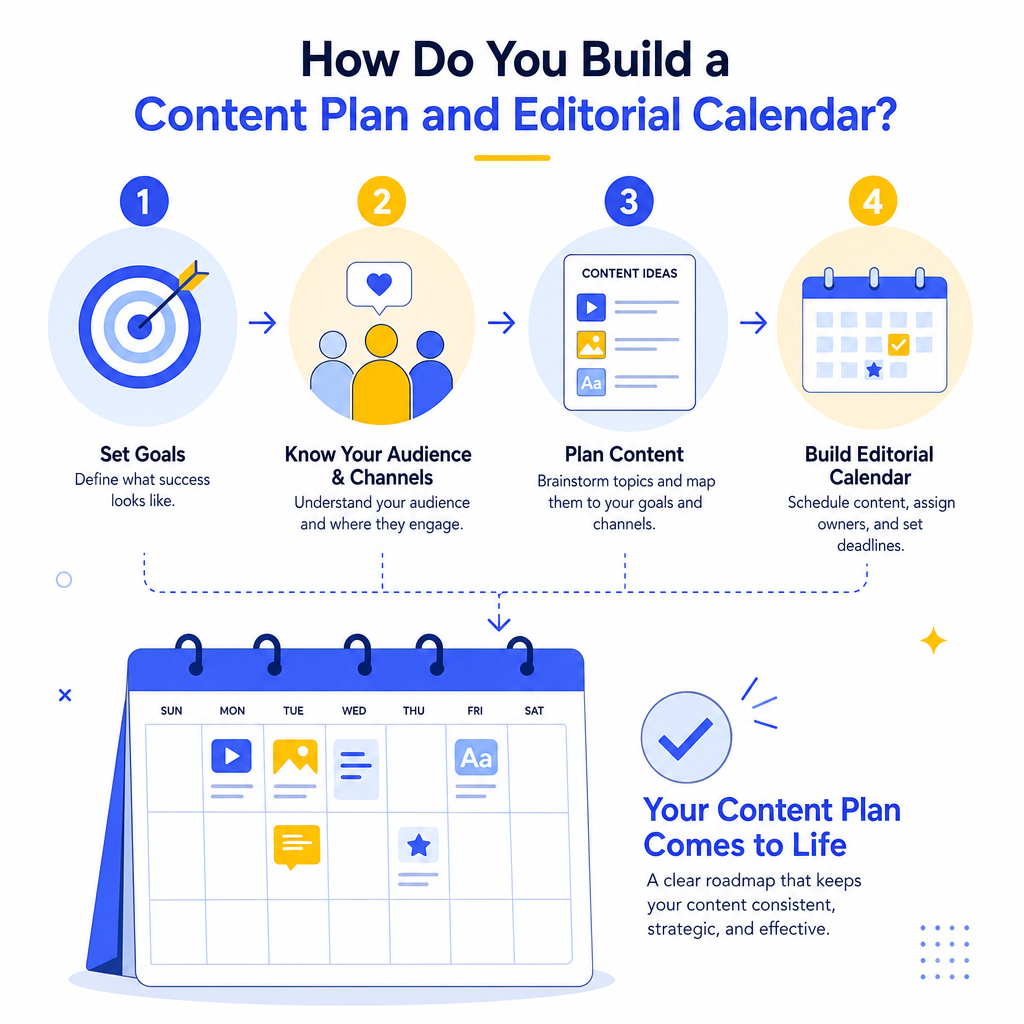
With your goals, audience, and channels defined, it is time to build the actual plan. This is where strategy becomes execution.
Mapping Content to the Customer Journey
Think about the different stages your audience moves through before taking a desired action. A simple framework divides this into three stages: awareness (they have a problem), consideration (they are exploring solutions), and decision (they are ready to act). Your content plan should include pieces that serve each stage, not just the top of the funnel.
Creating an Editorial Calendar
An editorial calendar is a scheduling tool that keeps your content production organized and consistent. It does not need to be complicated. A shared spreadsheet or a project management tool like Notion, Trello, or Asana works perfectly well. Your calendar should include:
- The content topic and working title
- The target keyword or search intent
- The content format (article, video, infographic, etc.)
- The distribution channel
- The publication date
- The team member responsible
- The current status (draft, review, published)
What Metrics Should You Track to Measure Success?
A content strategy without measurement is just guesswork. Defining your key performance indicators (KPIs) upfront ensures you can evaluate what is working and adjust accordingly.
The right metrics depend on your goals. Here are some of the most useful ones organized by category:
- Traffic metrics: Organic sessions, page views, new vs. returning visitors
- Engagement metrics: Time on page, scroll depth, social shares, comments
- Lead generation metrics: Email sign-ups, content downloads, form completions
- SEO metrics: Keyword rankings, backlinks earned, domain authority growth
- Revenue metrics: Leads attributed to content, customer acquisition cost, conversion rate
How Do You Refine and Evolve Your Content Strategy Over Time?
Creating a content strategy is not a one-time event. The best strategies are living documents that evolve as you learn more about your audience, as search algorithms shift, and as your business goals change.
Schedule a formal strategy review every quarter. Ask what content performed best and why. Look at what your audience is responding to and what they are ignoring. Stay current with changes in your industry and in the platforms you use. In 2026, AI-assisted content tools, evolving search behaviors, and new social platforms are reshaping how content gets discovered and consumed. Your strategy needs to reflect those realities.
Also, gather qualitative feedback. Ask your audience directly what they want to learn. Read the comments, reply to emails, and pay attention to the questions your sales or support team hears repeatedly. Those questions are content opportunities waiting to be developed.
Conclusion
Learning how to create a content strategy is one of the most valuable investments you can make in your brand or business. It brings clarity to your content efforts, helps you connect with the right audience, and turns scattered publishing into a purposeful system that builds momentum over time.
To recap the key steps: define your goals and audience, audit what you already have, choose the right content types and channels, build an editorial calendar, track the metrics that matter, and commit to ongoing refinement. None of these steps require a massive budget or a large team. They require intention and consistency.
If you are ready to stop publishing content and hoping for the best, start by writing down your top content goal and your primary audience persona today. That single act of documentation is the foundation of a strategy that works. Take the first step, stay consistent, and watch your content start doing the heavy lifting for your brand.
Frequently Asked Questions
A content strategy is the overarching framework that defines your goals, audience, content types, and success metrics. An editorial calendar is a tactical tool that schedules when and where specific pieces of content will be published based on that strategy.
Connect your content goals directly to broader business objectives, such as building brand awareness, generating leads, educating customers, establishing thought leadership, or driving organic traffic. Choose one or two primary goals to focus on rather than trying to accomplish everything at once.
A content audit reveals what content is already performing well, what gaps exist in your coverage, and where resources are being wasted. This insight helps you avoid duplicating efforts and identify high-opportunity topics to focus on next.
Match your content types to your specific goals and audience behavior. Start with one or two channels where your audience is most active and excel there before expanding to additional platforms. Different goals require different formats—for example, lead generation works better with guides and webinars than short social posts.
Your content plan should map content to different stages of the customer journey (awareness, consideration, decision), define the topics and formats you will create, assign ownership and deadlines, and establish metrics to measure success. This becomes the basis for your editorial calendar.

Stefan Winter
Founder & SEO Expert
Founder of Fast SEO Fix and SEO automation expert. Stefan built Fast SEO Fix to solve the tedious problem of manual SEO work. He specializes in SEO optimized content generation, keyword research, and automated SEO strategies.
